Gas exchange in humans
- Gas exchange – The process of gases exchanging at the alveoli. Oxygen goes from alveoli to blood circulation. Carbon dioxide goes from blood circulation to alveoli.
Features of gas exchange surfaces:
- Large surface area
- Thin surface
- Good blood supply
- Good ventilation with air
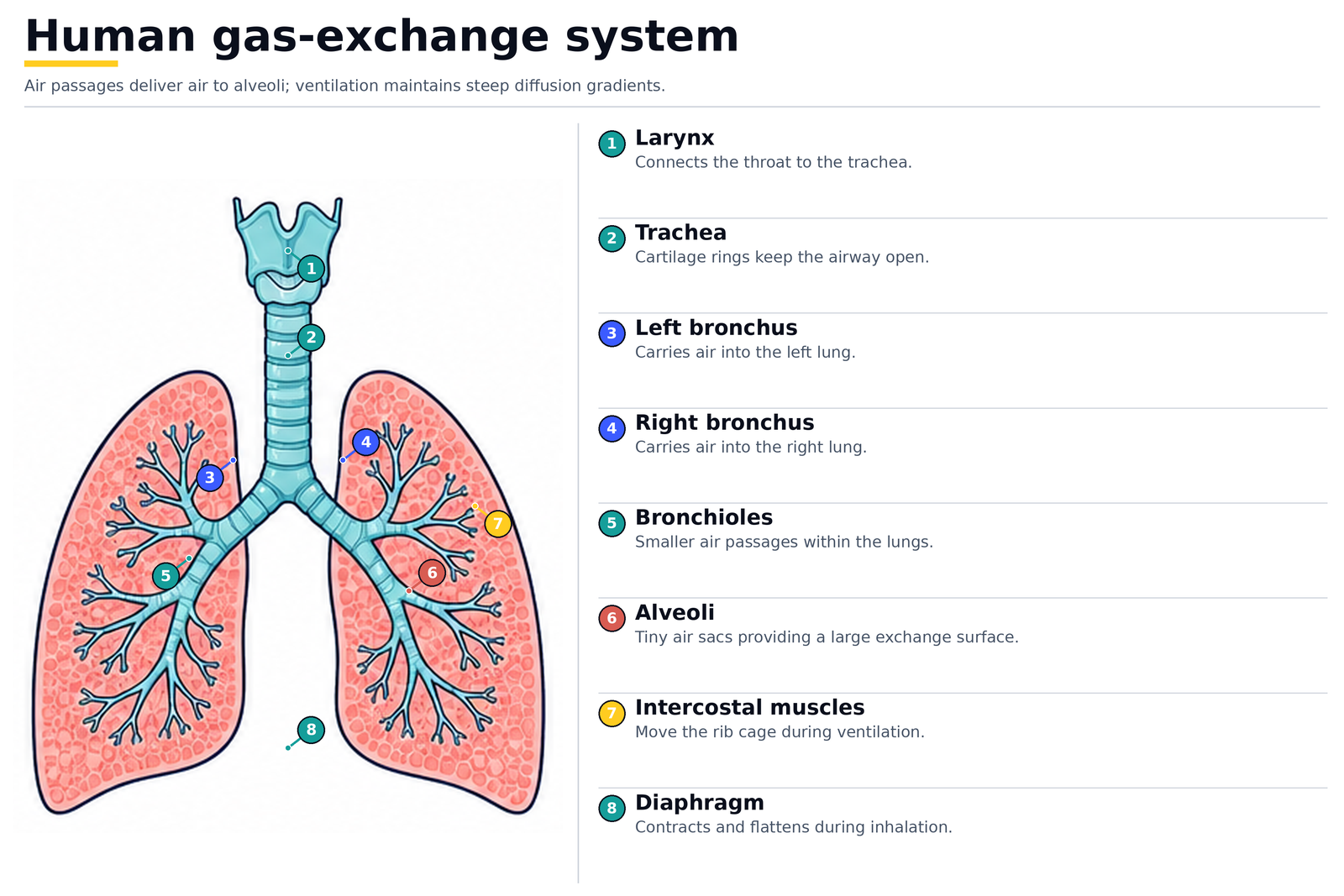
- Larynx (voice box): allows us to make sound
- Trachea: passes air to both lungs
- Bronchus: air is carried from trachea to lungs
- Bronchioles: tiny tubes taking air to alveoli
- Alveoli: tiny air sacs where gaseous exchange takes place
- Diaphragm: a sheet of muscle that moves down to draw air into the lungs and to expel air out of the lungs
- Ribs: bone that provides protection for lungs
| Inspired | Expired |
|---|---|
| 78% Nitrogen | 78% Nitrogen |
| 21% Oxygen | 16% Oxygen |
| 0.04% Carbon dioxide | 4.4% Carbon dioxide |
| >1% Other gases | >1% Other gases |
| Less water vapour | More water vapour |
| Inspired | Expired |
|---|---|
| Intel intercostal muscles relax | Intel intercostal muscles contract |
| Extel intercostal muscles contract | Extel intercostal muscles relax |
| Diaphragm contracts | Diaphragm relaxes |
| Volume increases, pressure decreases | Volume decrease, pressure increase |
| Air enters to rebalance pressure | Air forced out |
Investigation: Limewater is used to test for CO2.
Breathing & exercise:
- Frequency & depth of breathing increase when exercising.
- Muscles work harder and aerobically respire more, needing more oxygen to be delivered to them (and CO2 removed) to keep up with the energy demand.
- Pulse rate remains high after exercise, because the heart is beating faster to deliver oxygen to muscle tissue.
As respiration rates increase, more carbon dioxide is produced and enters the blood, which is acidic and affects the working of enzymes.
- Increased carbon dioxide concentration in the blood
- Detected by the brain
- Increased rate and greater depth of breathing
- Until pH of blood is back to normal
Goblet cells (produce mucus), mucus and ciliated cells protect the breathing system from pathogens and particles.
Cleaning the air
- The passages down the lungs are lined with ciliated epithelial cells, which beat mucus up towards the throat where it can be removed.
- The mucus (which is secreted from goblet cells) traps particles/dust and prevents them from getting into the lungs and damaging the cells there.