Chromosomes, genes and proteins
- Chromosomes — Made of DNA, which contains genetic information in the form of genes.
- Gene — A length of DNA that codes for a protein
- Allele — An altetive form of a gene
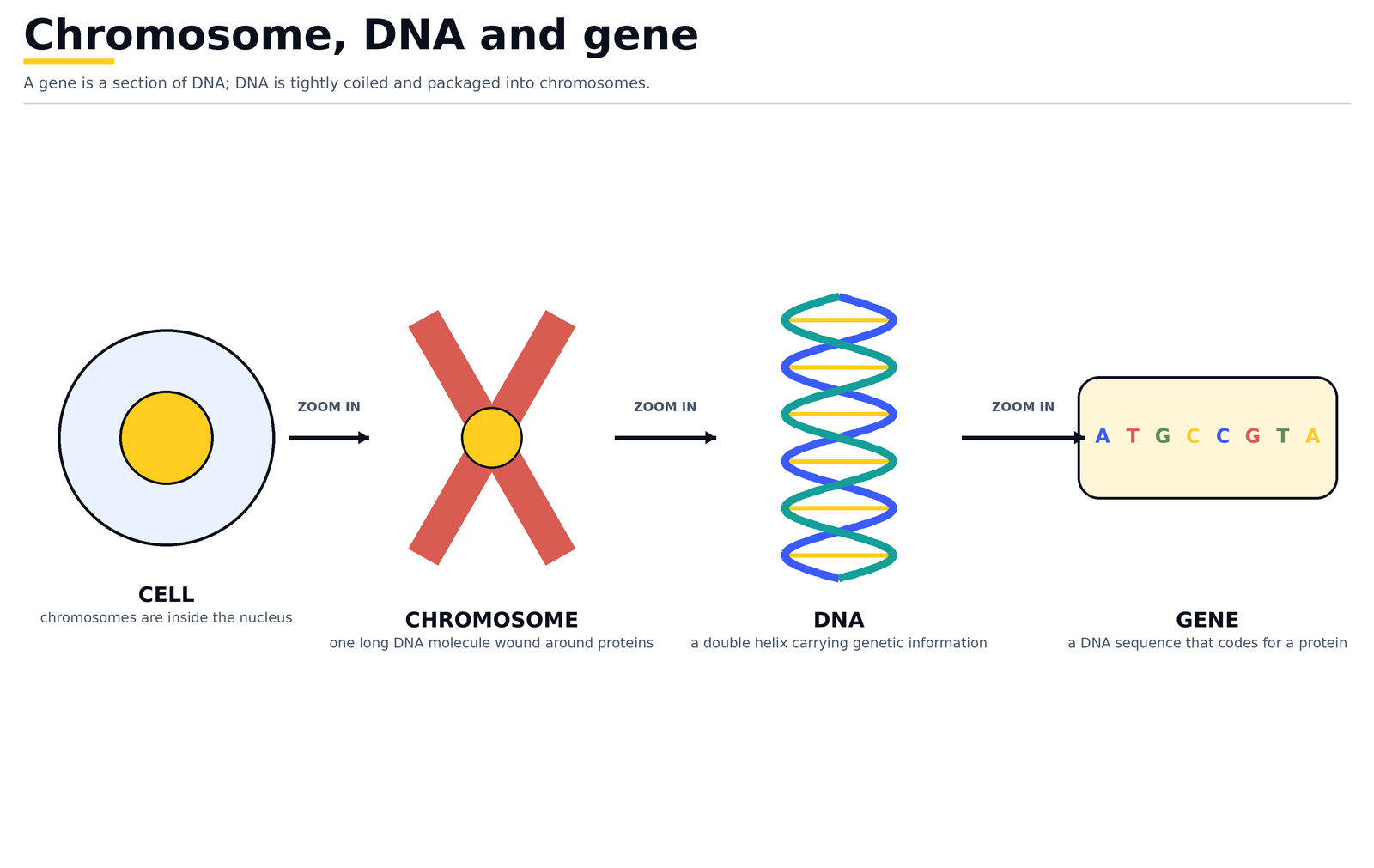
Male = XY, female = XX
The sequence of bases in a gene determines the sequence of amino acids used to make a specific protein. Different sequences of amino acids give different shapes to protein molecules
DNA controls cell function by controlling the production of proteins, including enzymes, membrane carriers and receptors for neurotransmitters.
How a protein is made:
- Gene coding for the protein remains in the nucleus.
- Messenger (m) is a copy of a gene.
- m molecules are made in the nucleus and move to the cytoplasm.
- The m passes through ribosomes.
- The ribosome assembles amino acids into protein molecules.
- The specific sequence of amino acids is determined by the sequence of bases in the m.
Most body cells in an organism contain the same genes, but many genes in a particular cell are not expressed because the cell only makes the specific proteins it needs.
- Haploid nucleus — A nucleus containing a single set of chromosomes
- Diploid nucleus — A nucleus containing two sets of chromosomes
In a diploid cell, there is a pair of each type of chromosome and in a human diploid cell there are 23 pairs.
Function of DNA
- Store genetic information / genes
- DNA codes for making proteins
- The sequence of bases in DNA codes for sequence of amino acids
- DNA transfer information to daughter cells
- DNA copied as m
Mitosis
Mitosis – Nuclear division giving rise to genetically identical cells.
Mitosis is used in: growth, repair of damaged tissues, replacement of cells and asexual reproduction.
Stem cells - unspecialised cells that divide by mitosis to produce daughter cells that can become specialised for specific functions. Examples:
- Basal cells of the skin which keep dividing to make new skin cells. These stem cells produce more cells to repair the damage.
- Stem cells in bone marrow produce red blood cells and white blood cells.
Process of mitosis:
- Exact replication of chromosomes occurs before mitosis.
- During mitosis, the copies of chromosomes separate.
- The chromosome number in each daughter cell maintains the same as the start.
- Two daughter cells are produced.
Meiosis
Meiosis - reduction division in which the chromosome number is halved from diploid to haploid resulting in genetically different cells.
Meiosis is used in: production of gametes.
Process of meiosis:
- Each chromosome makes identical copies of itself.
- In each pair, one is inherited from father, and one is from mother.
- First division: chromosomes pair up along the centre of the cell. Recombination occurs. Each new cell will have one of each recombinant chromosome pair.
- Second division: A total of four haploid daughter cells will be produced.
- The chromosome number in each daughter cell is halved as from the start
Monohybrid inheritance
- Inheritance — The transmission of genetic information from generation to generation
- Genotype — The genetic make-up of an organism and in terms of the alleles present
- Phenotype — The observable features of an organism
Homozygous have two identical alleles of a particular gene. 2 identical homozygous individuals that breed together will be pure-breeding.
Heterozygous have two different alleles of a particular gene. A heterozygous individual will not be pure-breeding.
- Dominant allele — an allele that is expressed if it is present in the genotype.
- Recessive allele — an allele that is only expressed when there is no dominant allele of the gene present in the genotype.
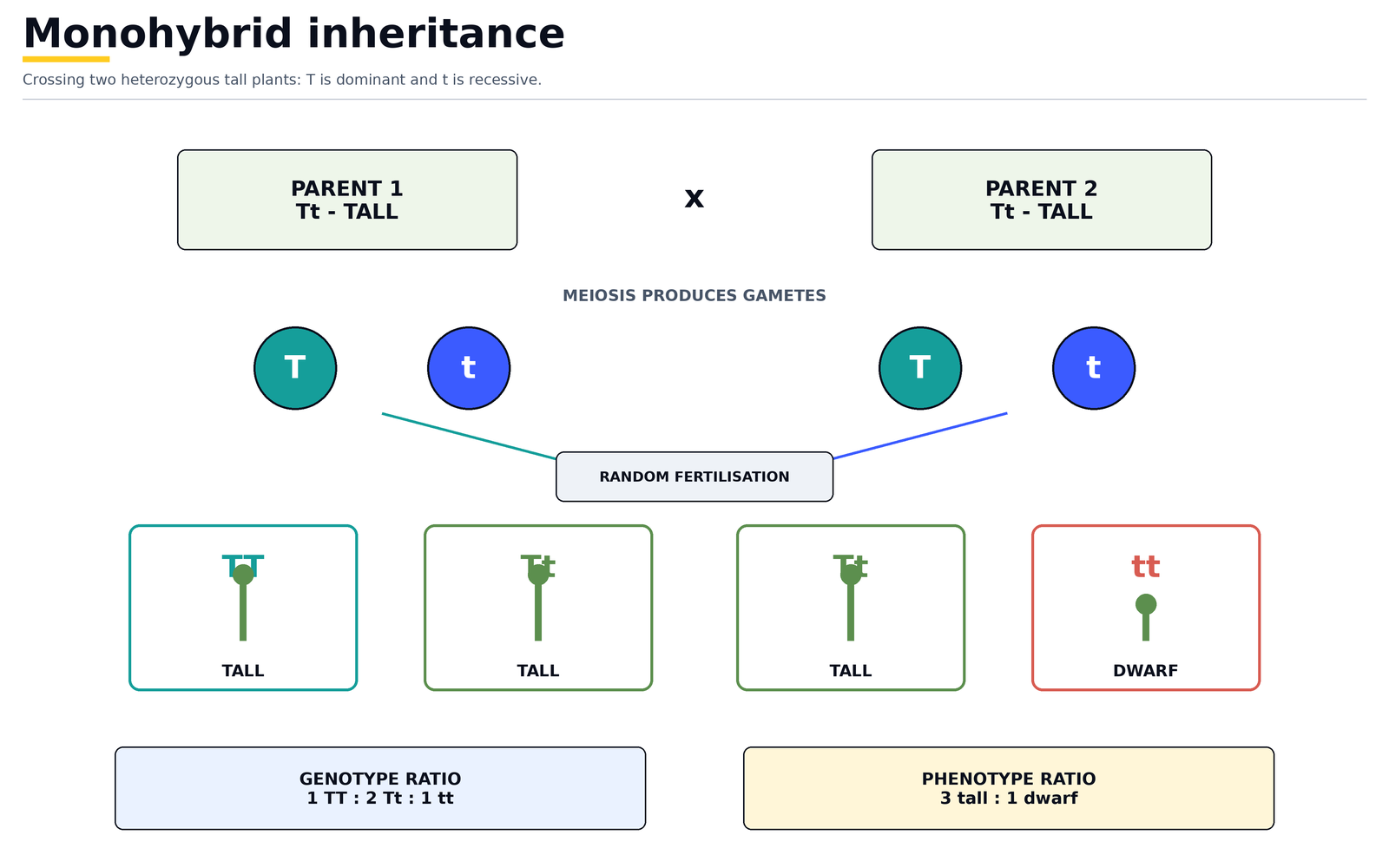
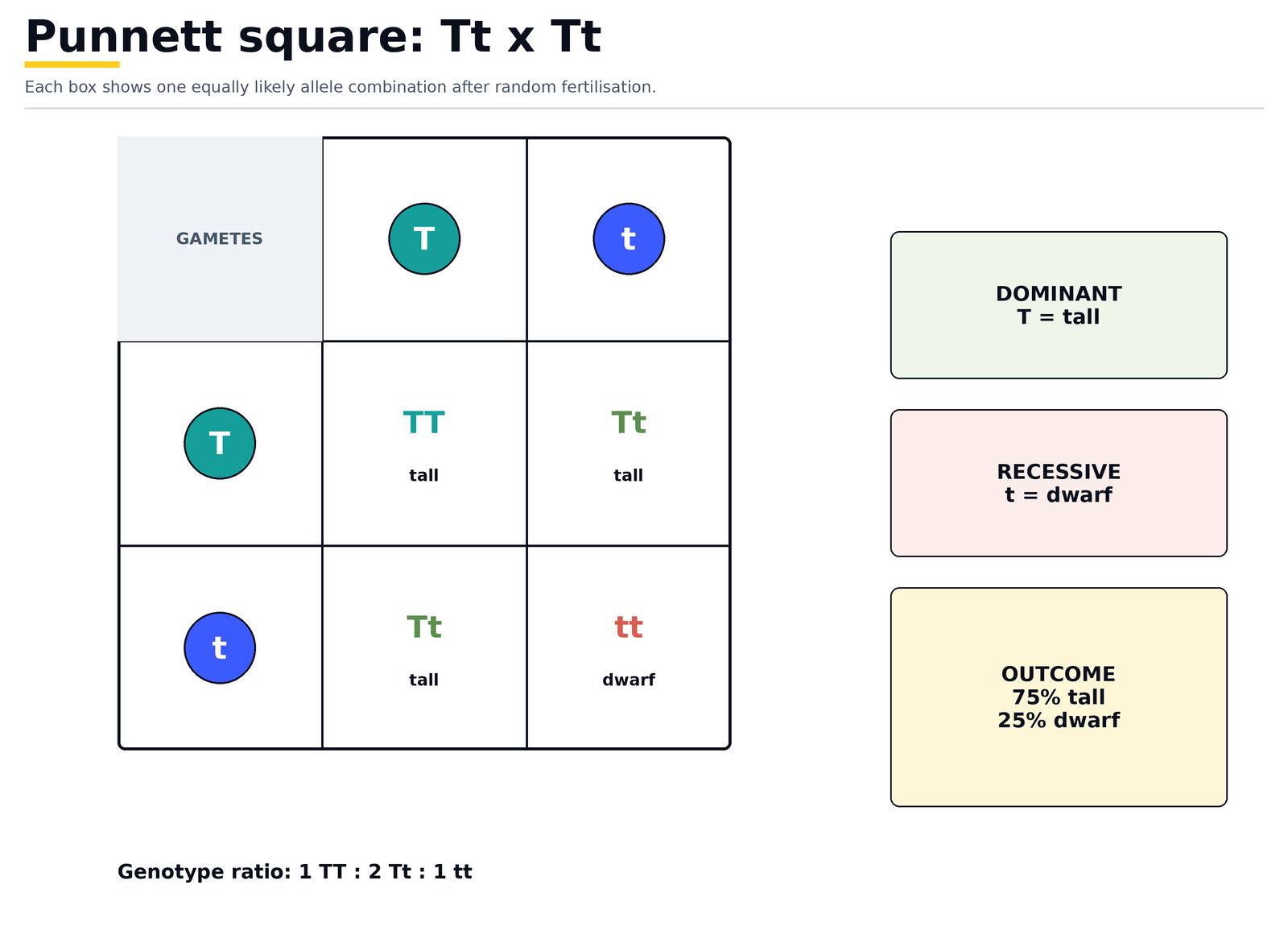
Examples of Monohybrid Inheritance: height (short or tall), single or double eyelids, straight or curly hair, attached or detached earlobes.
- Codominance — A situation in which both alleles in heterozygous organisms contribute to the phenotype.
Phenotypes of ABO blood groups are A, B, AB and O blood groups Alleles are IA , IB and IO
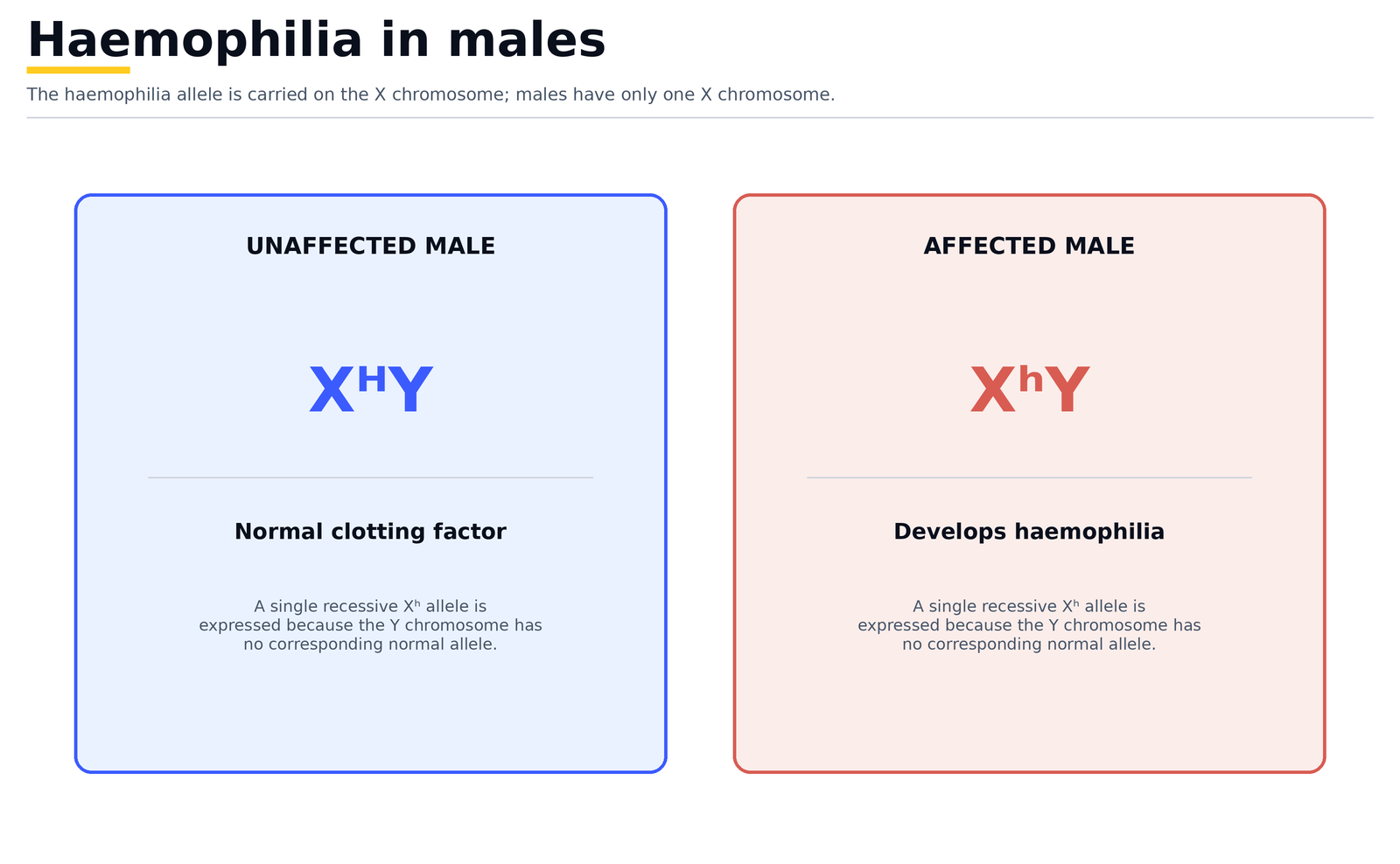
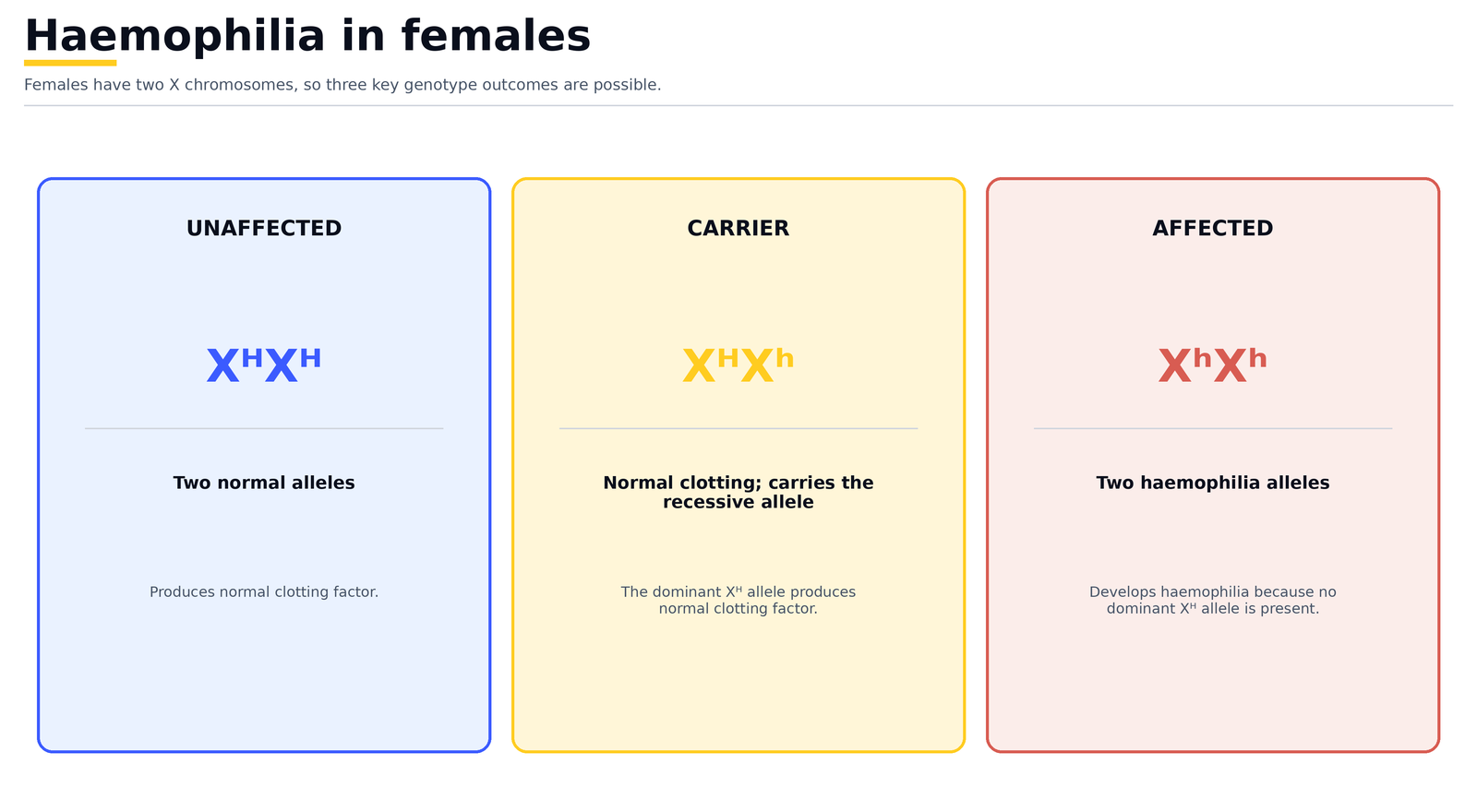
- Sex-linked characteristic — A feature in which the gene responsible is located on a sex chromosome. This makes the characteristic more common in one sex than in the other. E.g. red-green colorblindness, found on the X allele.
Females have the alleles XX Males have the alleles XY
Haemophilia (Sex-linked characteristics):