Energy flow
The Sun is the principal source of energy input to biological systems.
Flow of energy: light energy from the Sun -> chemical energy in organisms -> energy transferred to the environment.
Food chains and food webs
A food chain shows the transfer of energy from one organism to the next, beginning with a producer
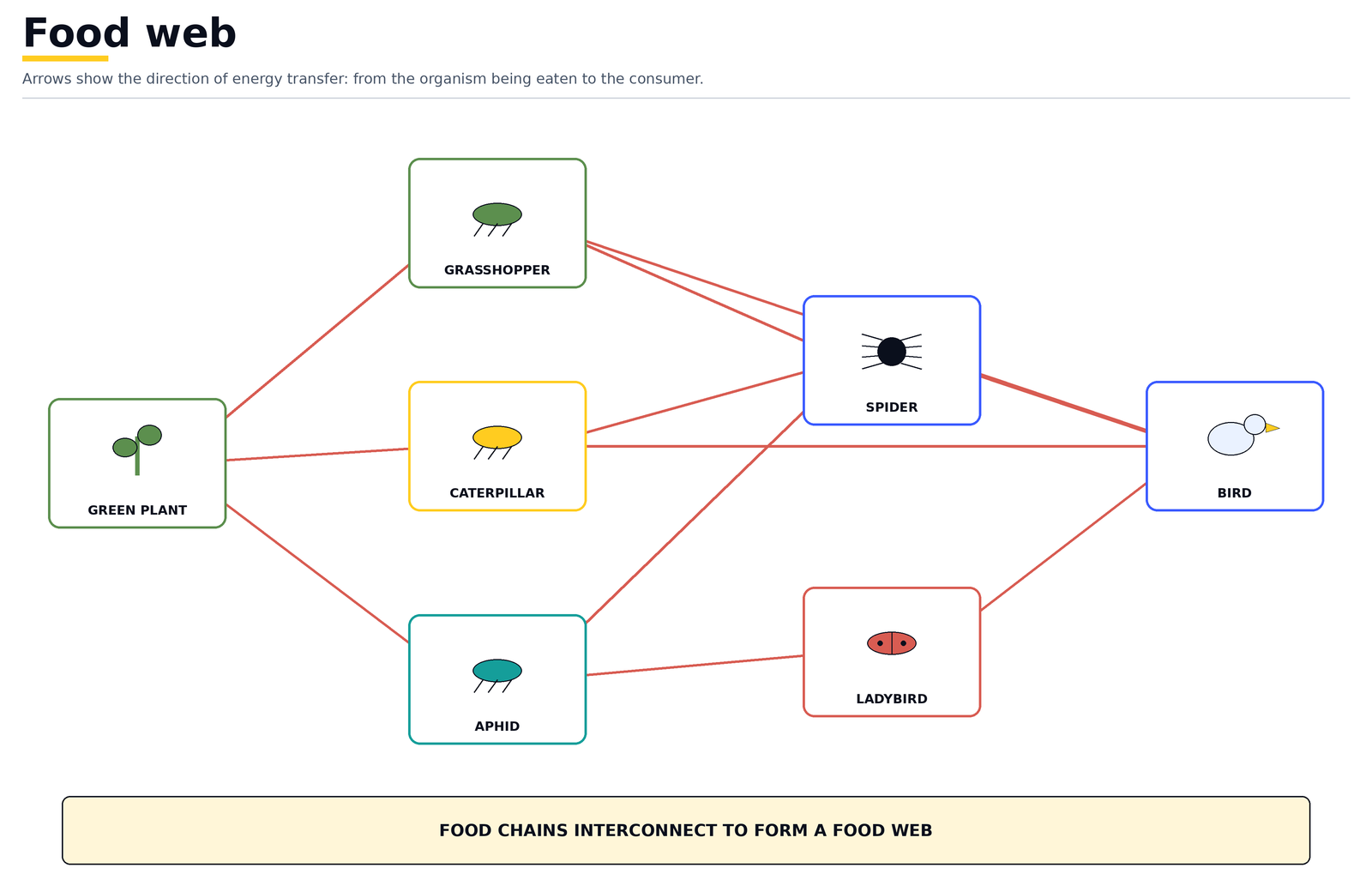
- Food web – A network of interconnected food chains and interpret food webs.
- Producer – An organism that makes its own organic nutrients, usually using energy from sunlight, through photosynthesis.
- Consumer – An organism that gets its energy by feeding on other organisms.
- Herbivore – An animal that gets its energy by eating plants.
- Carnivore – An animal that gets its energy by eating other animals.
- Decomposer – An organism that gets its energy from dead or waste organic material
Consumers may be classed as primary, secondary, tertiary and quatery according to their position in a food chain.
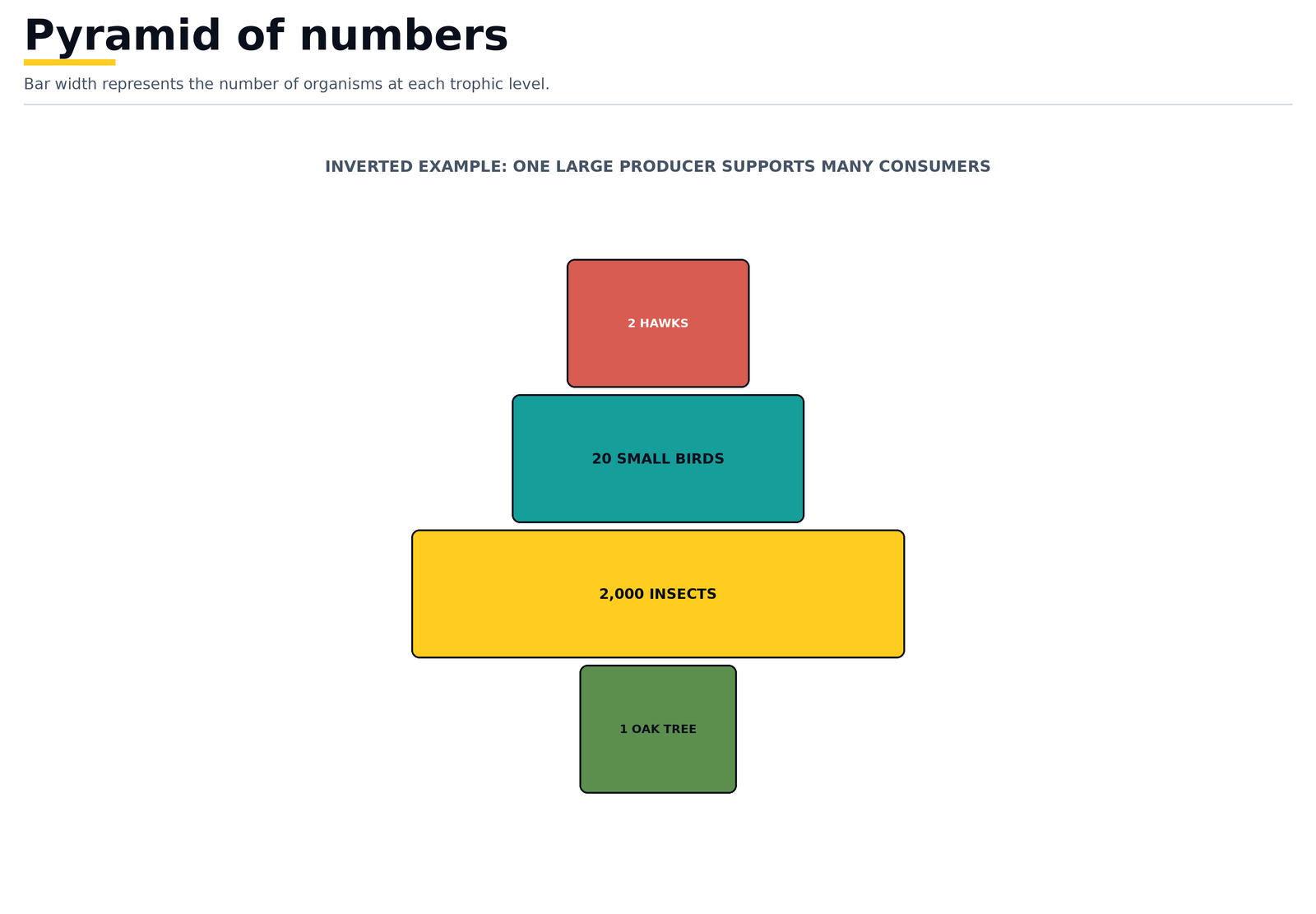
A pyramid of numbers shows how many organisms we are talking about at each level of a food chain. It does not consider the size & mass of organisms or whether the organism is an adult/juvenile.
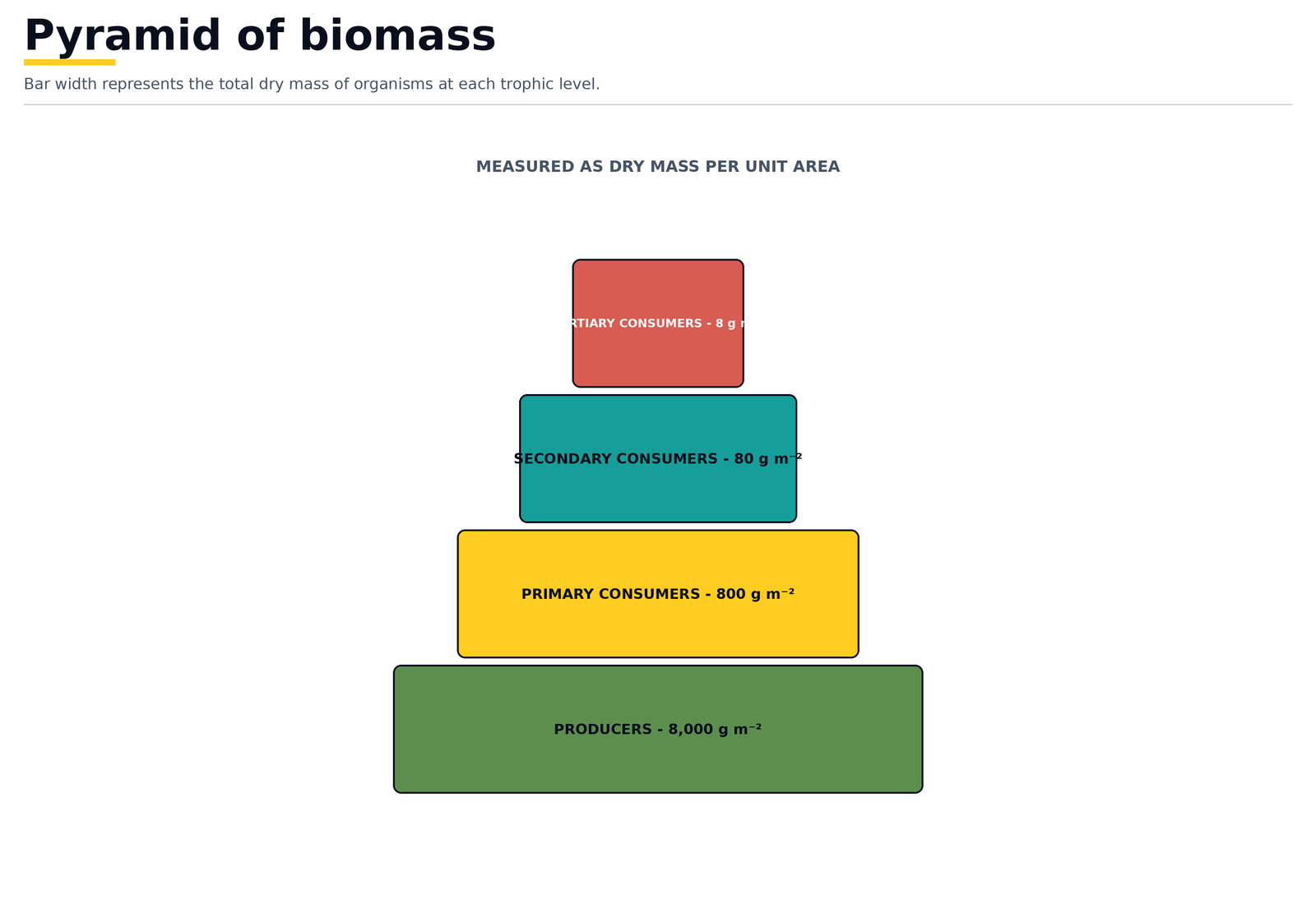
Pyramid of biomass
It shows the total amount of living tissues & amount of energy available for the next trophic level.
- Trophic level – The position of an organism in a food chain, food web or ecological pyramid Supplement
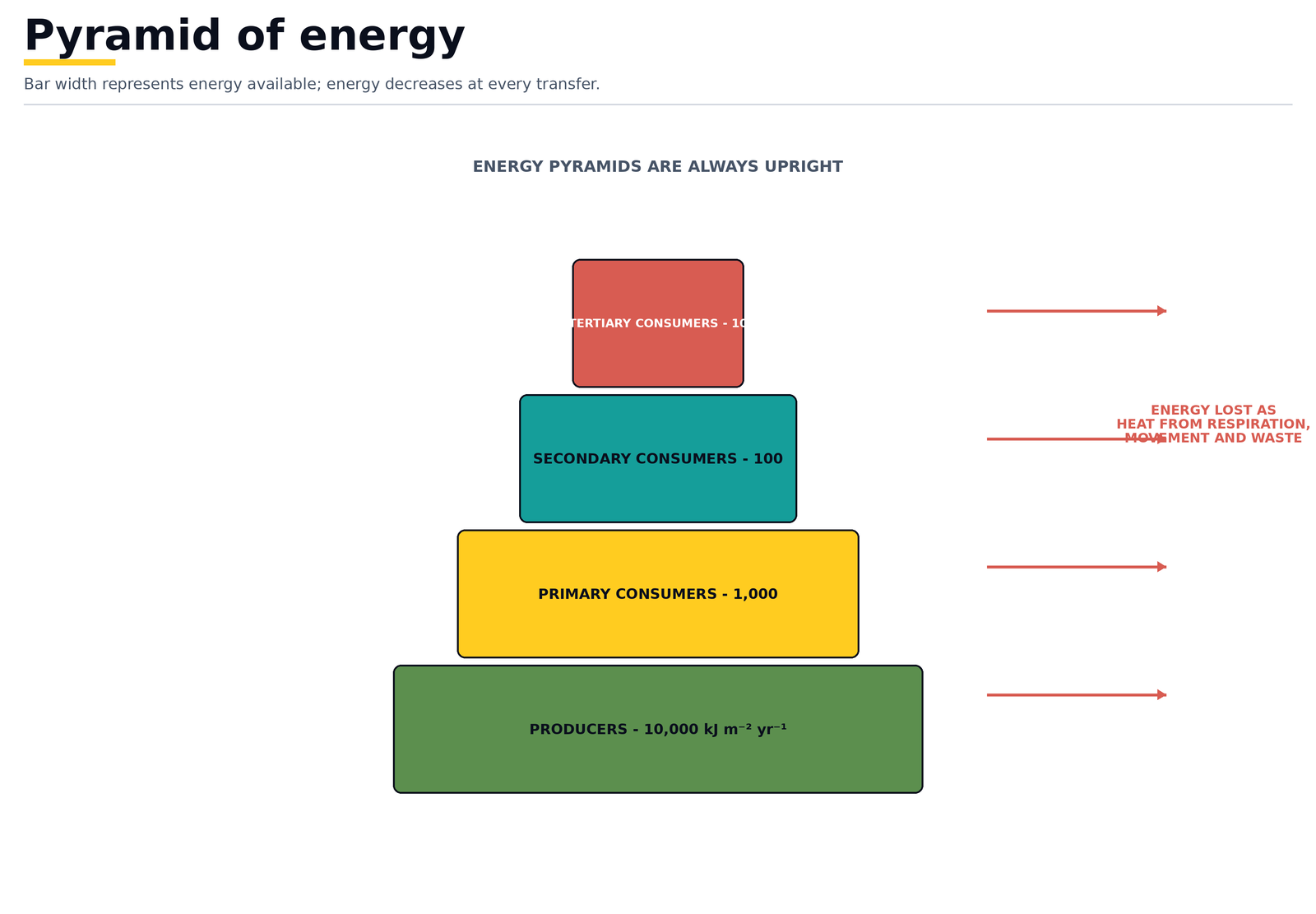
Pyramid of energy
- Producers – Make all their own nutrients using energy from sunlight. (Green plants)
- Primary consumer – A consumer eats another organism. (herbivores & omnivores)
- Secondary consumer – Eat primary consumer. (omnivores & carnivores)
- Tertiary consumer – A secondary carnivore that eats a secondary consumer. It is bigger than the others.
Transfer of energy
- In order for the energy to be passed on, it has to be eaten.
- Not all of the energy grass plants receive goes into making new cells that can be eaten.
- Food chains usually have fewer than five trophic levels, as there is very little usable energy after four or five trophic levels.
- It is more energy efficient for humans to eat crop plants than to eat livestock that have been fed on crop plants, as there is more energy.
Nutrient cycles
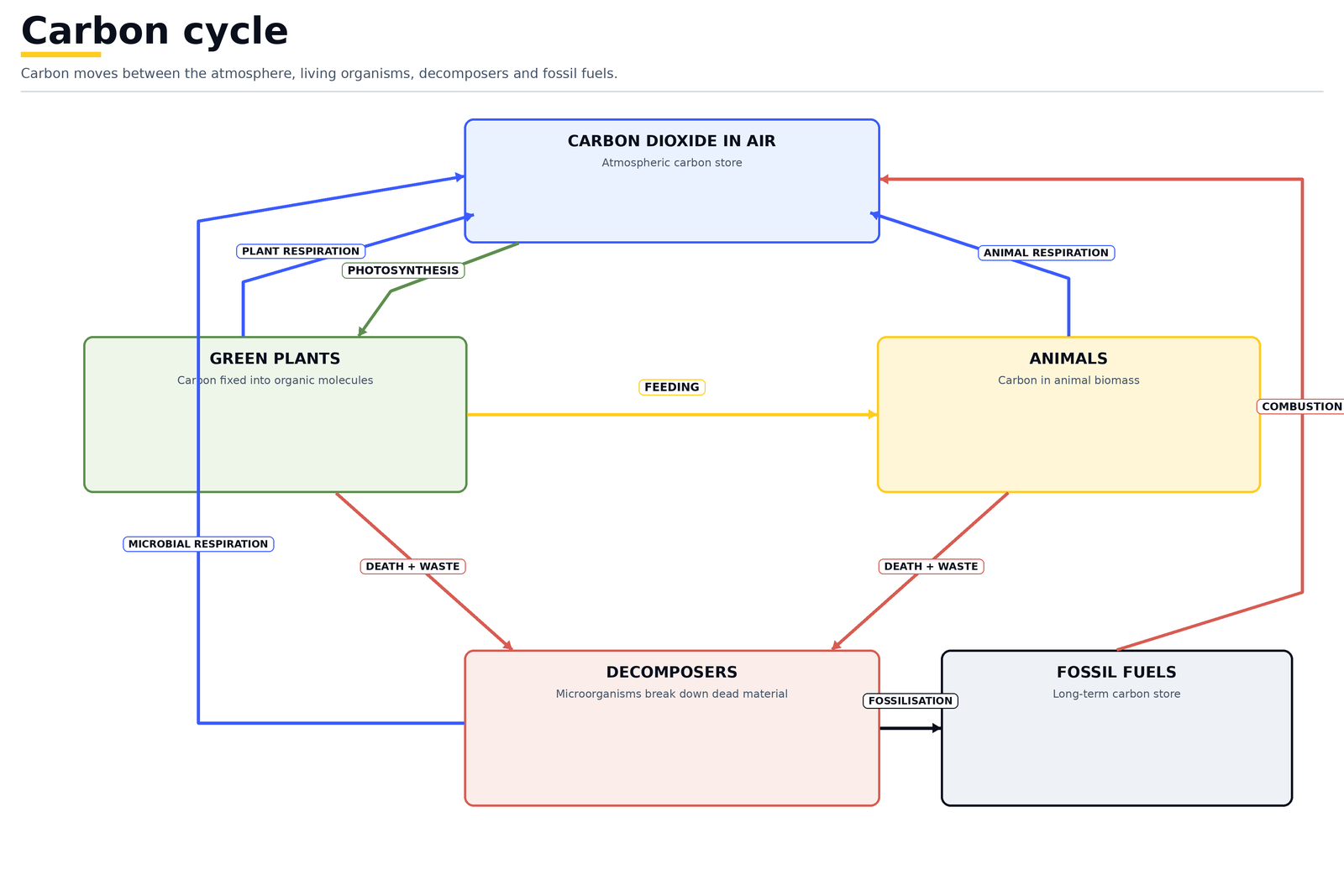
Carbon cycle
- Carbon is taken by plants for photosynthesis.
- It is passed on to animals by feeding.
- It is returned to the atmosphere by plants, animals and microorganisms from respiration.
- Decomposers use decaying material for respiration, releasing carbon dioxide.
- If animals and plants die, the carbon in their bodies can be converted into fossil fuels. When fossil fuels are burned, CO2 is released into atmosphere.
- Mass deforestation is reducing the amount of producers available to take carbon dioxide out of the atmosphere by photosynthesis.
Nitrogen cycle
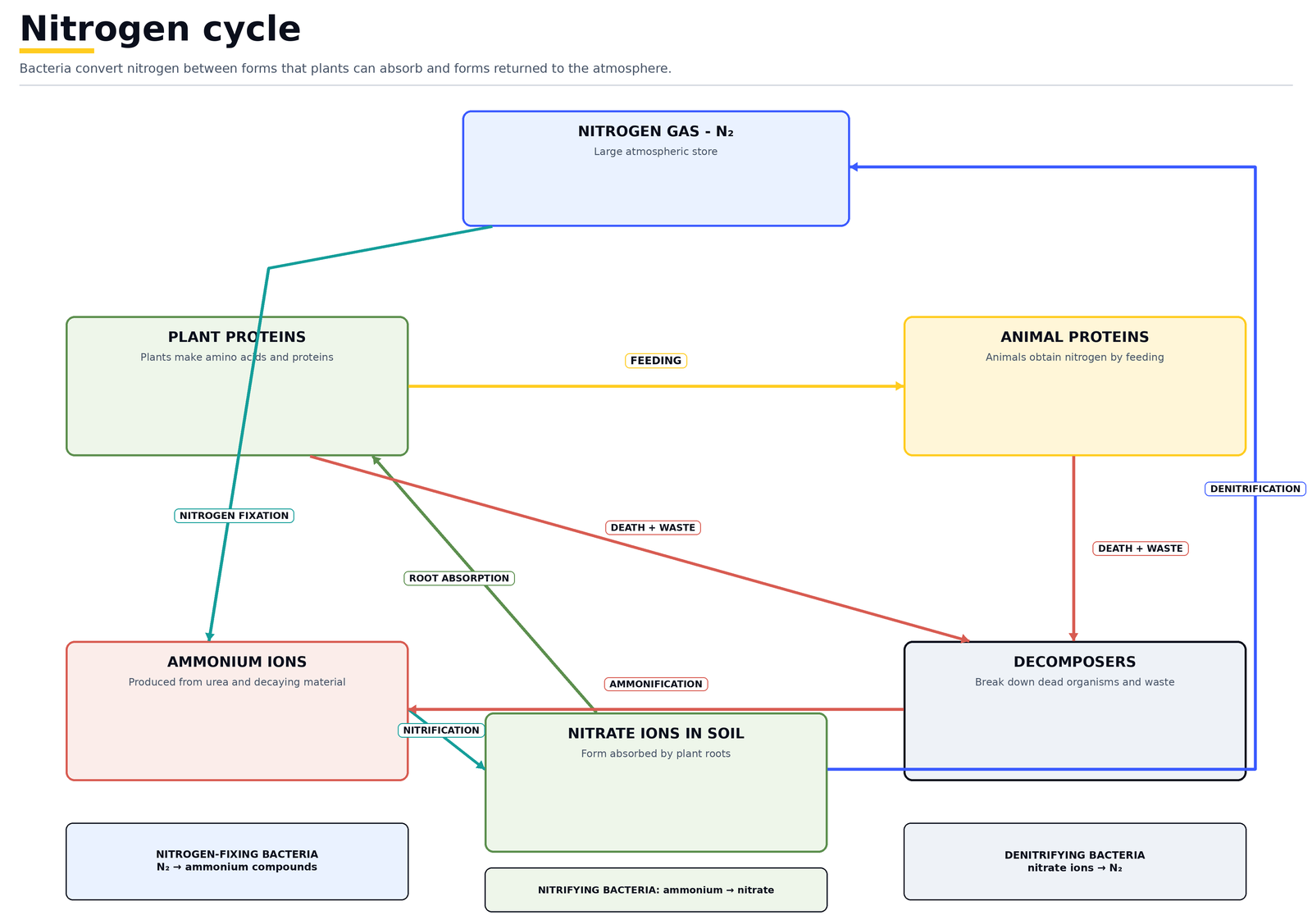
Nitrogen fixing bacteria
- Nitrogen fixing bacteria in soil convert nitrogen gas to compounds of nitrogen (nitrates)
- When bacteria die and decompose, this fixed nitrogen is available to plants.
- Nitrogen-fixing bacteria are also in the root nodules of certain legumes plants (peas, beans, clover) These bacteria change nitrogen gas to ammonia for plants to make amino acids.
Lightning
- Lightning splitting the bond between the two atoms
- Causes nitrogen & oxygen to react together at high temperatures to form nitrogen oxides
- These nitrogen oxides are washed into soil by rain where they form nitrate ions.
Denitrifying bacteria
- Denitrifying bacteria change nitrate ions to nitrogen gas.
Decomposers
- Decomposers break down dead animals, releasing ammonium ions into soil.
- Bacteria also break down urea to ammonium ions.
Nitrifying bacteria
- Convert ammonium to nitrates, which can be absorbed by plants.
Uses of nitrate ions
- To make amino acids in leaves of plants.
- Excess of amino acids are broken down → ammonia (deamination)
Populations
- Population - a group of organisms of one species, living in the same area at the same time
- Community - all of the populations of different species in an ecosystem.
- Ecosystem - a unit containing the community of organisms and their environment, interacting together. (biotic & abiotic)
Population growth factors: Food supply, predation, disease, competition, immigration
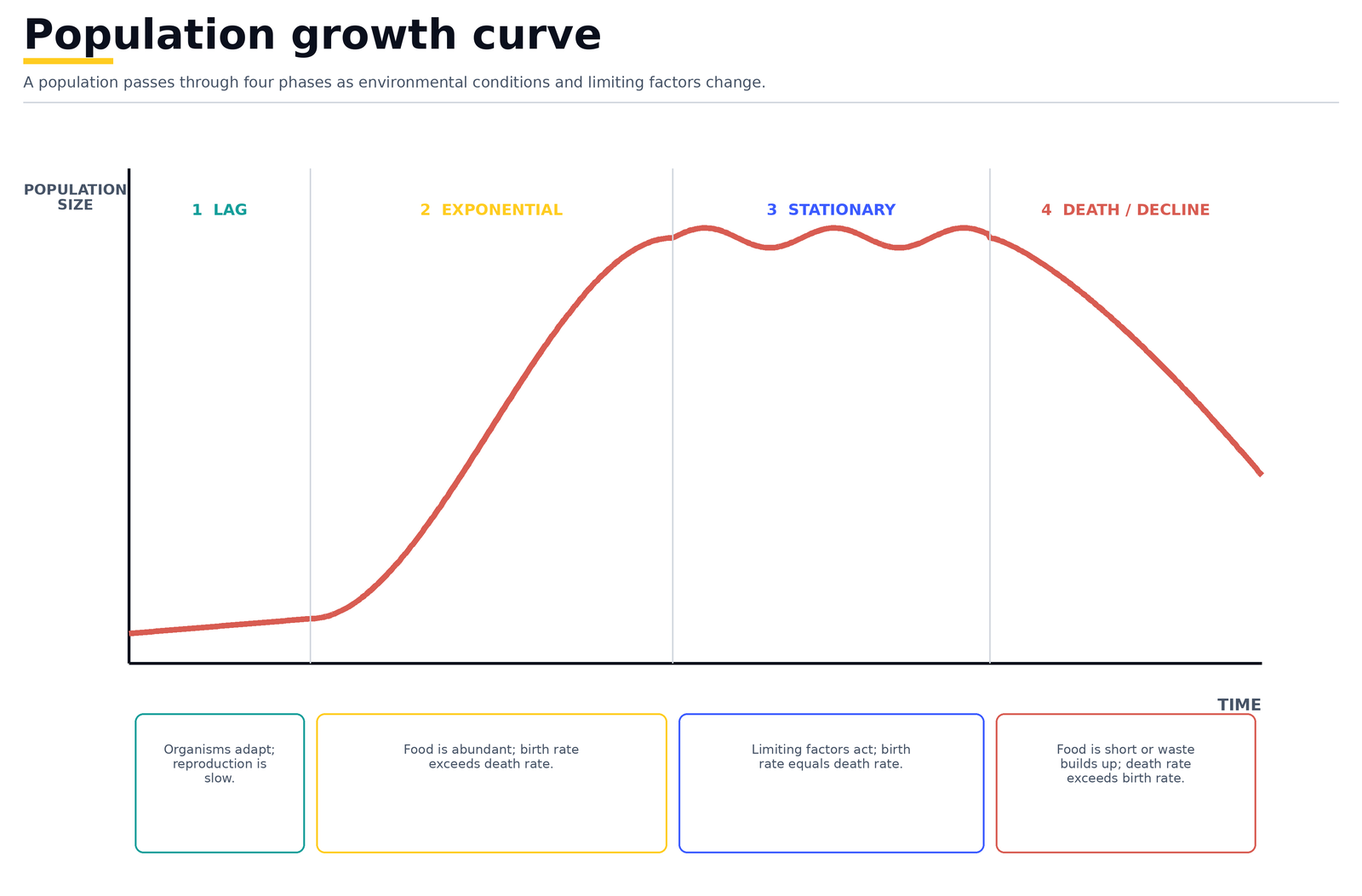
- Lag phase - organisms are adapting to the environment before they are able to reproduce.
- Exponential phase - food supply is abundant, birth rate > death rate.
- Stationary phase - birth rate and death rate are equal. Nutrients are limited or waste products are building up.
- Death phase - death rate > birth rate. Food supply is short or metabolic wastes produced by the population have built up to toxic levels.