Photosynthesis
Photosynthesis - the process by which plants synthesise carbohydrates from raw materials using energy from light.
Carbon dioxide + water → glucose + oxygen (in the presence of light and chlorophyll)
6CO2 + 6H2O → C6H12O6 + 6O2
Chlorophyll is a green pigment that is found in chloroplasts. It transfers energy from light into energy in chemicals, for photosynthesis.
Use and storage of the carbohydrates:
- Starch as an energy store
- Cellulose to build cell walls
- Glucose used in respiration to provide energy
- Sucrose for transport in the phloem
- Nectar to attract insects for pollination
Plant minerals
- Plants absorb nitrate and magnesium ions from the soil.
- Nitrate ions are necessary for the production of amino acids.
- Magnesium is necessary for the production of chlorophyll. Without the chlorophyll, the plant leaf cannot absorb sunlight for photosynthesis.
Factors that affect rate of photosynthesis (limiting factors, factors that in scarcity, limit the rate of photosynthesis):
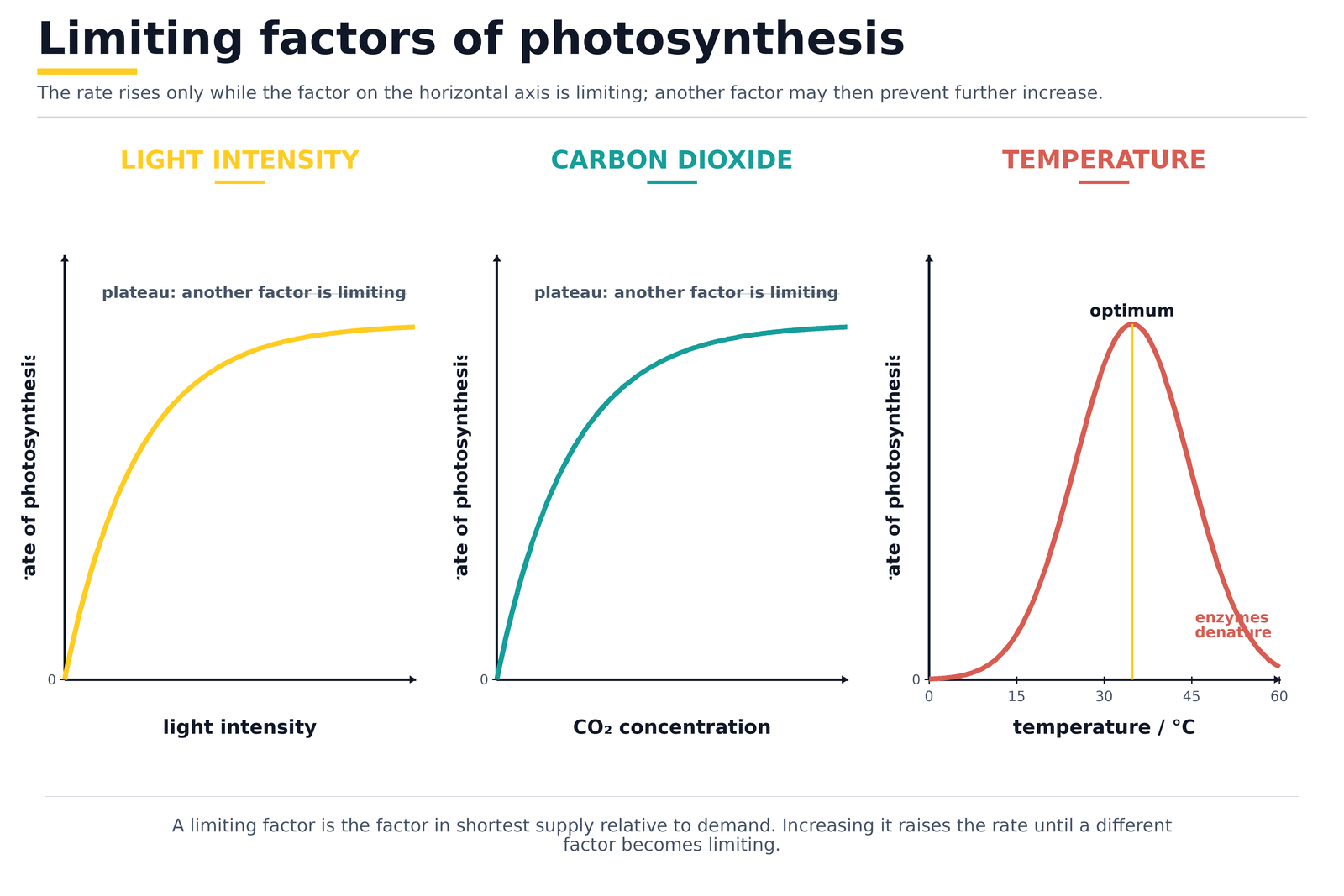
Light intensity:
- As light intensity increases, rate of photosynthesis increases, as more light can be absorbed and utilised by chlorophyll.
- At the point where the graph evens off, the increase of light would not affect the rate of photosynthesis anymore. CO2 concentration and temperature becomes a limiting factor.
CO2 concentration
- As CO2 concentration increases, rate of photosynthesis increases, as more CO2 can be used in the reaction.
- At the point where the graph evens off, the increase of CO2 concentration would not affect the rate of photosynthesis anymore. Light intensity and temperature becomes a limiting factor.
Temperature
- As temperature increases, rate of photosynthesis increases. Enzymes gain kinetic energy and collide more frequently.
- When the temperature passes the optimum temperature, enzymes denature and the rate of photosynthesis decreases.
Hydrogencarbonate indicators can detect the increase/decrease in CO2. An increase of CO2 changes the indicator from red to yellow. A decrease in CO2 changes the indicator from red to purple.
Leaf structure
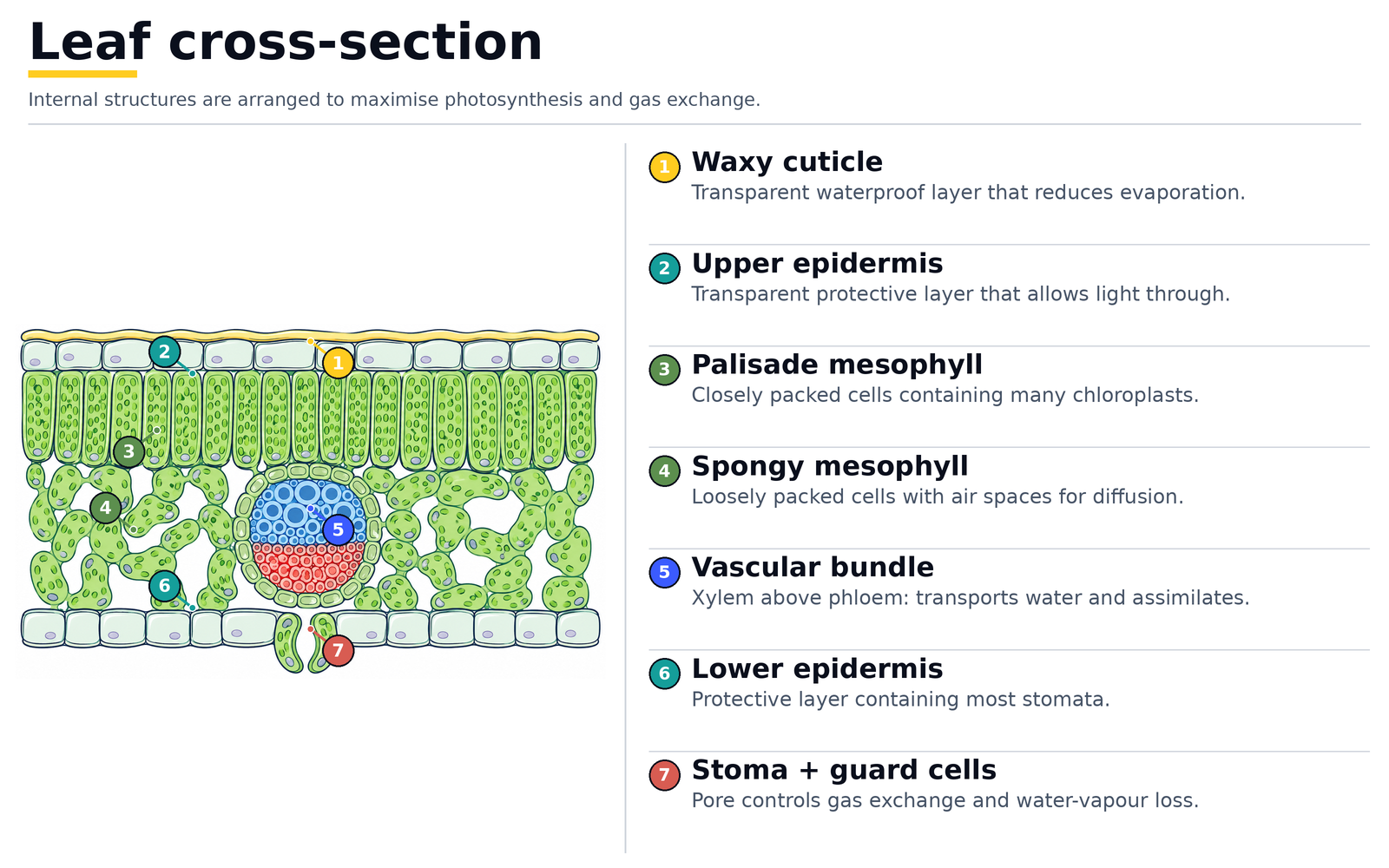
Adaptation of the leaves
- The flat and wide structure of leaves increases the surface area, allowing more efficient absorption of sunlight and gas exchange.
- Palisade mesophyll cells are in vertical arrangement to allow more cells to be packed. More cells = more chloroplasts = more photosynthesis.
- Waxy cuticle — retains water in plant
- Upper epidermis — protects leaf in preventing water loss.
- Palisade mesophyll — contains chloroplasts for photosynthesis.
- Spongy mesophyll — interchange of gases for photosynthesis.
- Stomata — shrinks to prevent water loss and expands to absorb water.
- Guard cells — controls gas diffusion by regulating opening/closing of stomata.