Economic growth
Meaning and measurement
- Gross Domestic Product (GDP) - the total value of final goods and services produced within a country over a period of time.
- Nominal GDP - GDP measured at current prices, so it can rise because output rises, prices rise, or both.
- Real GDP - GDP adjusted for changes in the general price level, so it measures changes in actual output.
- Economic growth - an increase in real GDP over time.
- Real GDP per head - real GDP divided by the population; it estimates average real output or income per person.
Real GDP is used because a rise in money values alone does not prove that more goods and services were produced. If nominal GDP rises by 7% while prices rise by about 5%, the increase in real output is much smaller than 7%.
Measurement rule: Growth concerns real GDP, not simply higher prices or a larger cash value of output.
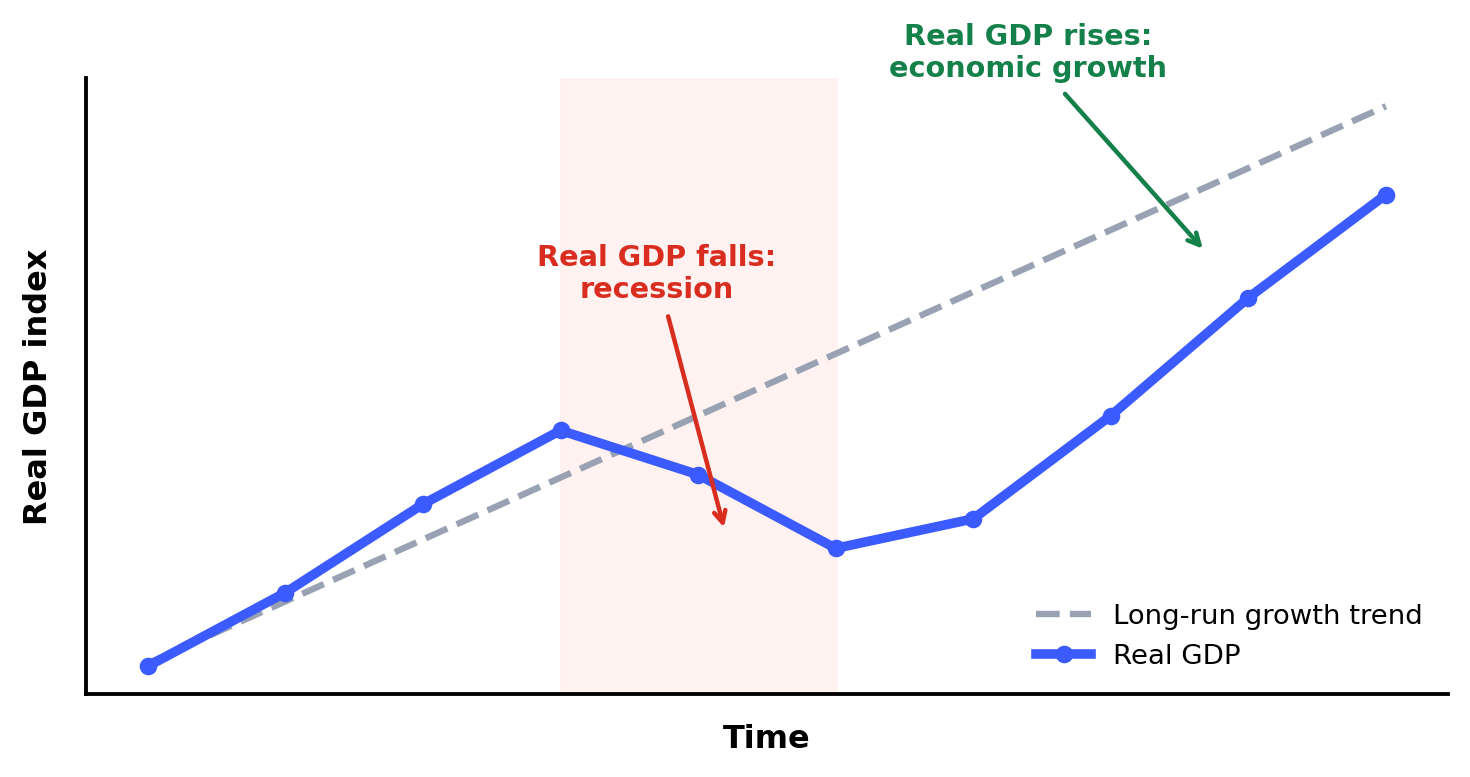
Figure 4.1: Economic growth and recession are measured using changes in real GDP.
Causes of economic growth
Growth can come from stronger use of existing resources or from an increase in the economy's productive capacity.
| Cause | Chain to higher real GDP | Important condition |
|---|---|---|
| Increase in total demand | Households, firms, government or foreign buyers spend more -> firms receive more orders -> firms use spare resources to raise output and employment. | If the economy is near full capacity, prices may rise more than real output. |
| Increase in quantity of resources | A larger labour force, more capital, more usable land or more enterprise expands the amount that can be produced. | Resources must be employed efficiently; quantity alone does not guarantee output. |
| Increase in quality of resources | Education, health, technology and better capital raise productivity -> more output is produced from each resource. | Investment and training take time and must suit economic needs. |
Advantages and disadvantages of growth
| Possible advantages | Possible disadvantages |
|---|---|
| Higher employment and household income | Demand-pull inflation if spending grows faster than productive capacity |
| More goods and services and potentially higher living standards | Pollution, congestion, waste and depletion of non-renewable resources |
| Higher profit and investment for firms | Some workers or regions may not share the gains, so inequality can widen |
| More tax revenue and less benefit spending | More imports can weaken balance of payments stability |
| Greater capacity to fund healthcare, education and poverty reduction | Rapid structural change may make some skills and industries obsolete |
Growth raises average output, not automatically everyone's welfare. Its value depends on how the gains are distributed, whether population also rises, what is produced and the environmental cost. Real GDP per head and broader living-standard measures are studied in Unit 5.
Recession
- Recession - a fall in real GDP over a period of time.
A recession can result from lower total demand, fewer resources or poorer-quality resources. A loss of confidence, higher taxes or interest rates, falling exports or weaker investment may reduce demand. War, disasters, emigration of skilled workers or damaged capital can reduce resource quantity or quality.
| Group | Likely consequences of recession |
|---|---|
| Consumers | Lower confidence and income, reduced spending, more debt difficulty; lower inflation may benefit some buyers. |
| Workers | Redundancy, fewer vacancies, lower wage growth and loss of skills during long unemployment. |
| Producers / firms | Lower sales, unused capacity, falling profit and investment; some inefficient firms close. |
| Government | Lower tax revenue and higher benefit spending create pressure for a budget deficit. |
| Economy | Real GDP falls, unemployment and spare capacity rise, investment weakens and long-term productive potential may be harmed if skills or capital are lost. |
PPC applications: actual output and productive capacity
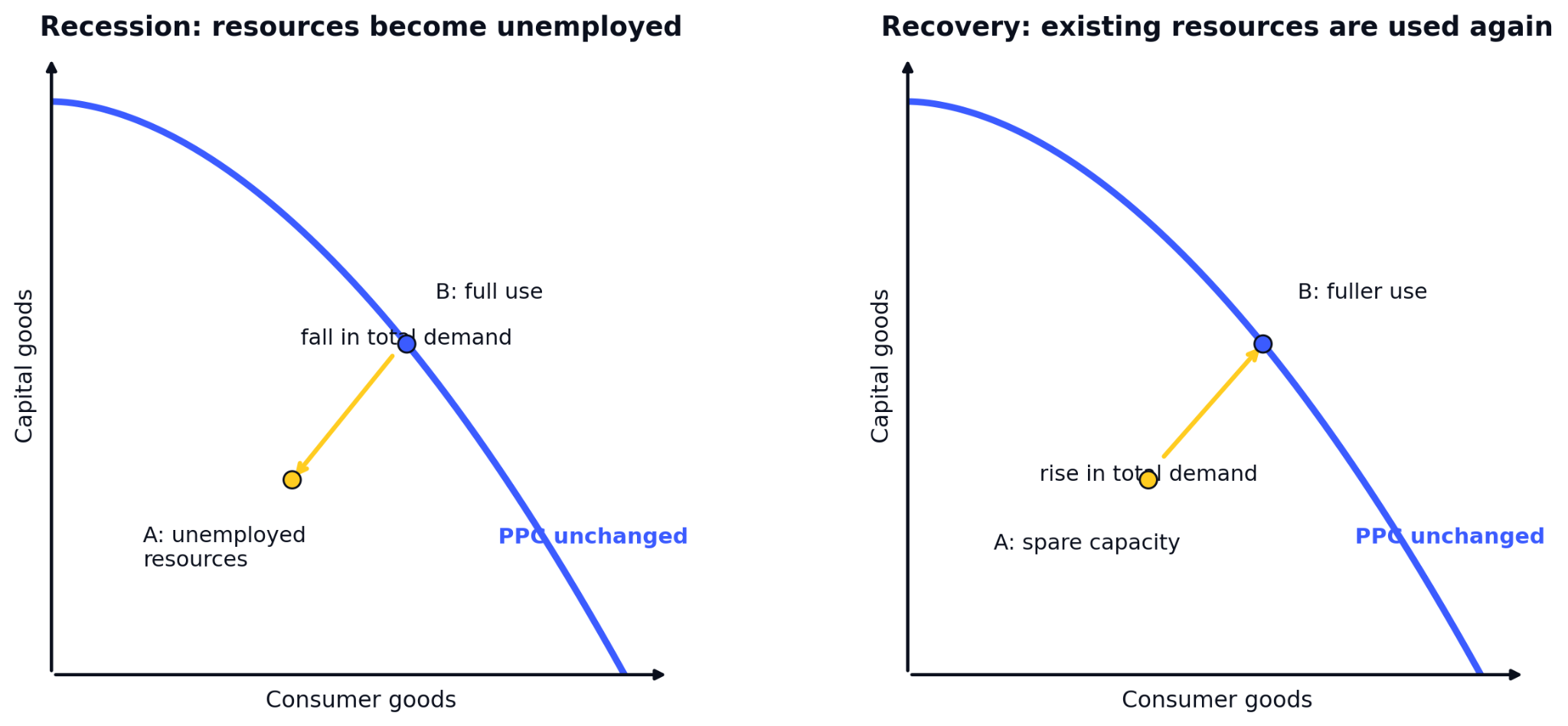
Figure 4.2: Lower total demand moves actual production inside an unchanged PPC; recovery moves it back towards the frontier.
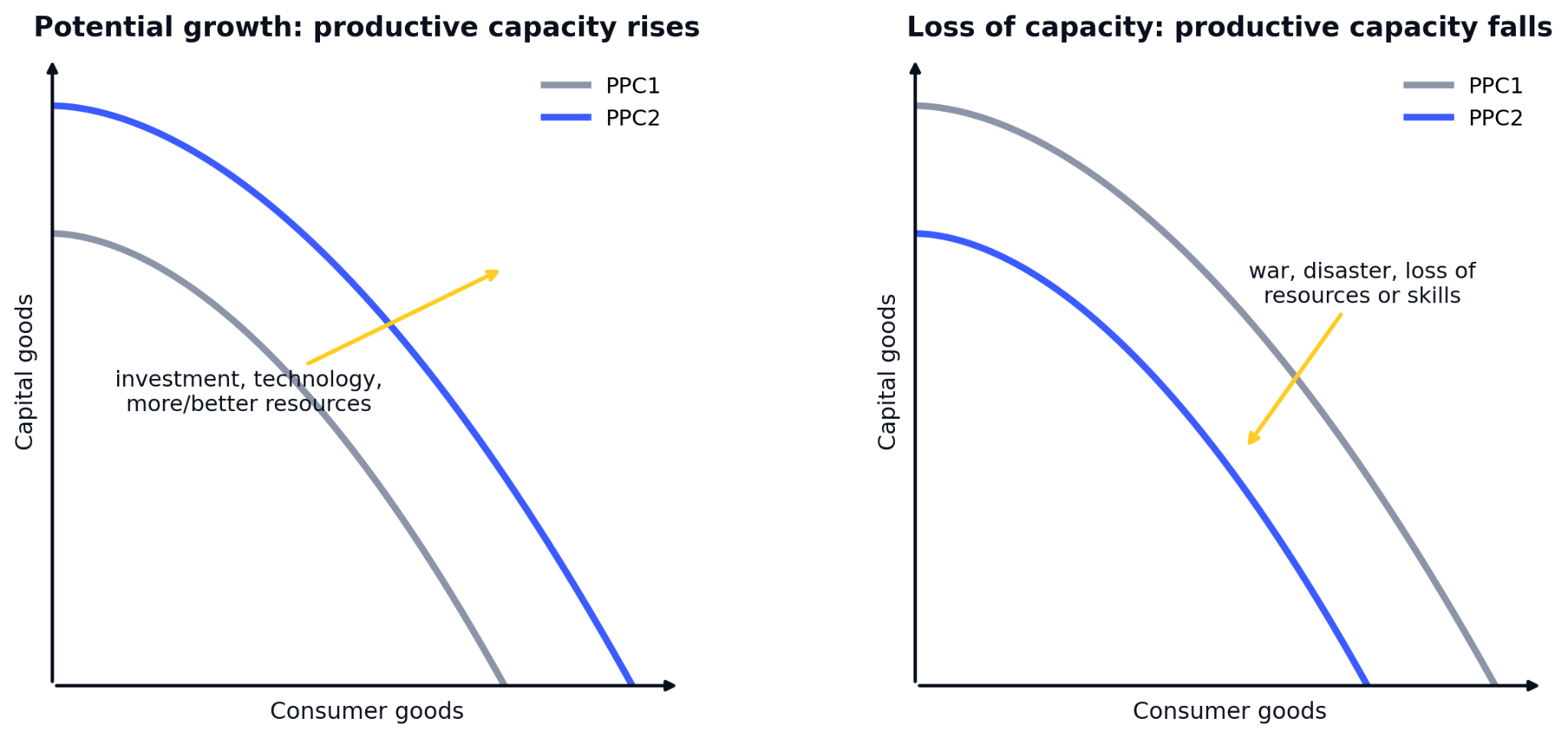
Figure 4.3: Potential growth shifts the PPC outward; a genuine loss of resources or resource quality shifts it inward.
Policies to promote growth
| Policy | How it may promote growth | Effectiveness depends on... |
|---|---|---|
| Expansionary fiscal policy | Higher spending or lower tax increases total demand and can use spare capacity. | Size of multiplier effects, confidence, spare capacity and budget position. |
| Expansionary monetary policy | Lower rates or easier credit can increase consumption and investment. | Willingness to borrow, bank lending and the cause of weak demand. |
| Supply-side policy | Training, infrastructure, competition and investment incentives raise resource quality, quantity or productivity. | Time lags, cost, policy design and whether firms use the opportunity. |
Best policy judgement: Demand-side policy is most useful when spare capacity and weak total demand cause slow growth. Supply-side policy is stronger for long-run capacity, but normally takes longer.