Waves transfer energy without transferring matter.
Wave – A repeating disturbance or movement that transfers energy through matter or space.
Features of a wave: wavefront, wavelength, frequency, crest, trough, amplitude, wave speed.
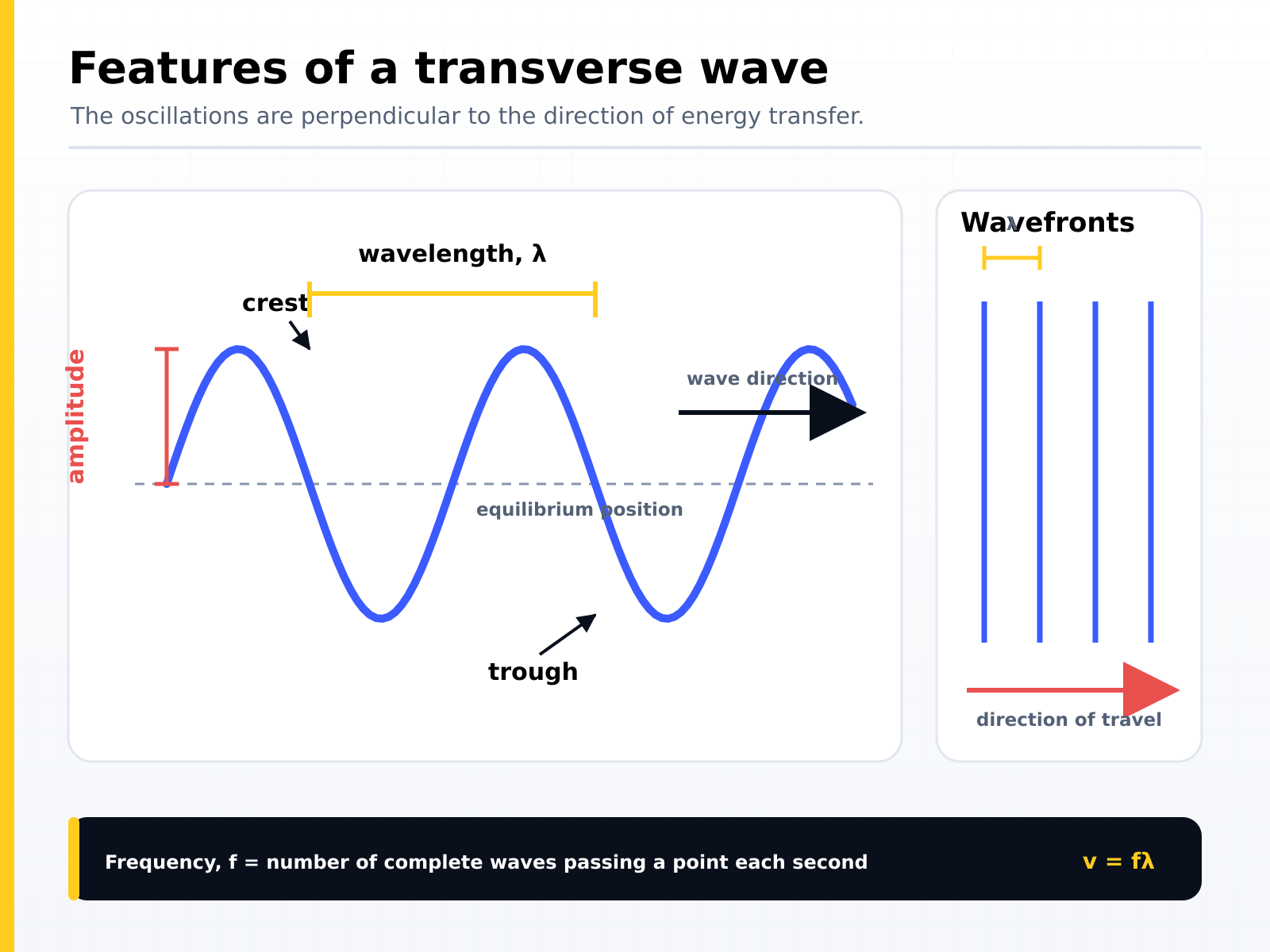
v = f λ
Speed = frequency x wavelength
Transverse and longitudinal waves
| Transverse waves | Longitudinal waves | |
|---|---|---|
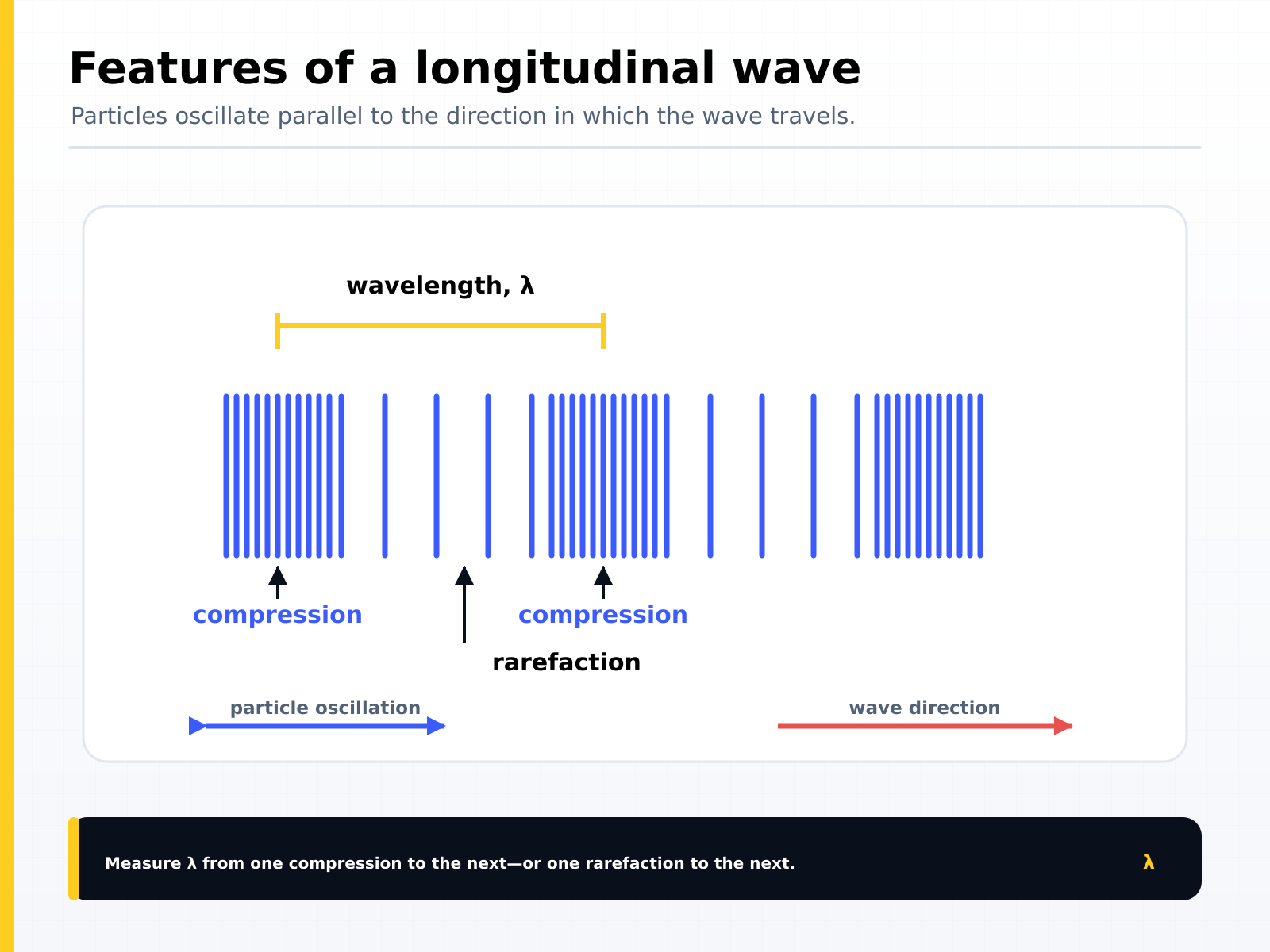
| Direction of vibration | Direction of vibration is at right angles to the direction of propagation. | Direction of vibration is parallel to the direction of propagation |
| Features | Transverse waves consists of crest (high point) and trough (low point) | Consist of regions of compression (area where particles are densely packed) and rarefaction (area where particles are lightly packed) |
| Examples | E.g. electromagnetic radiation, water waves and seismic S-waves. | E.g. sound waves, seismic P-waves |
Reflection, refraction and diffraction
Waves can undergo:
- Reflection
- Refraction
- Diffraction
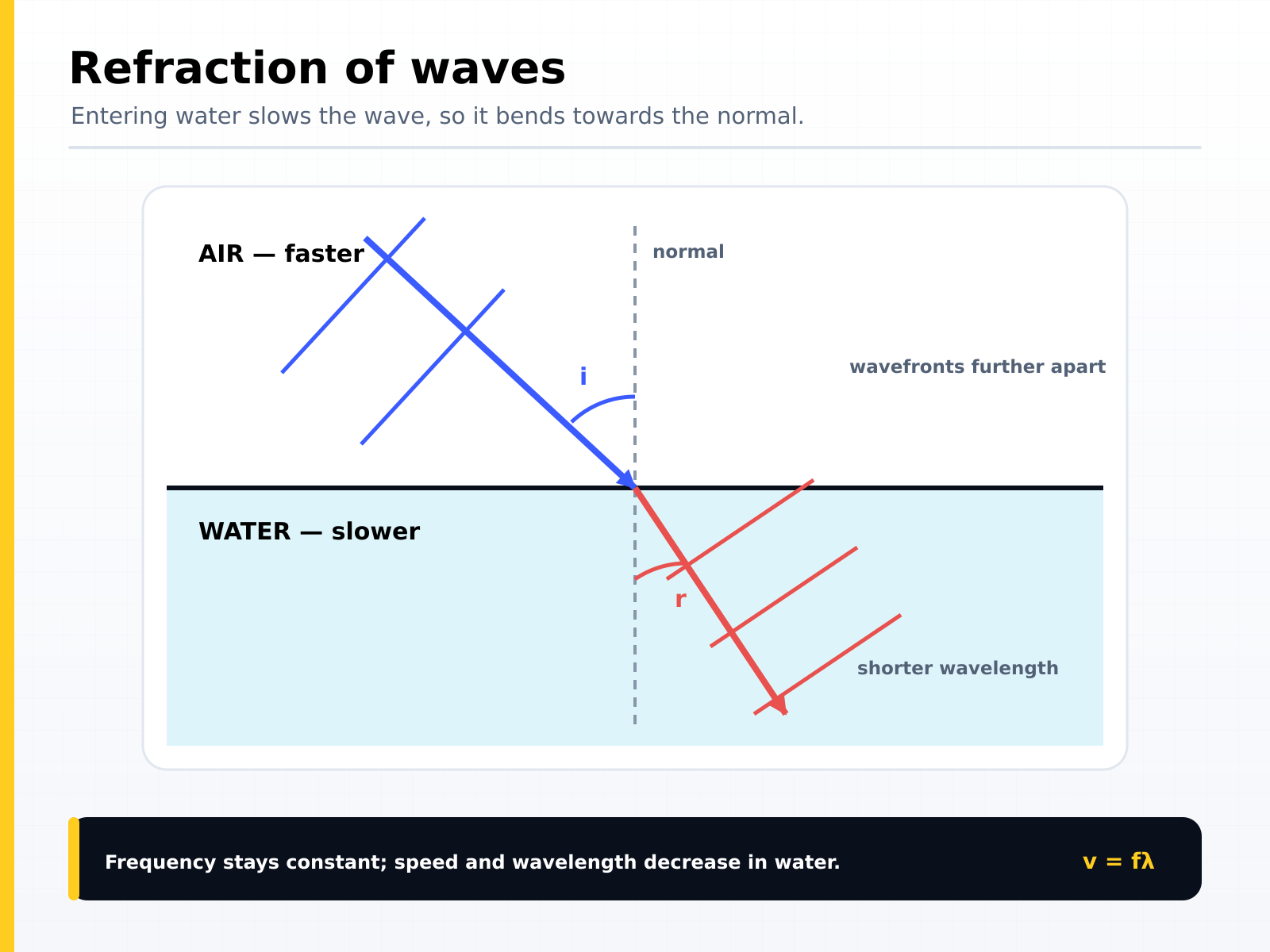
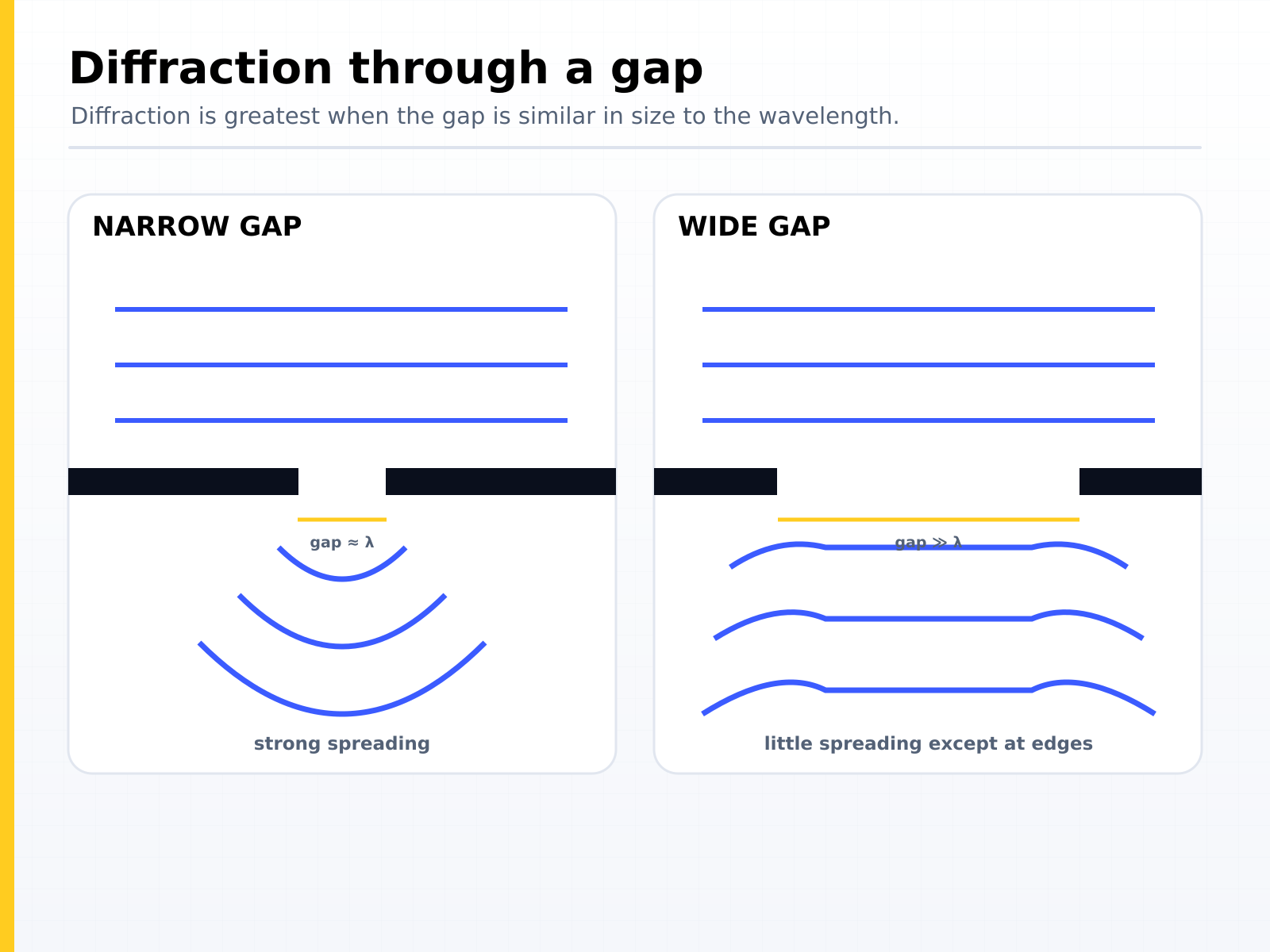
A ripple tank can be used to see reflection, refraction & diffraction.
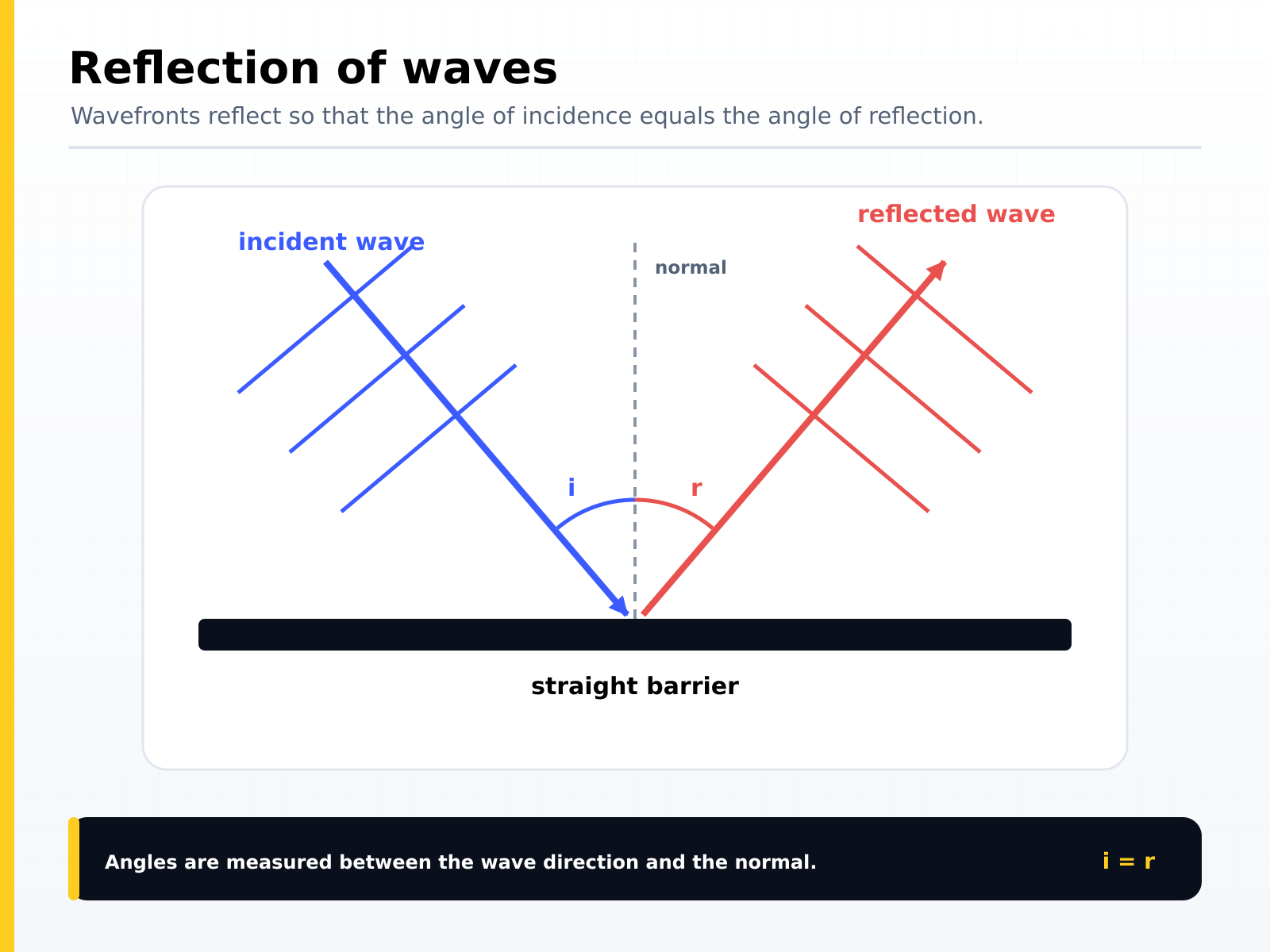
- Reflection - a wave encounters an obstacle and is reflected back
- Refraction of Waves - As the waves cross the boundary between two different mediums they change speed. Light travels more slowly in water than in air. The frequency of the waves remains unchanged. Waves change their wavelength when their speed changes.
- Diffraction of Waves - Waves are diffracted when they pass through a gap or around the edge of an obstacle. The effect is greatest (diffracted the most) when the width of the gap is equal or smaller than the wavelength of the ripples.
Definitions
- Wavelength - 入 of a wave is distance from one crest of the wave to the next. (measured in metres.)
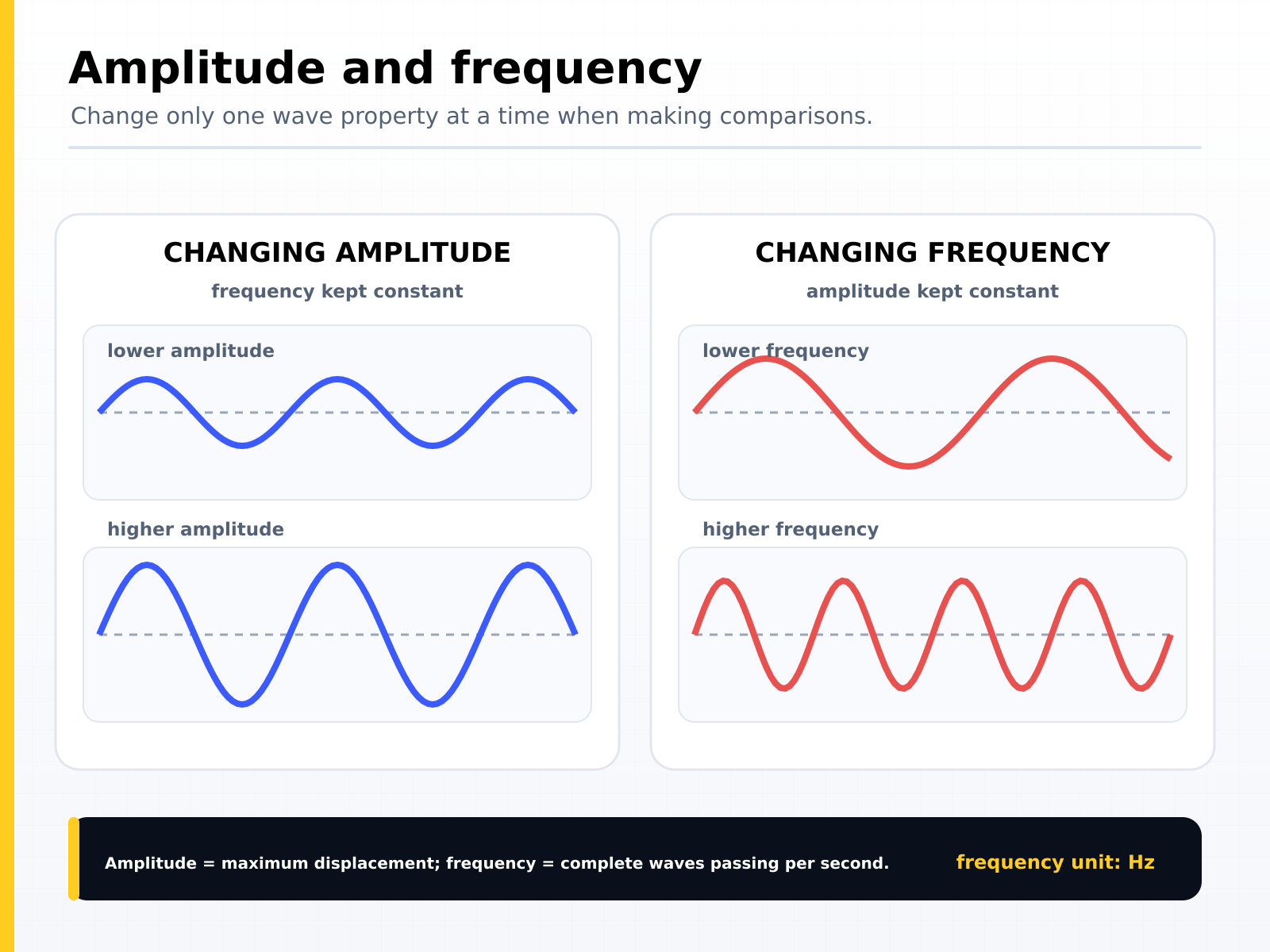
- Amplitude - Maximum displacement of a point on a wave away from its undisturbed position.
- Frequency - Number of waves per second passing a point. (measured in Hertz, Hz)
- Period - Time taken for one complete wave to pass a point. (measured in seconds)