Reflection of light
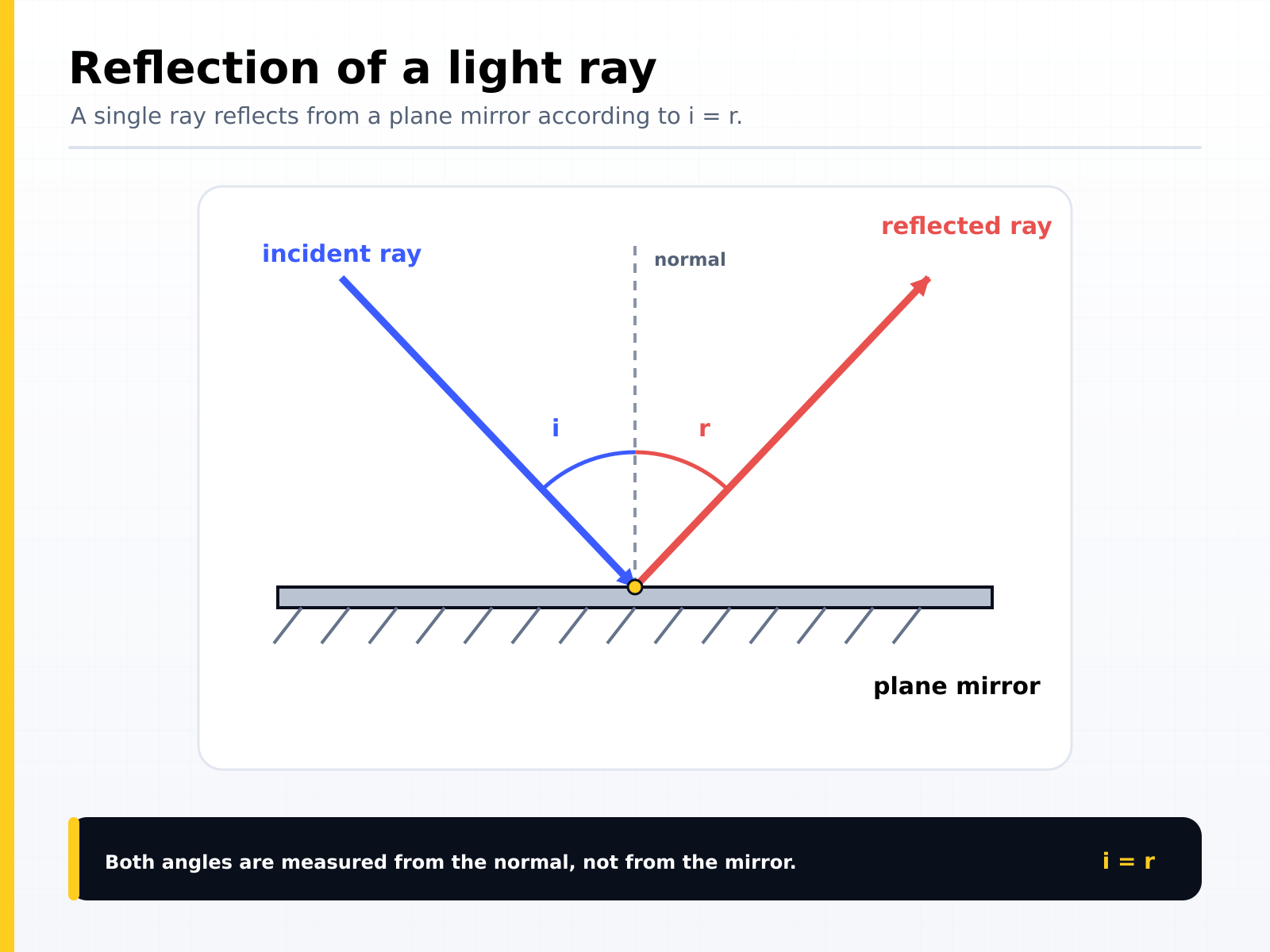
- Normal ray — The line perpendicular from the reflecting surface at the point of incidence.
- Angle of incidence — The angle between the incident ray and the normal.
- Angle of reflection — The angle between the reflected ray and the normal.
Angle of incidence = angle of reflection.
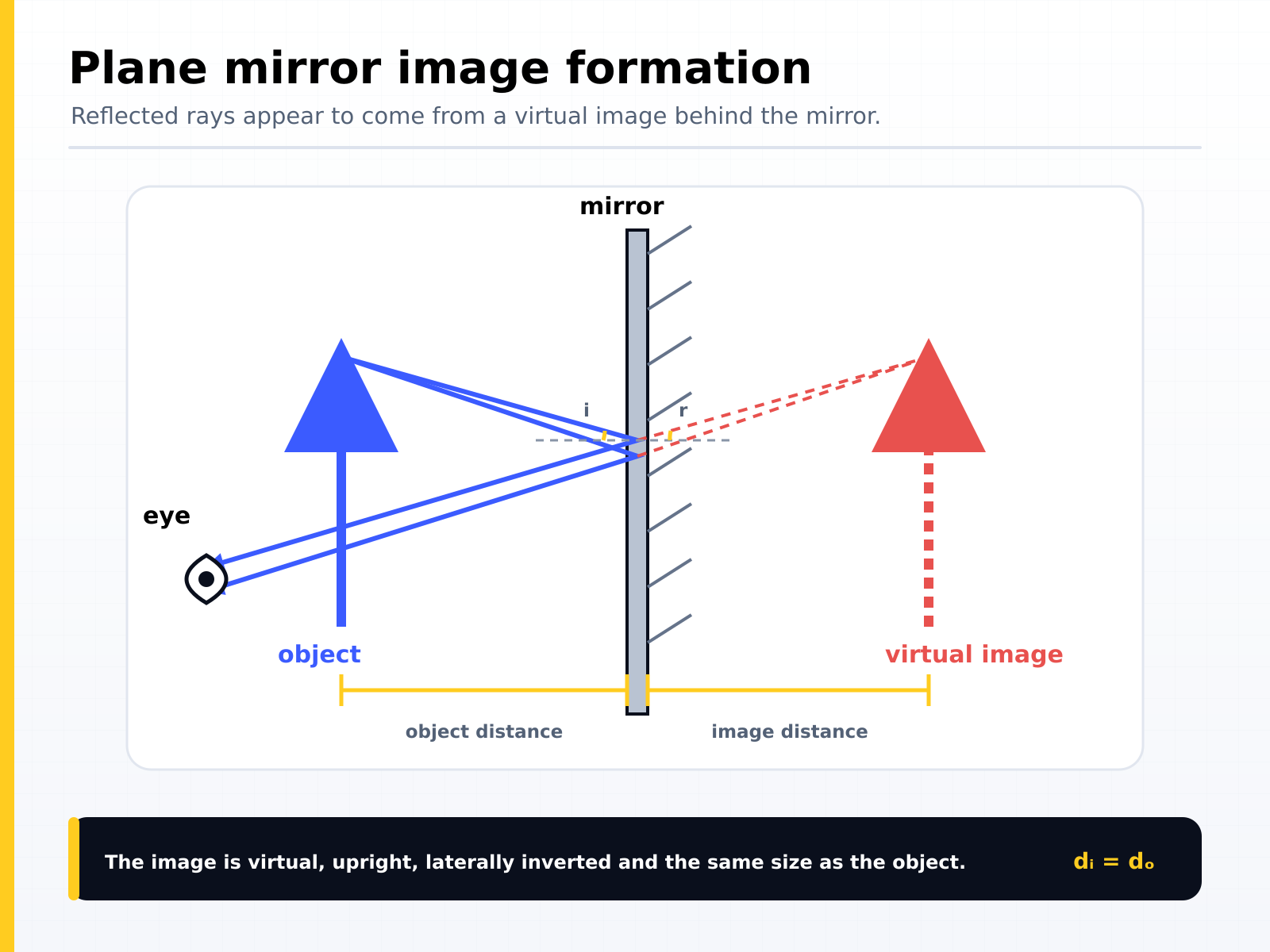
Characteristics of an optical image: same size, same distance from mirror, virtual.
Refraction of light
When light slows down, the ray bends to the normal. When light moves faster, the ray bends away from the normal.
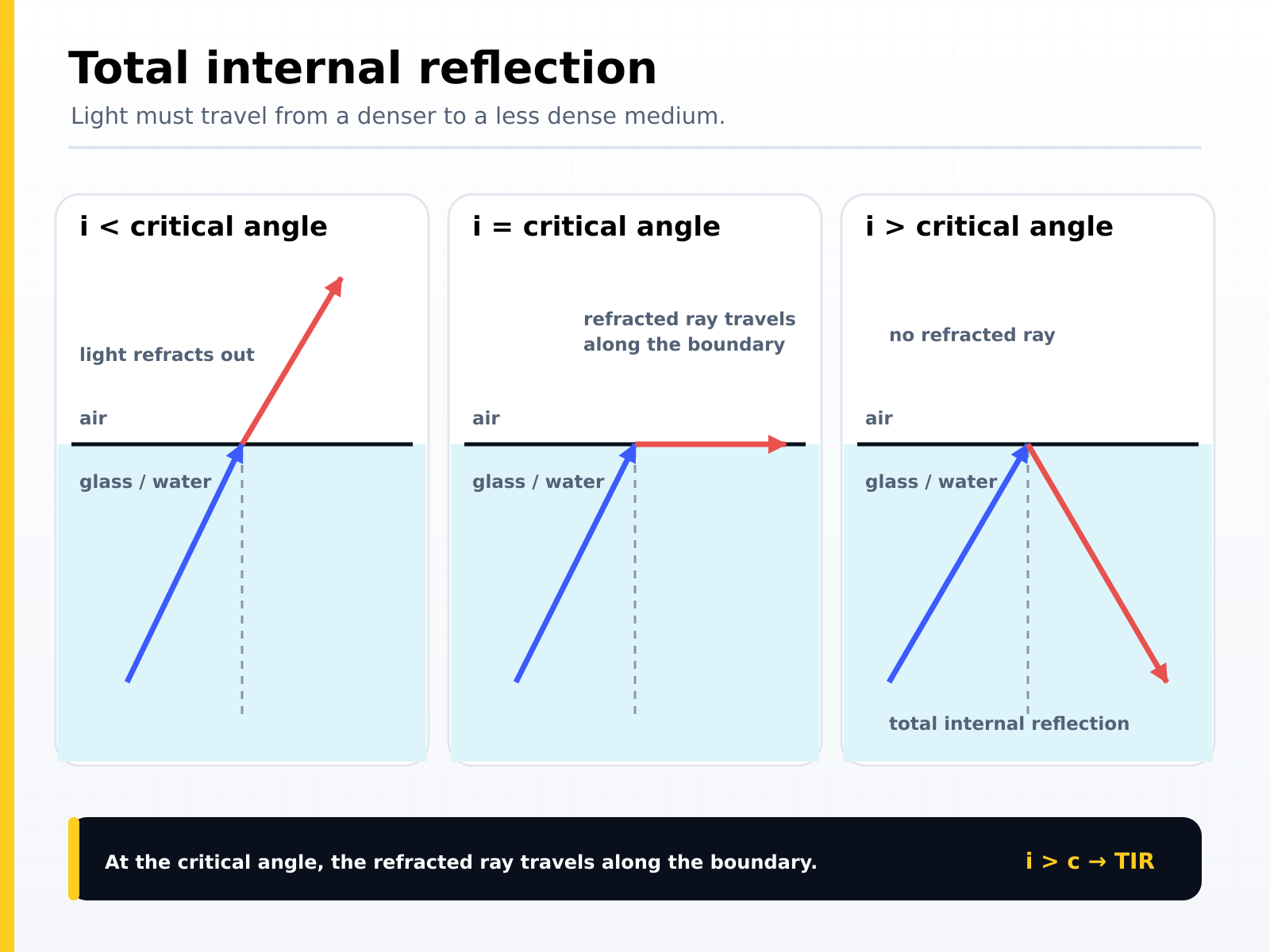
- Critical angle — The angle of incidence where the angle of refraction is 90 degrees. This varies from medium to medium
- Total internal reflection — The complete reflection of a ray of light from the surrounding surfaces of optically less dense medium back into the denser medium.
Two conditions for TIR to take place:
- Light rays must travel from an optically denser medium to a less dense medium.
- The angle of incidence in optically denser medium > critical angle.
Applications of TIR:
- Prism
- Endoscope
- Optical fibres (flexible, carries more data, has high transmission quality)
- Refractive index (n) — The ratio of the speeds of a wave in two different regions.
Thin lenses
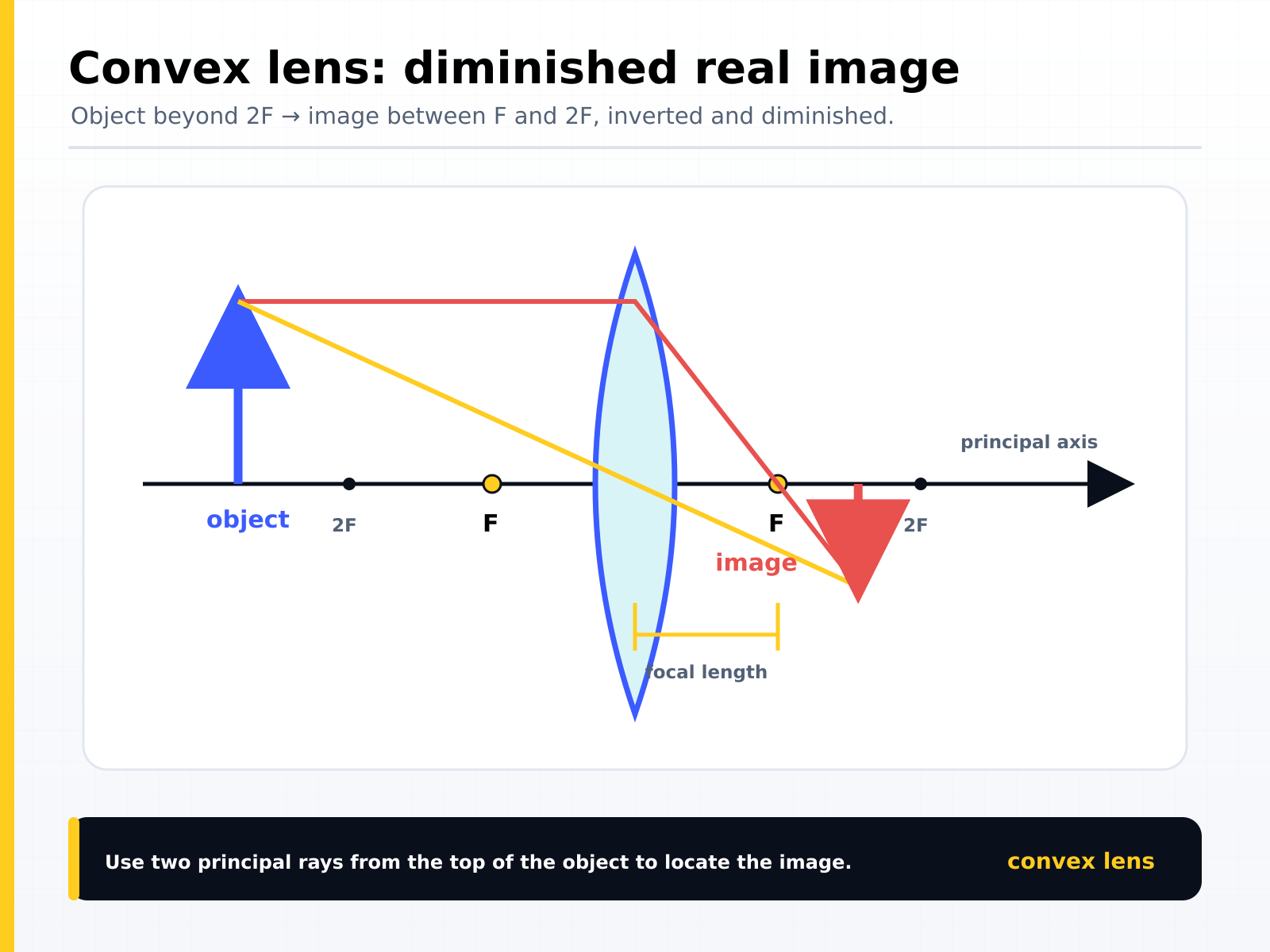
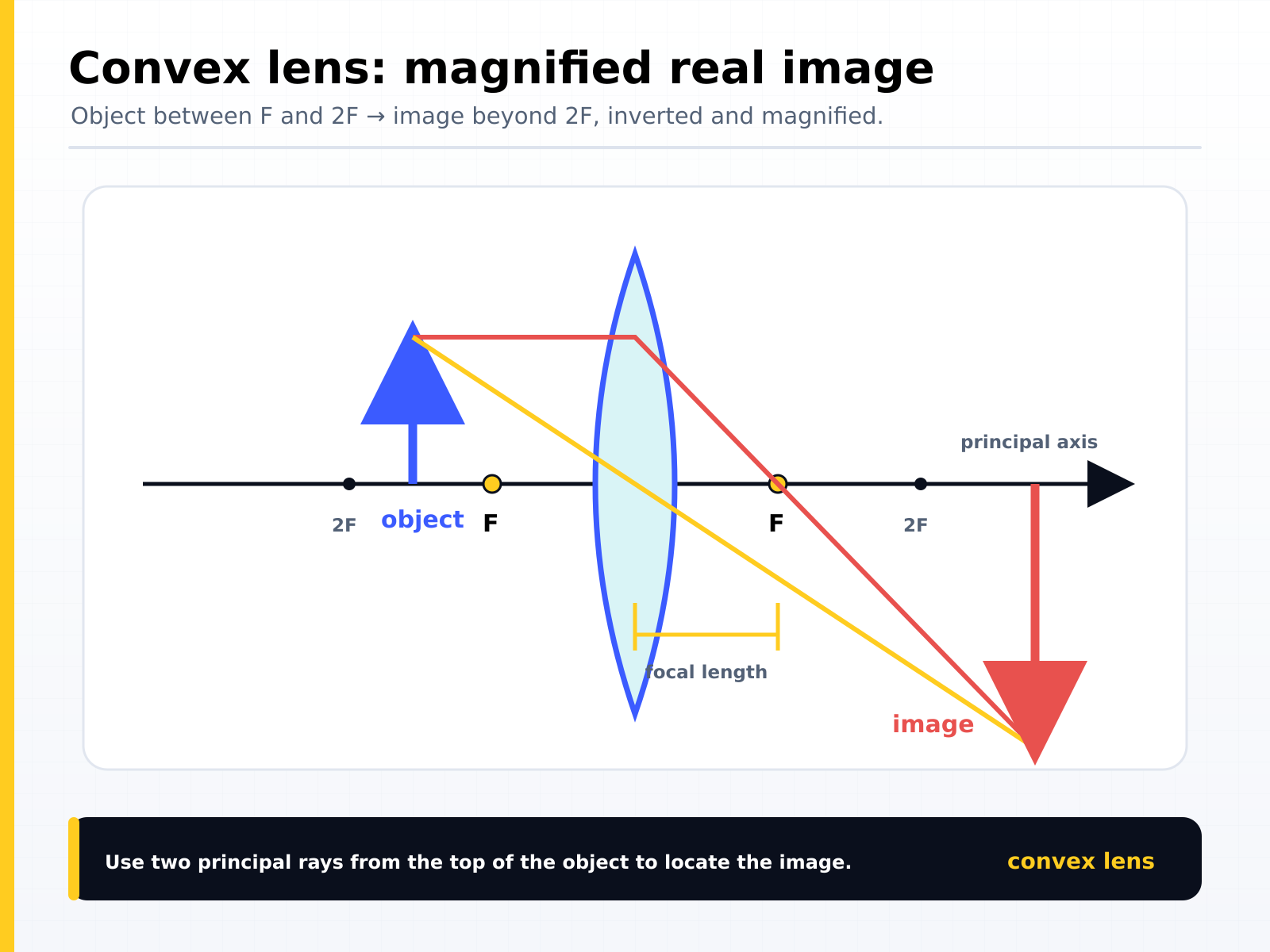
- Focal length — Distance from the middle of the lens to F.
- Principal axis — The straight line passing the middle of the lens.
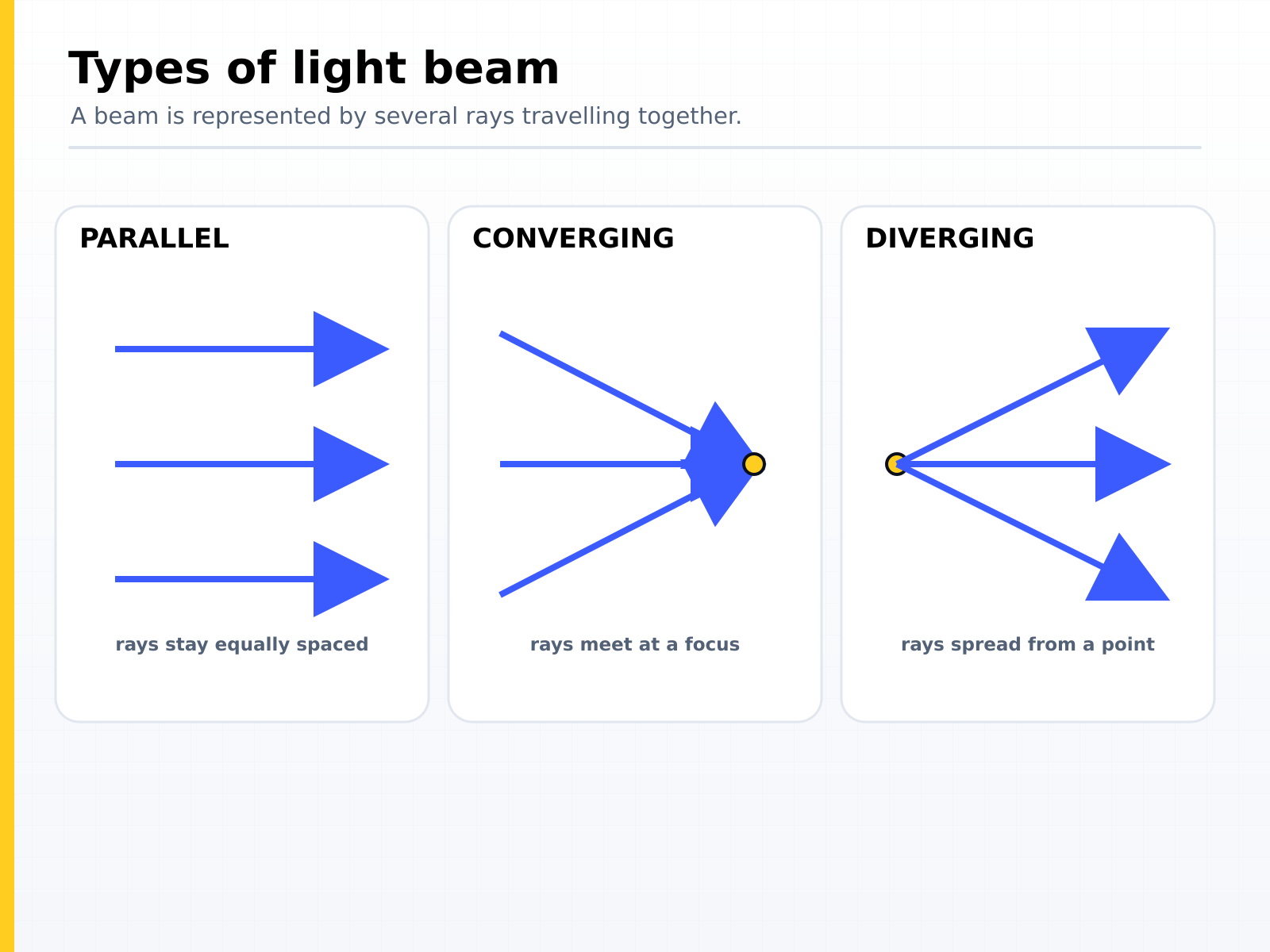
- Principal focus (focal point) — The point where parallel light rays converge/diverge.
An image can be described as:
- Inverted or Upright
- Diminished or Enlarged/Magnified
- Real or Virtual
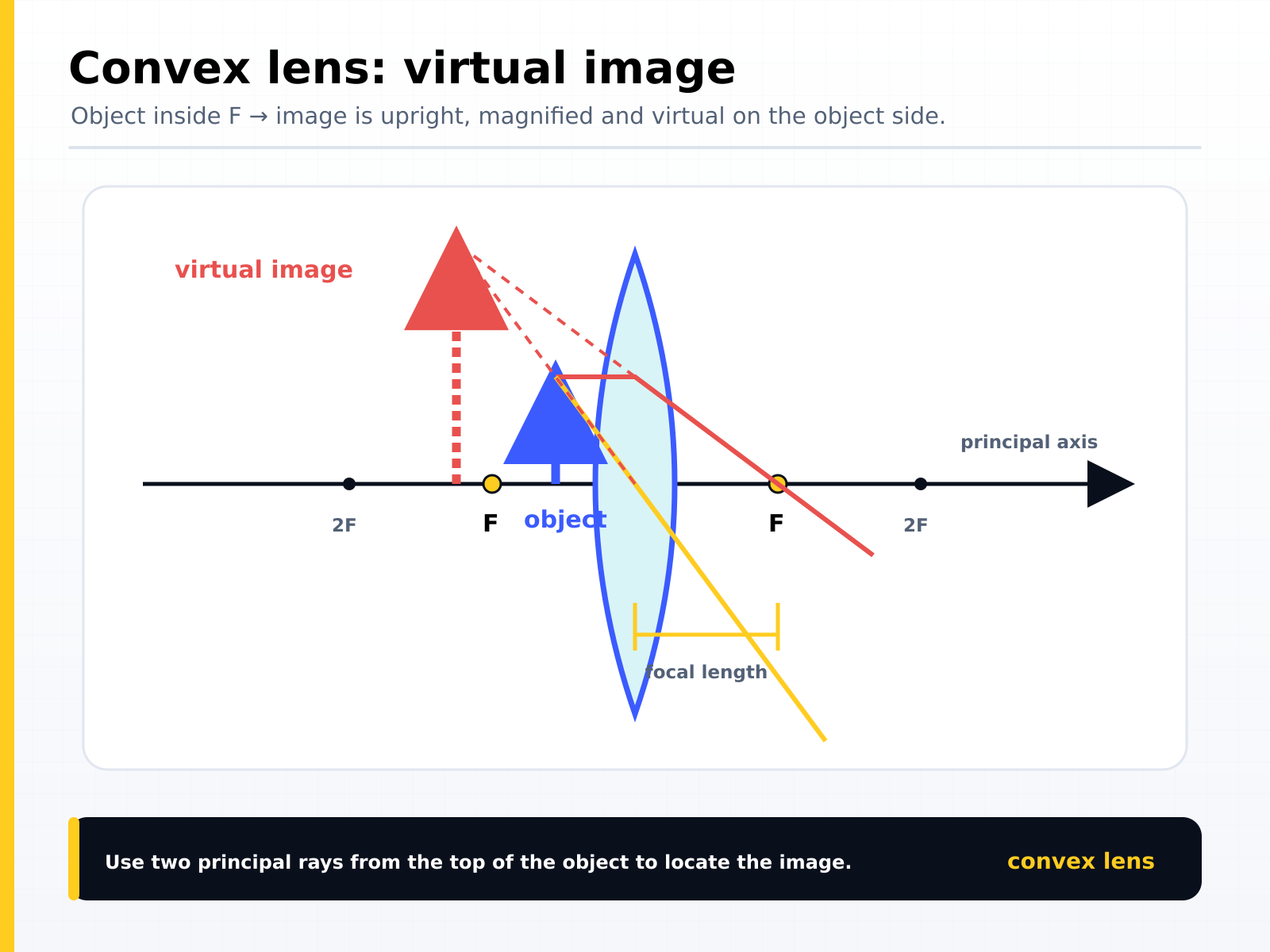
A virtual image is formed when diverging rays are extrapolated backwards and does not form a visible projection on a screen.
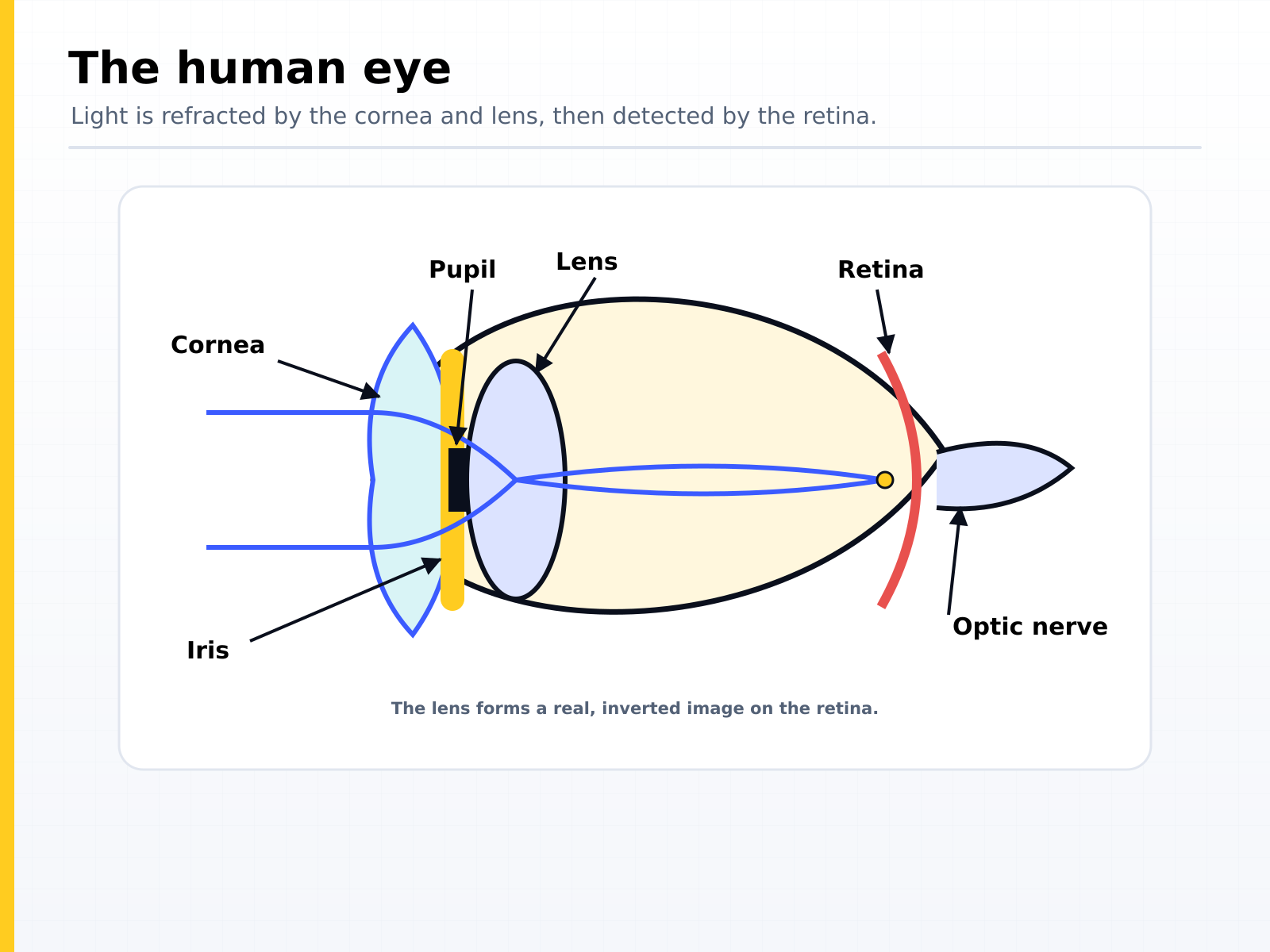
To correct long-sightedness, use converging lenses. To correct short-sightedness, use diverging lenses.
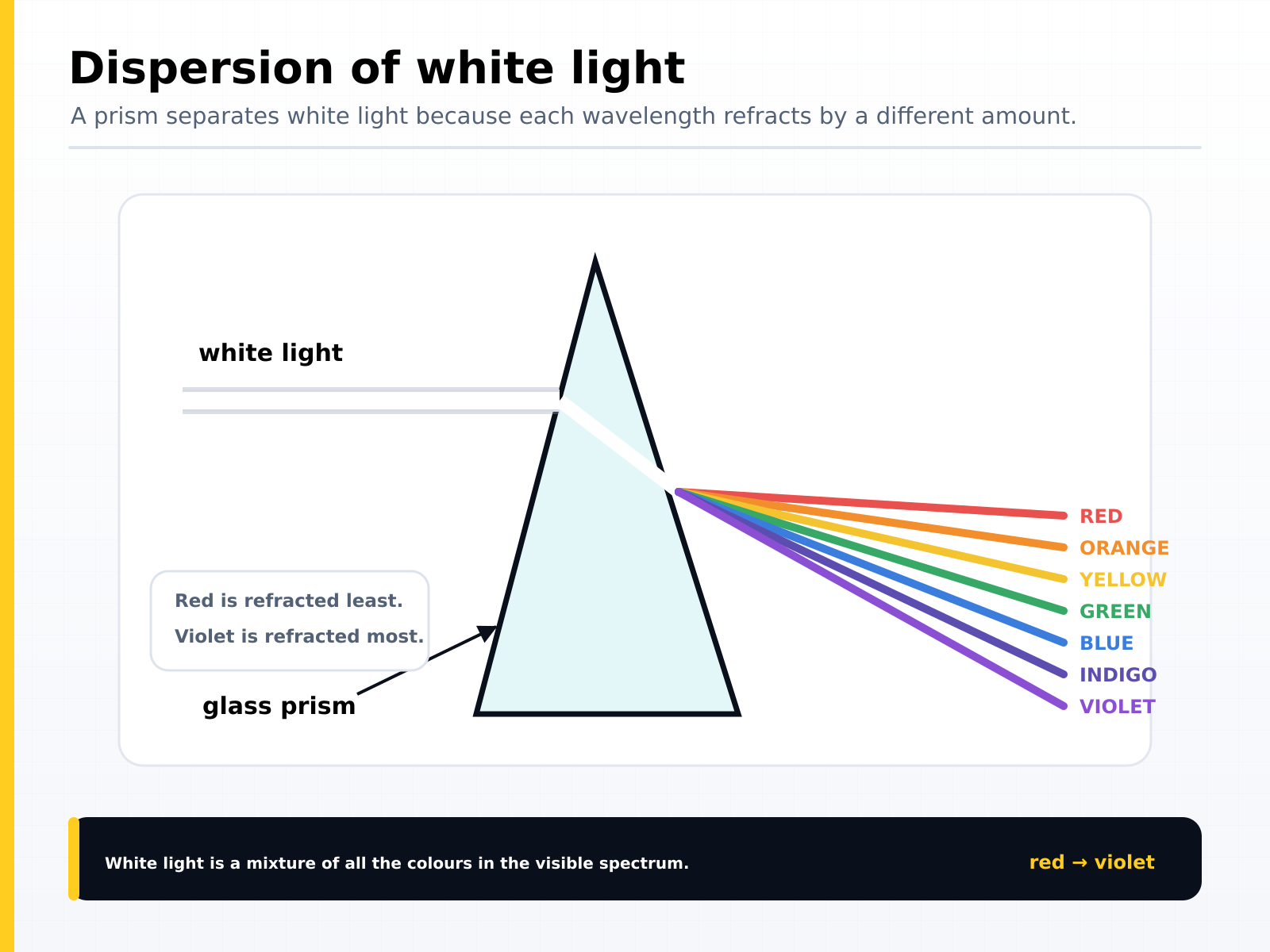
Dispersion of light
- Dispersion — process of white light splitting into a spectrum.
Dispersion of Light: When white light is passed through a glass prism it splits into its spectrum (Band of coloured components of light) of colours (in order red, orange, yellow, green, blue, indigo, violet)
- White light is made up of many different wavelengths, each wavelength corresponding to a different colour.
- Each beam of light is slowed differently by the glass.
- Violet light -> shorter wavelength -> slowed more.
- When light travels from one medium to another, the speed of its propagation changes -> it ‘bends’ or is ‘refracted’.
Visible light of a single frequency is described as monochromatic.