Nutrients
Balanced diet - A diet that contains all essential nutrients in the correct amounts for growth, repair and as an energy source.
Carbohydrates
- Provides energy from respiration.
- Helps blood circulation.
- Prevents starvation.
Protein
- Building muscle mass, growth.
- Prevents weakness and fatigue.
- Function body.
- Regulation of the body's tissues and organs.
Fat
- Gives energy.
- Reduce heat loss from the body (insulates).
- Provides mechanical protection for organs.
- Controls blood pressure.
Vitamin
- Helps with the immune system.
- Maintains our health.
- Fighting illnesses.
- Vitamin D - regulates the calcium and phosphate in the body, and prevents bone deformities.
- Vitamin C - antioxidant, protects cells from free radicals from digestion.
Mineral
- Strengthen our bones.
- Boost immune system.
- Acts as electrolytes.
- Control our blood pressure
Water
- Maintains body temperature.
- Keeps tissue hydrated.
- Gets rid of waste through urination.
- Helps transport nutrients and oxygen into the cell.
- Protects and moisturises our joints & organs.
- Moisture in the lungs helps with metabolism.
Fibre (not a nutrient, as it's not absorbed into the body)
- Soluble Fibre regulates the body's sugar and cholesterol levels.
- Insoluble Fibre helps food travel through the digestive system more easily.
Scurvy is caused by vitamin C deficiency. This leads to anaemia, exhaustion, limb pain, inflammation, ulceration.
Rickets is caused by vitamin D deficiency. This softens bones, leading to delayed growth, muscle weakness.
Digestive System
Digestive system: A group of organs working together to break down food eaten to provide nutrients that can be absorbed into the blood and delivered to the cells.
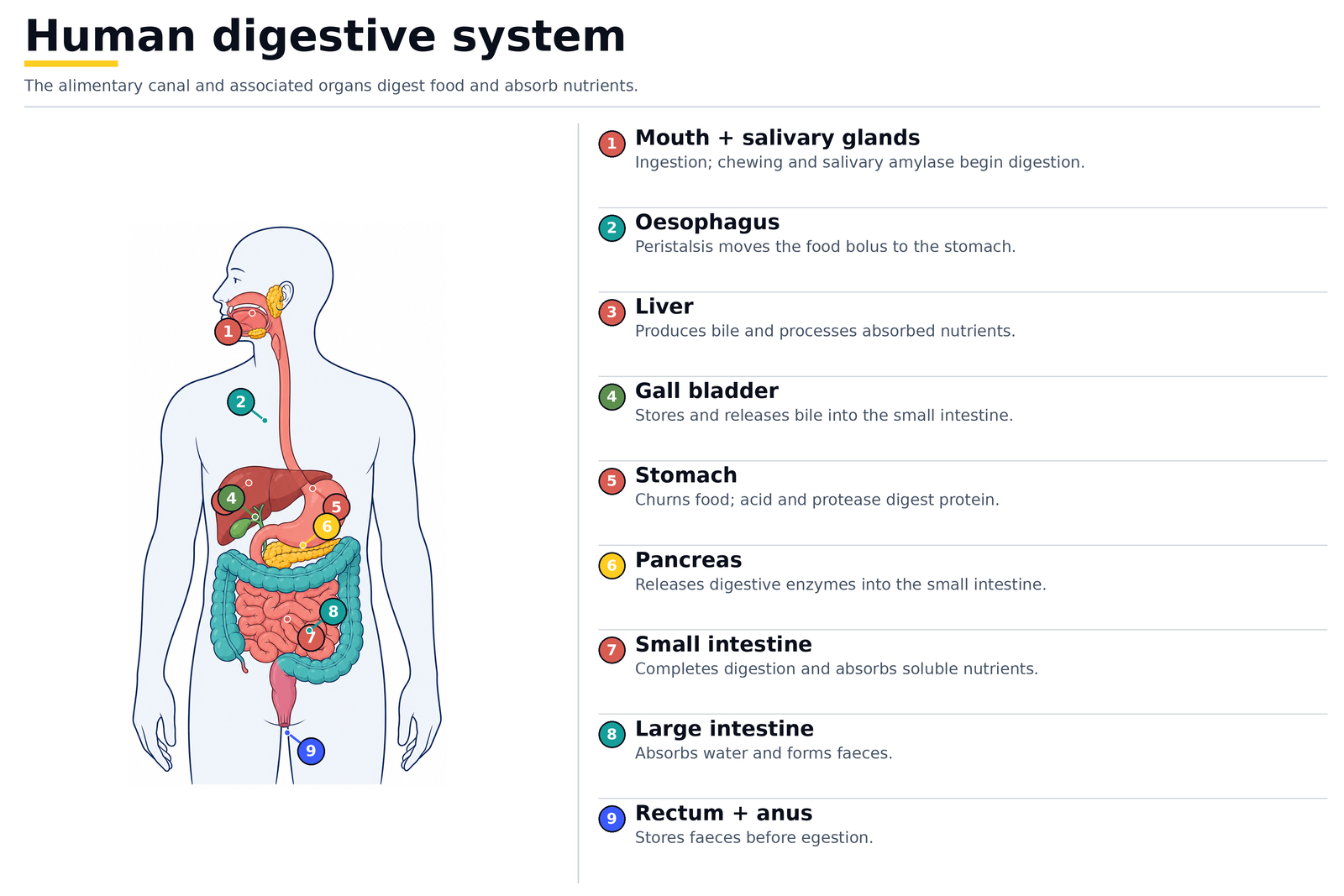
The alimentary canal: Runs from the mouth to the anus, includes the liver and pancreas. They break down food to provide nutrients, where they are absorbed.
Features of alimentary canal:
- Sphincter muscles
- Lubricated with mucus
- Mouth — Ingestion. Mechanical digestion with teeth. Chemical digestion with amylase.
- Oesophagus — Peristalsis occurs. Bolus is pushed down towards the stomach.
- Stomach — Mechanical digestion of churning. Contains goblet cells and HCl. Chemical digestion with pepsin.
- Small intestine — Pancreatic juice flows in for chemical digestion. Bile flows in for mechanical digestion. Absorption occurs. Consists of duodenum and ileum
- Pancreas — Forms pancreatic juice (which contains amylase, lipase and trypsin).
- Liver — Assimilation. Produces bile.
- Gallbladder — Stores bile.
- Large intestine — Reabsorption of water. Egestion via the anus. Consists of the colon, rectum and anus
- Peristalsis — a process where the walls of the alimentary canal contract/relax to move food.
- Ingestion – the taking of substances, e.g. food and drink, into the body.
- Digestion – the breakdown of food.
- Absorption – the movement of nutrients from the intestines into the blood.
- Assimilation – uptake and use of nutrients by cells.
- Egestion – the removal of undigested food from the body as faeces.
Physical Digestion
Physical digestion – The breakdown of food into smaller pieces without chemical change to the food molecules. It increases the surface area of food for the action of enzymes in chemical digestion.
Bile emulsifies fats and oils to increase the surface area for chemical digestion
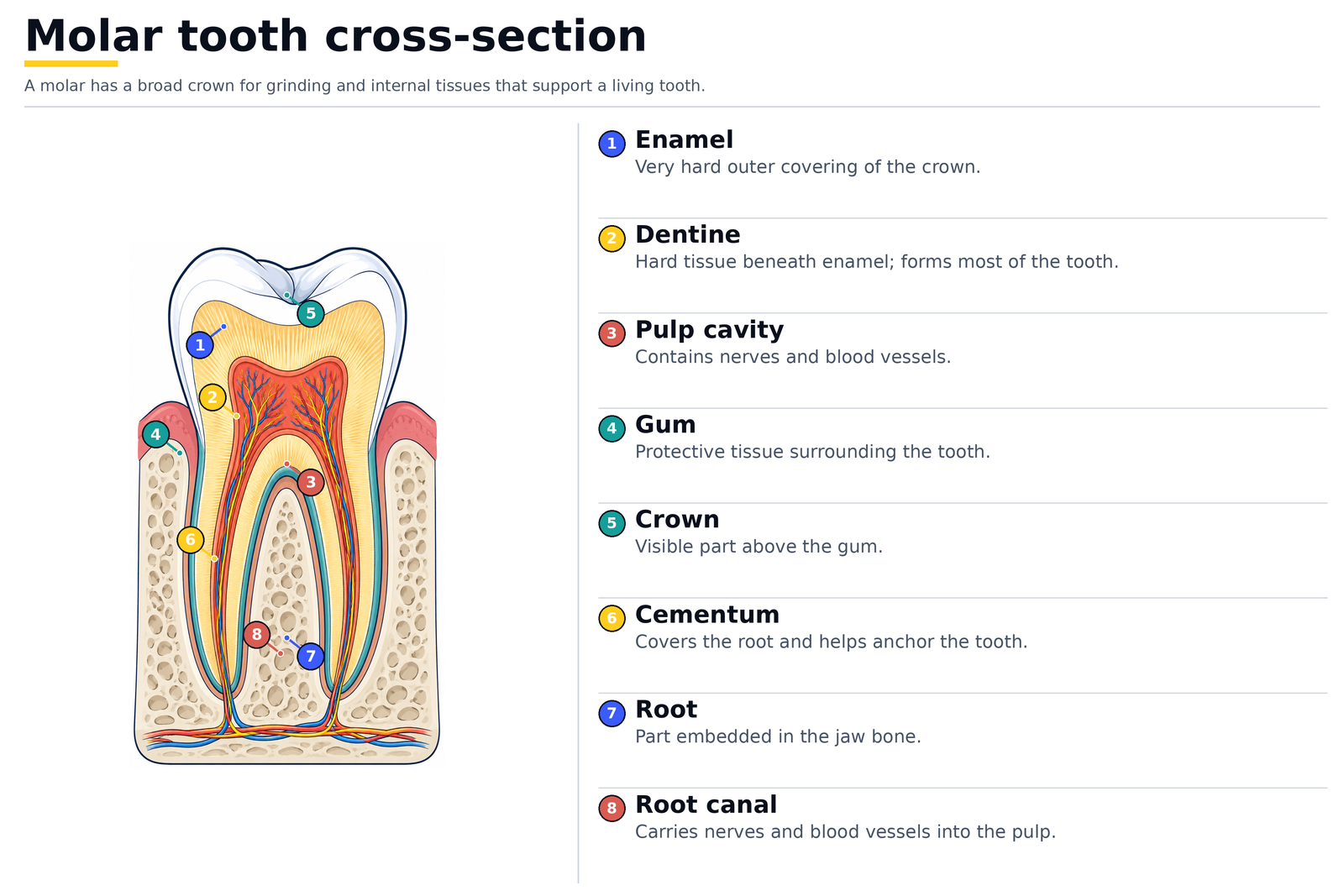
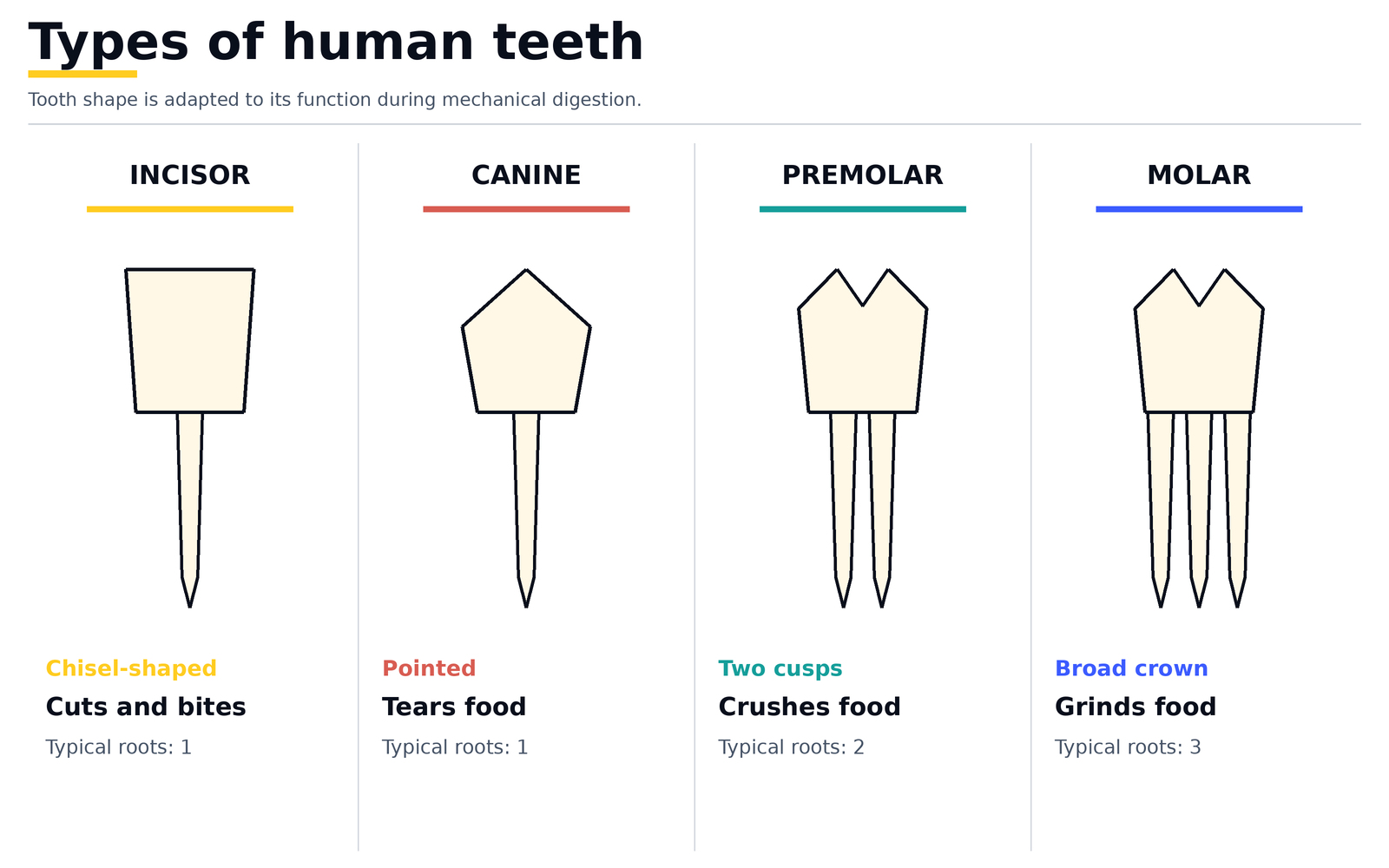
- Incisors — provides cutting action of food.
- Canines — tears and grips food.
- Premolars — grinds food.
- Molars — grinds food.
Chemical digestion
Chemical digestion – The breakdown of large insoluble molecules into small soluble molecules, so that it can be absorbed.
Amylase breaks down starch to maltose. Amylase is formed in salivary glands & pancreas and found in the mouth and duodenum. Its optimum temperature is pH 7.
Maltase breaks down maltose to glucose. Maltase is secreted by the cells lining the small intestine and found in the membranes of the epithelium lining the small intestine. Its optimum temperature is pH 6.5.
Proteases (pepsin & trypsin) break down protein to amino acids. Pepsin is formed & found in the stomach. Its optimum temperature is pH 2. Trypsin is produced in the pancreas and works in the small intestine. Its optimum temperature is pH 9.
Lipase breaks down fats and oils to fatty acids and glycerol. Lipase is secreted from pancreas and found in the small intestine. Its optimum temperature is pH 8.
Hydrochloric acid in gastric juice is used to kill harmful microorganisms in food and provides an acidic pH for optimum enzyme activity.
Bile is an alkaline mixture that neutralises the acidic mixture of food and gastric juices entering the duodenum from the stomach, to provide a suitable pH for enzyme action. It is also important in the emulsification of lipids, which increases its surface area for efficient digestion via lipase.
Absorption
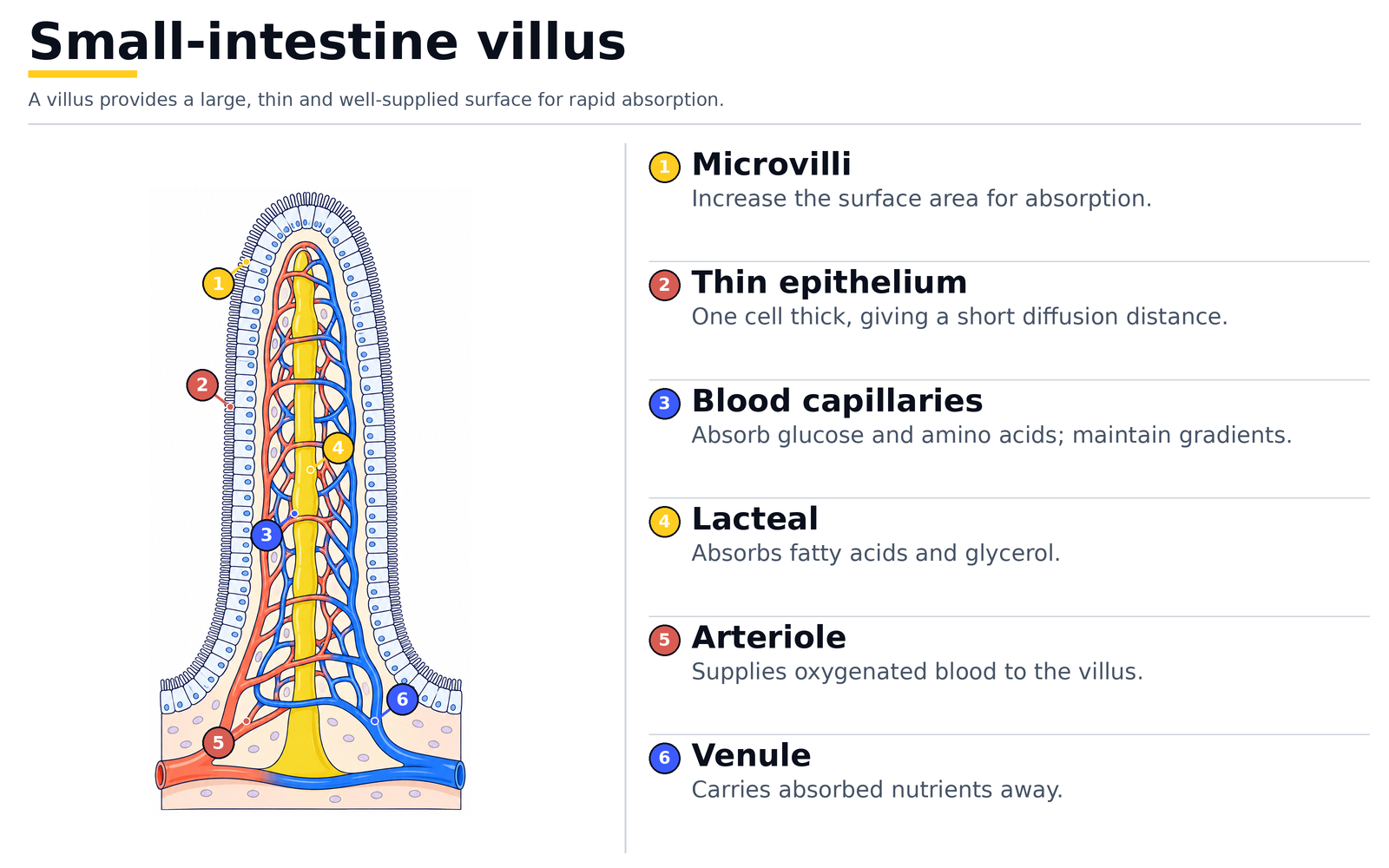
The small intestine is the region where nutrients are absorbed. Most water is absorbed from the small intestine but some is also absorbed from the colon.