Cell structure
Plant cell / Animal cell
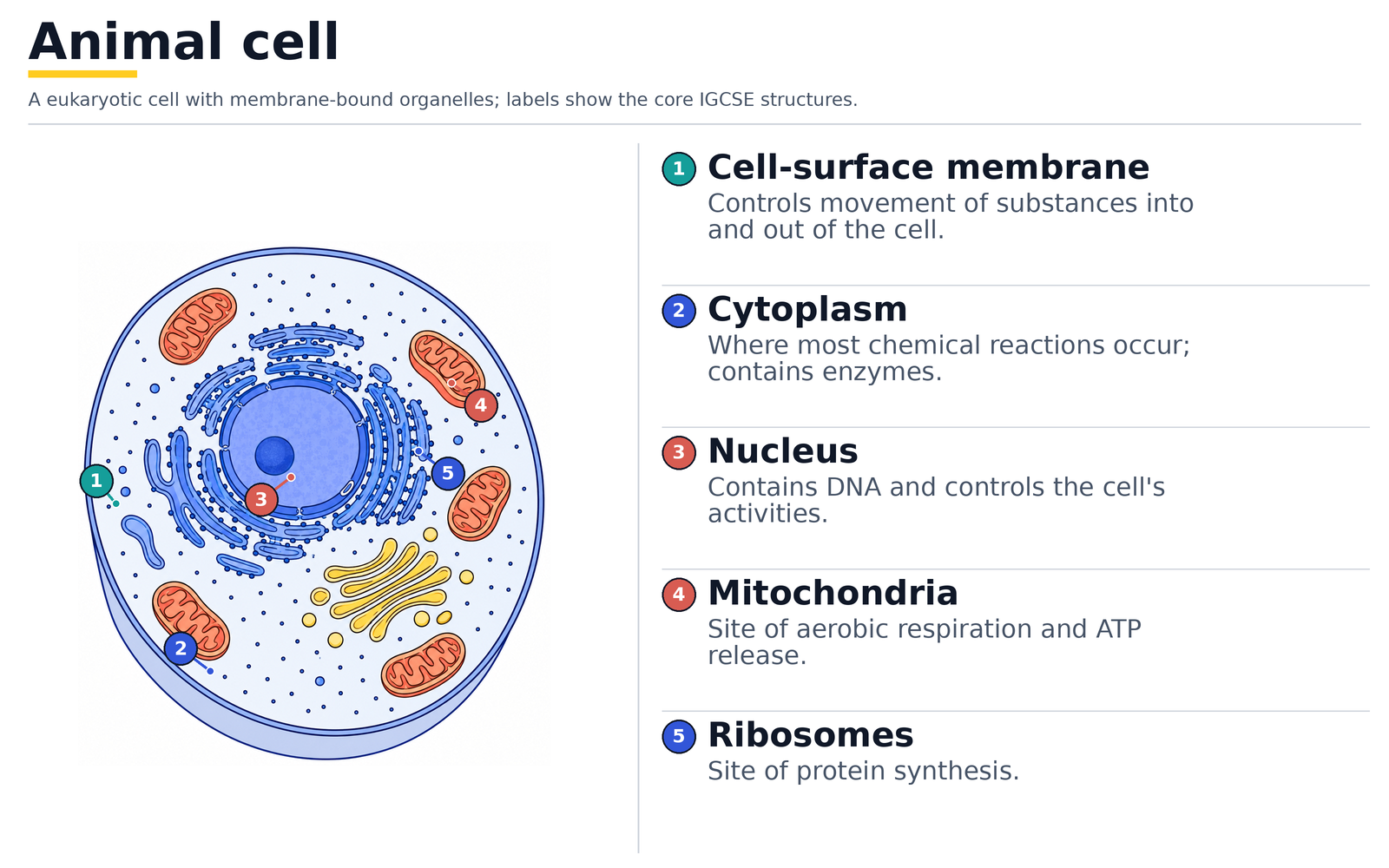
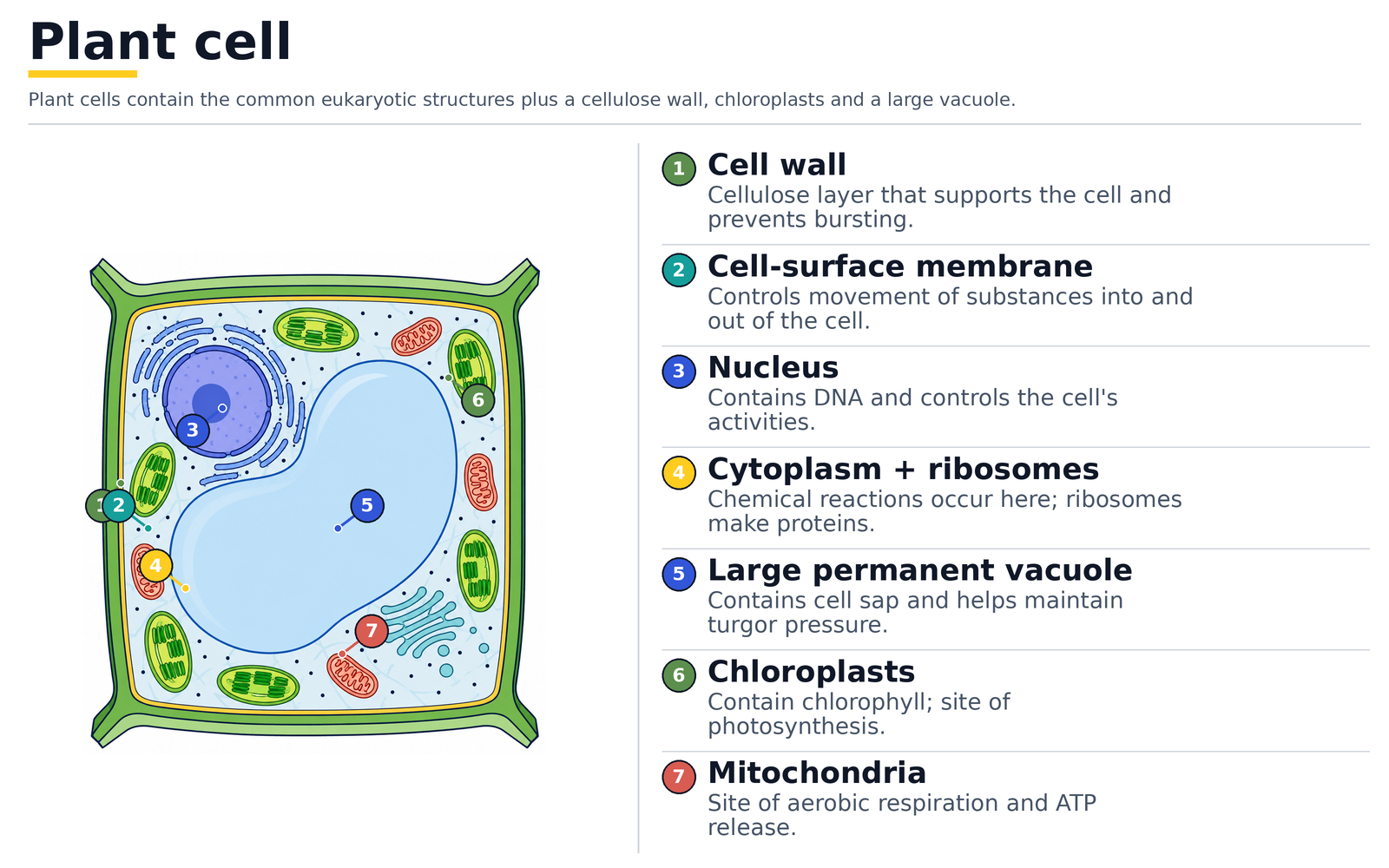
| Structure | Function |
|---|---|
| Cell membrane | Controls movement of substances, like oxygen, glucose and water, in and out of the cell. |
| Cell wall | Provides structure and protection. |
| Cytoplasm | Where metabolic (chemical) reactions take place. |
| Vacuole | Storage for water, sugars, ions, amino acids and waste. Provides turgor pressure. |
| Nucleus | Controls activities/development of the cell. Stores genetic information. |
| Chloroplasts | Contains chlorophyll for photosynthesis. |
| Mitochondria | The powerhouse where aerobic respiration takes place for energy. |
| Ribosome | Site of protein synthesis. |
Bacterial cell
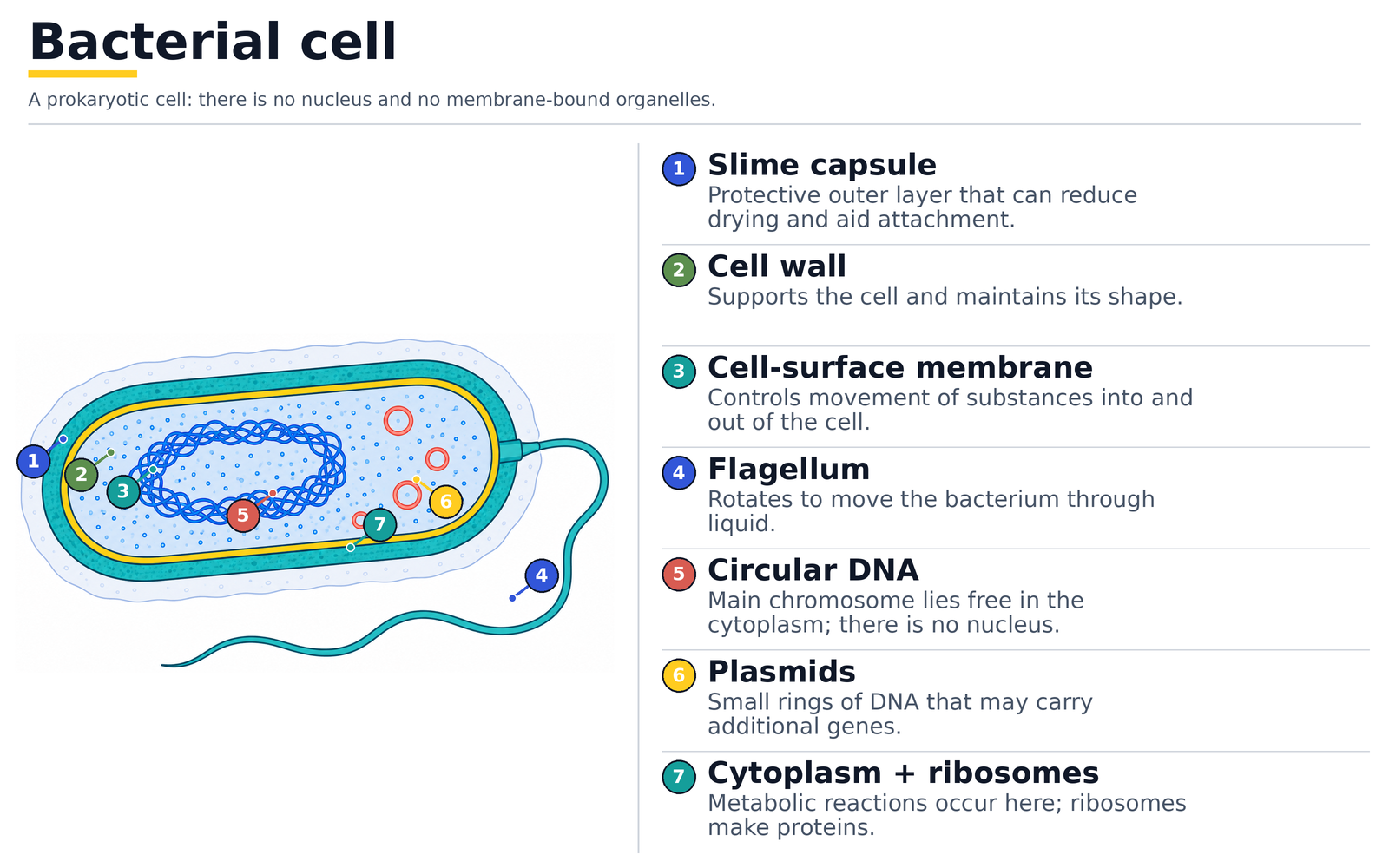
Specialised cells - cells that have structures adapted for their function.
Ciliated cells
- Movement of mucus in the trachea and bronchi.
- Covered in cilia.
Root hair cells
- Found in the roots of plants.
- They absorb water and mineral ions from the soil.
- Large surface area of absorption.
Palisade mesophyll cells
- Found in leaves.
- Used in photosynthesis.
- They are packed close together to maximise light absorption
- They contain chloroplasts to absorb light.
Neurones
- Found in sensory areas.
- Helps with conduction of electrical impulses.
Red blood cells
- Found in blood.
- Transports oxygen around the body.
Sperm and egg cells (gametes)
- Sperm is found in male testicles, eggs are found in the ovaries.
- They fuse together during reproduction.
- Sperm has a tail to swim, mitochondria for energy and an acrosome to release enzymes to digest the cell membrane of the egg.
- Egg cells have a jelly coating to allow only 1 sperm to fertilise the ovum.
Levels of organisation
- Cell — basic building blocks for all living organisms.
- Tissue — group of cells with similar structures, working together to perform a shared function.
- Organ — group of specialised tissues working together to carry out a specific function.
- Organ system — group of specialised organs working together to carry out a specific function.
- Organism — a living thing.
Size of specimen
Magnification = image size ÷ actual size
1mm = 1000μm