Asexual Reproduction
Asexual reproduction – a process resulting in genetically identical offspring from one parent.
| Advantages | Disadvantages |
|---|---|
| Saves more time & energy. | Less genetic variation. |
| Can exploit suitable environments quickly. | Vulnerable to changes in conditions. |
| Population can increase rapidly. | Diseases can affect the whole population. |
Sexual Reproduction
Sexual reproduction - a process involving the fusion of the nuclei of two gametes to form a zygote and offspring that are genetically different from each other.
| Advantages | Disadvantages |
|---|---|
| More genetic variation. | Takes more time & energy. |
| Able to adapt. | Difficult for isolated members to reproduce. |
| Less likely to be affected by diseases. |
- Fertilisation – fusion of nuclei of gametes
Nuclei of gametes are haploid (contain only 1 set of chromosomes)
Nuclei of zygotes are diploid (contains 2 sets of chromosomes)
Sexual reproduction in plants
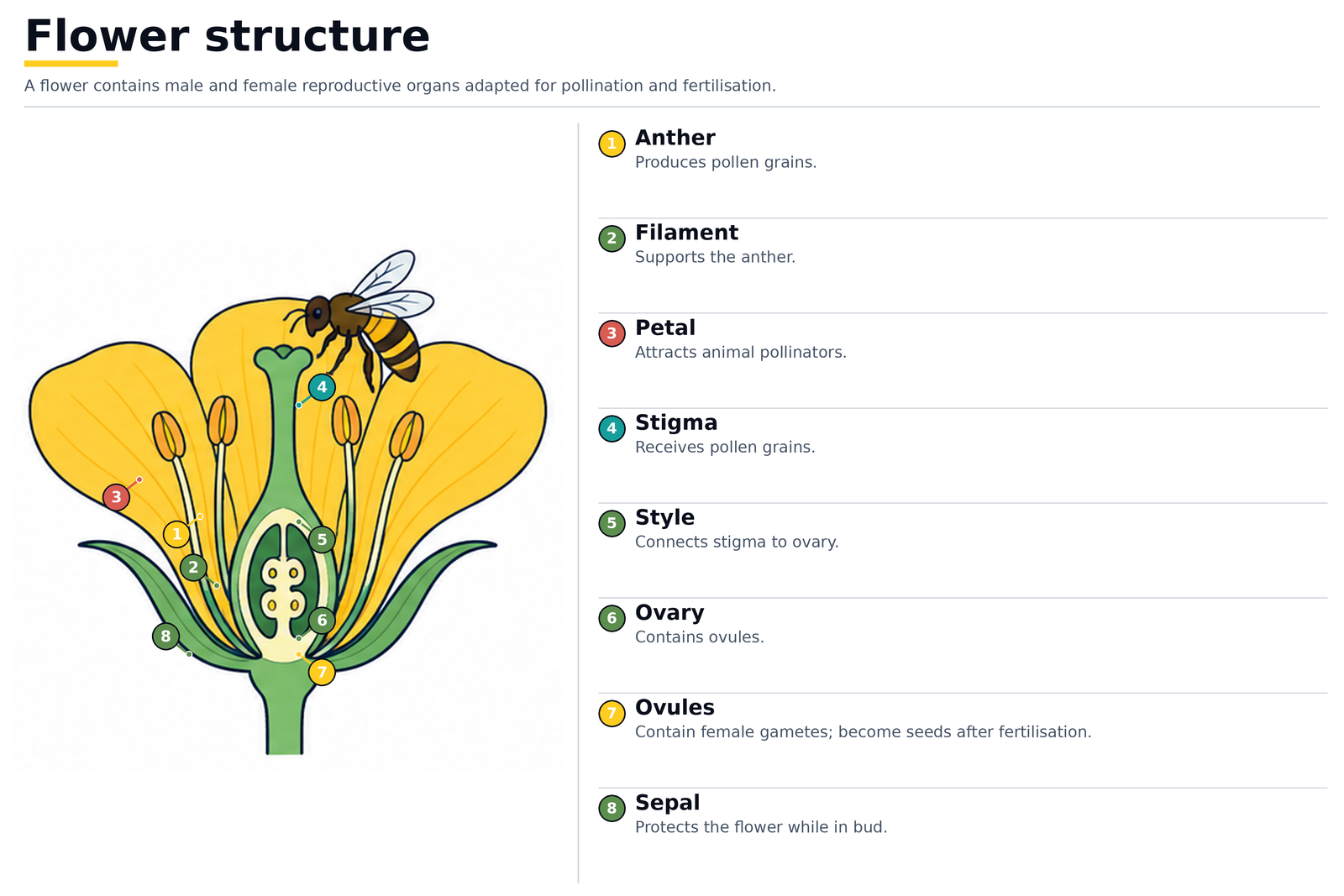
- Stigma - sticky or feathery end where the pollen lands/deposited
- Style - supports the stigma
- Ovary - produces female sex cells contained in ovules
- Sepals - a leaf-like structure that encloses and protect the bud of a flower
- Pistil - female part of flower (stigma, style, ovary, ovule)
- Ovule - contains female sex cells (ovum)
- Anther - site where the male gametes (pollen) are produced
- Filament - supports the anther
- Stamen - male part of flower (anther, filament)
- Petals - a plain or colourful leaf-like structure of some flowers
- Nectary - site where nectar is found (usually present in insect pollinated flowers)
- Pollen grains - male sex cells
Pollination – The transfer of pollen grains from an anther to a stigma.
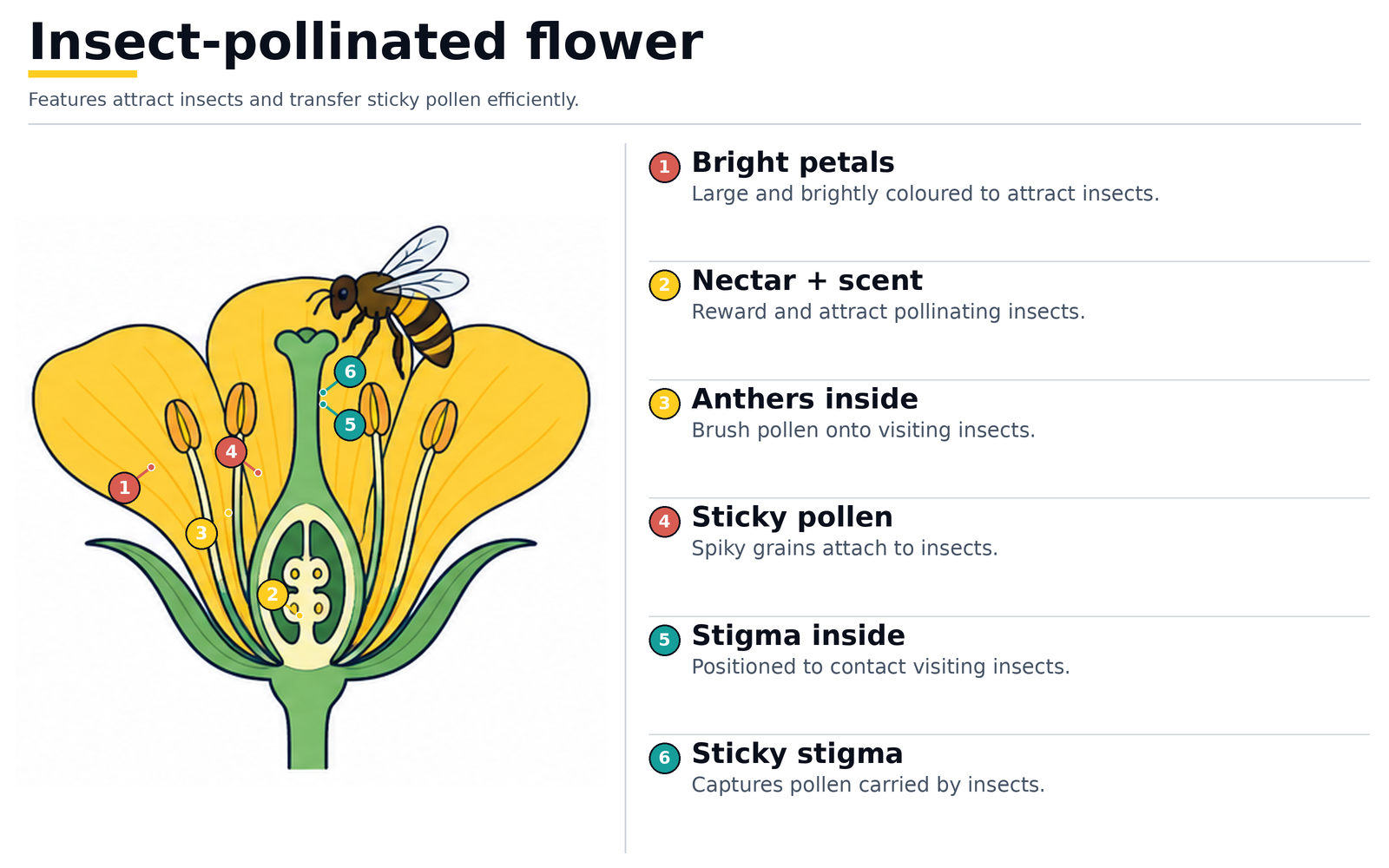
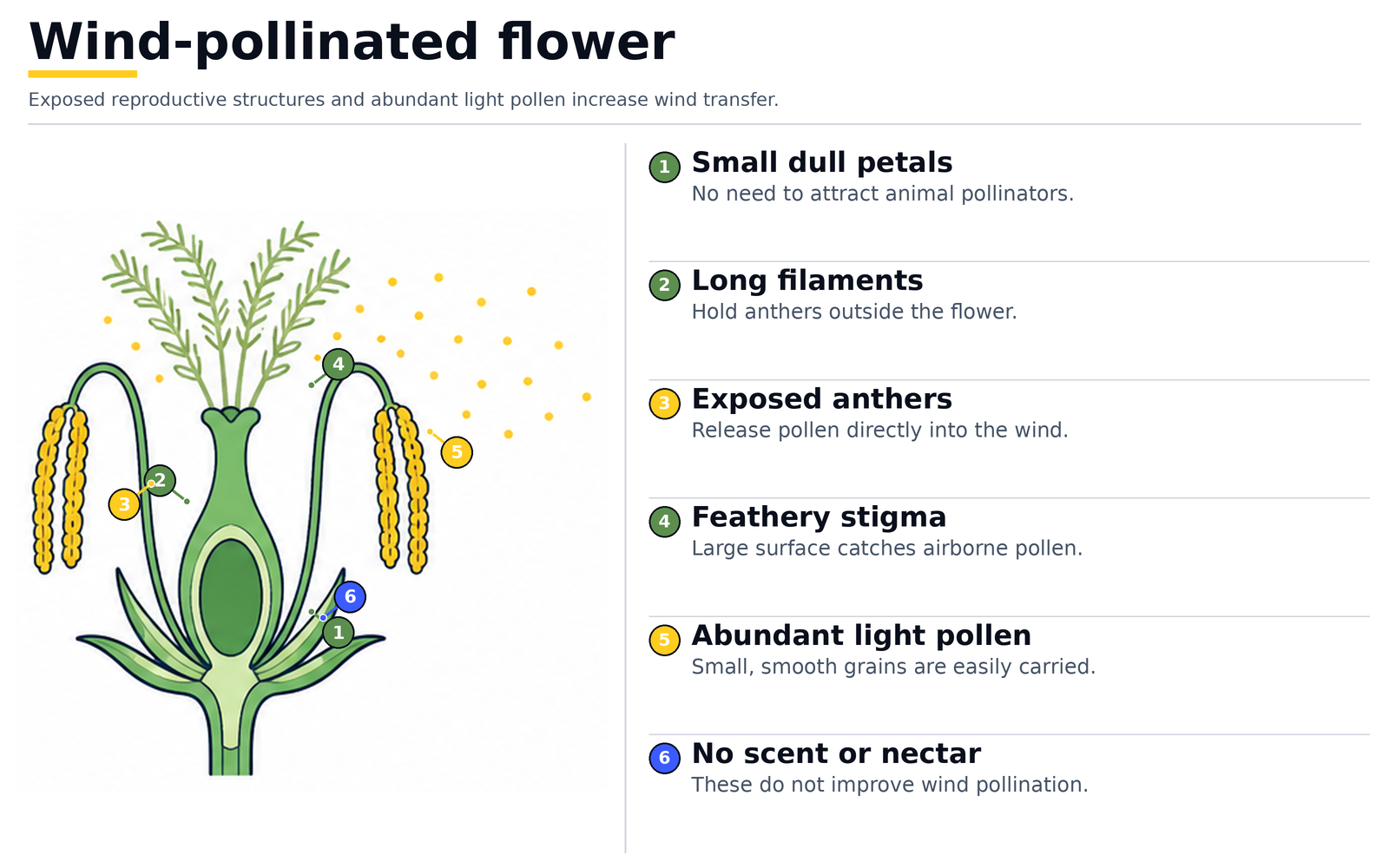
| Feature | Insect pollinated flowers | Wind pollinated flowers |
|---|---|---|
| Anthers | Inside flower & stiff | Outside flower |
| Stigma | Inside flower & sticky | Outside flower & feathery |
| Pollen grains | Larger, heavier, spiky | Small, lightweight, smooth |
| Number of pollen grains | Small amounts | Large amounts |
| Petals | Large & brightly coloured | Small & dull |
Diagram
Self-pollination – The transfer of pollen grains from the anther of a flower to the stigma of the same flower or a different flower on the same plant.
| Advantages | Disadvantages |
|---|---|
| Only one parent is required. | Less genetic variation. |
| Beneficial qualities are more likely to be passed on the offspring. | Less adapted to changes in the environment. |
| Does not depend on extel factors (wind.insects) | Less resistant to diseases. |
| Less pollen and energy are wasted. | |
| More chance of fertilisation. |
Cross-pollination – The transfer of pollen grains from the anther of a flower to the stigma of a flower on a different plant of the same species.
| Advantages | Disadvantages |
|---|---|
| Offspring may inherit good qualities from both parents. | Two parent plants are required. |
| More varieties are produced. | Depends on extel factors (wind/insects). |
| Increases chance of species surviving environmental changes. | There is low probability that pollination will occur. |
| More viable seeds produced. | More pollen wasted. |
Fertilisation occurs when a pollen nucleus fuses with a nucleus in an ovule
- A pollen tube grows
- The nucleus of pollen grain slips down the tube as it grows down the style towards the ovary.
- The ovary contains one or more ovules which each contain a female nucleus that a male pollen nucleus can fuse with.
- The pollen tube enters the ovule through a small hole - the micropyle.
After fertilisation,
- The stamen, petals and sepals wither and fall off.
- Each ovule now contains a zygote, which is formed at fertilisation.
- The zygote divides by mitosis to form an embryo.
- The ovule is now a seed, while the ovary forms the fruit.
Germination is the development of a new plant from the embryo in a seed. Conditions to germinate:
- Water - activate enzymes which digest stored food. allows the seed to swell up.
- Oxygen - needed for aerobic respiration to release energy needed for germination
- Warmth - needed for the enzymes to work effectively at their optimum temperature
Sexual reproduction of humans
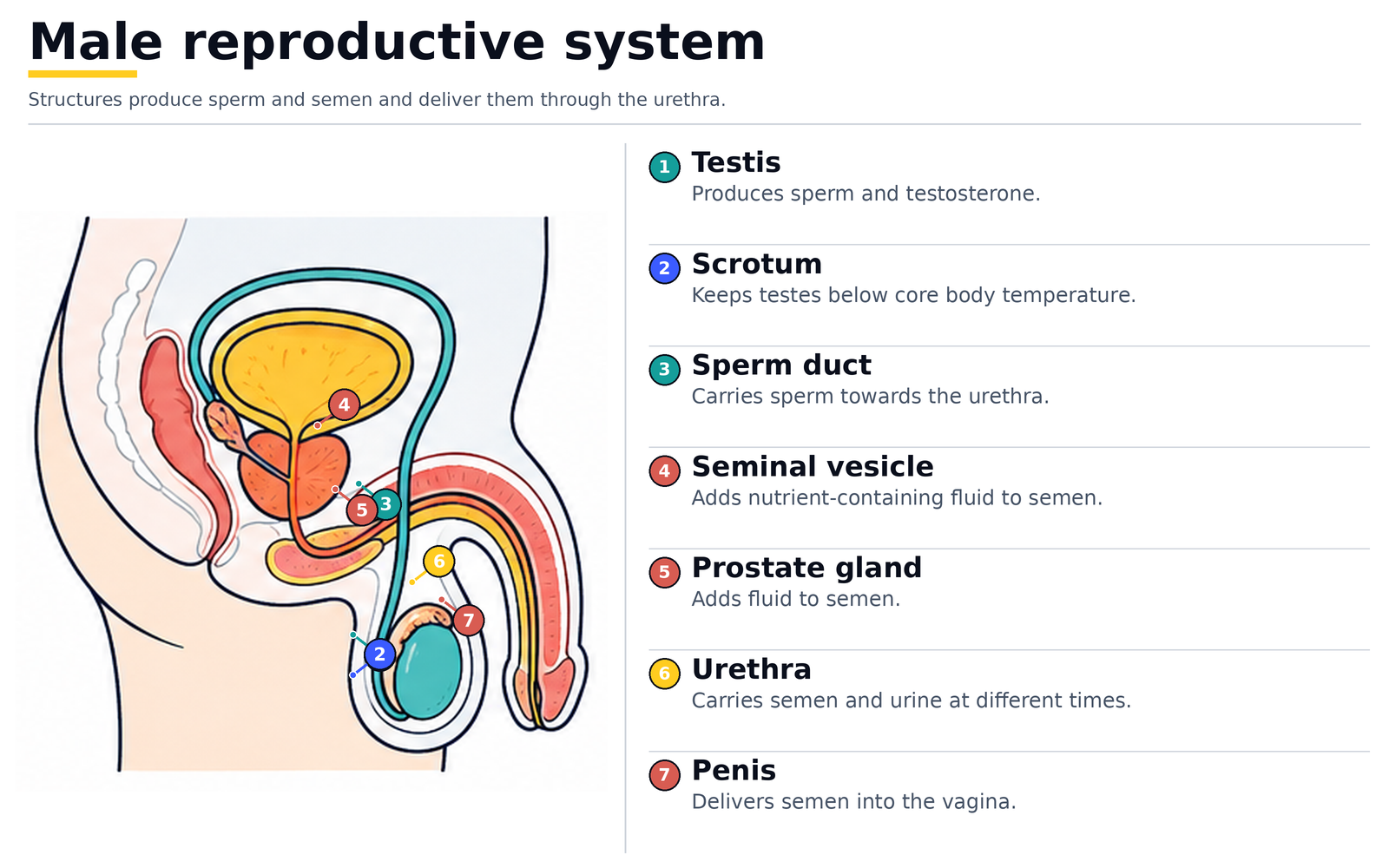
| Males | Females |
|---|---|
| Testes: produces sperm & testosterone. | Ovaries: contains ova. |
| Scrotum: sac supporting the testes. | Oviducts: connects ovary to uterus. Fertilisation occurs here. |
| Prostate gland: produces semen. | Uterus: where fertilised egg is implanted. |
| Urethra: a tube carrying out urine or semen. | Cervix: keeps fetus in place during pregnancy. |
| Penis: passes urine out of body and allows semen to pass into vagina during sexual intercourse. | Vagina: where penis enters during sexual intercourse. |
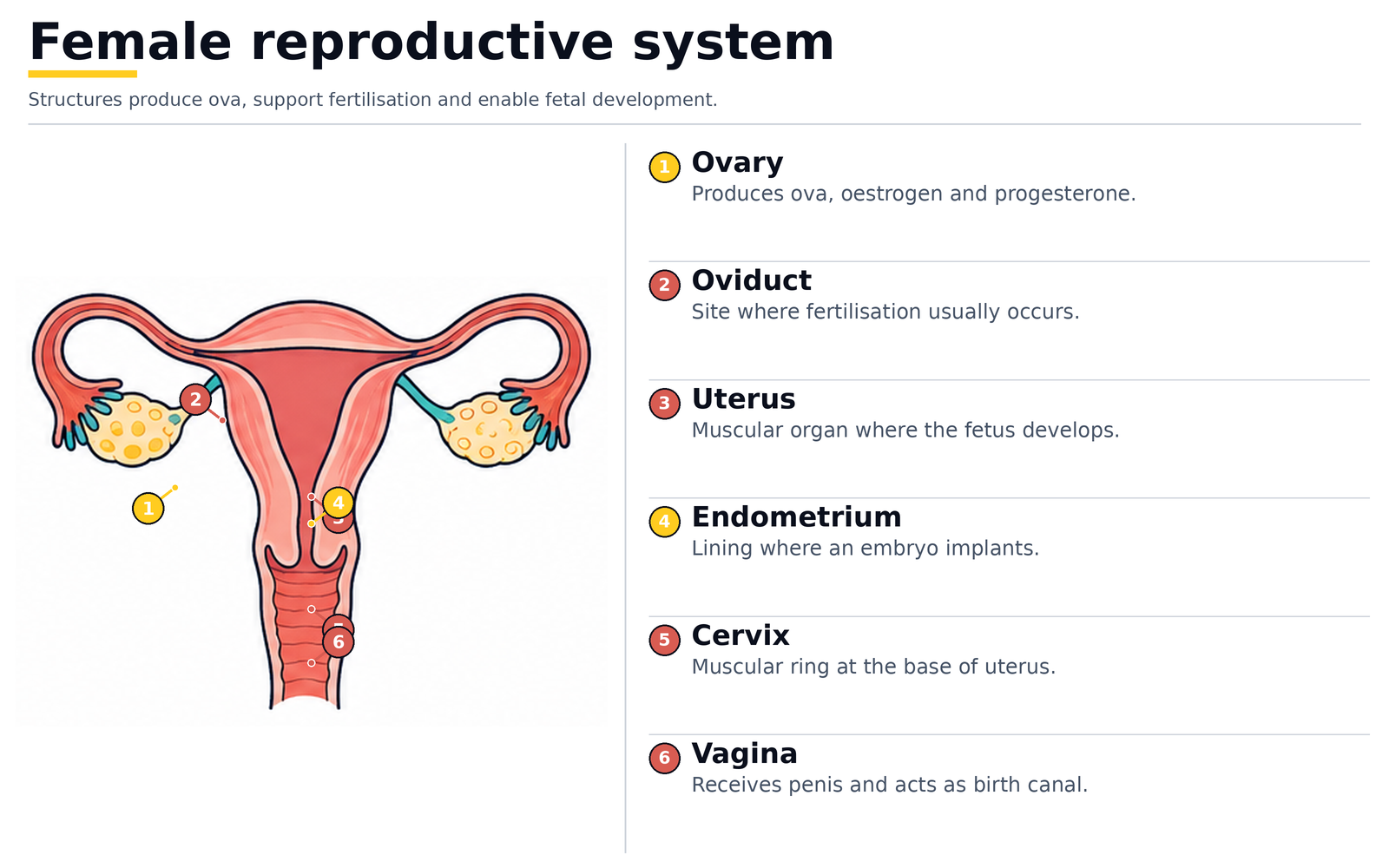
Fertilisation – the fusion of the nuclei from a male gamete (sperm) and a female gamete (egg cell)
| Feature | Sperm | Egg |
|---|---|---|
| Size | Small (0.05cm) | Larger (2cm) |
| Structure | 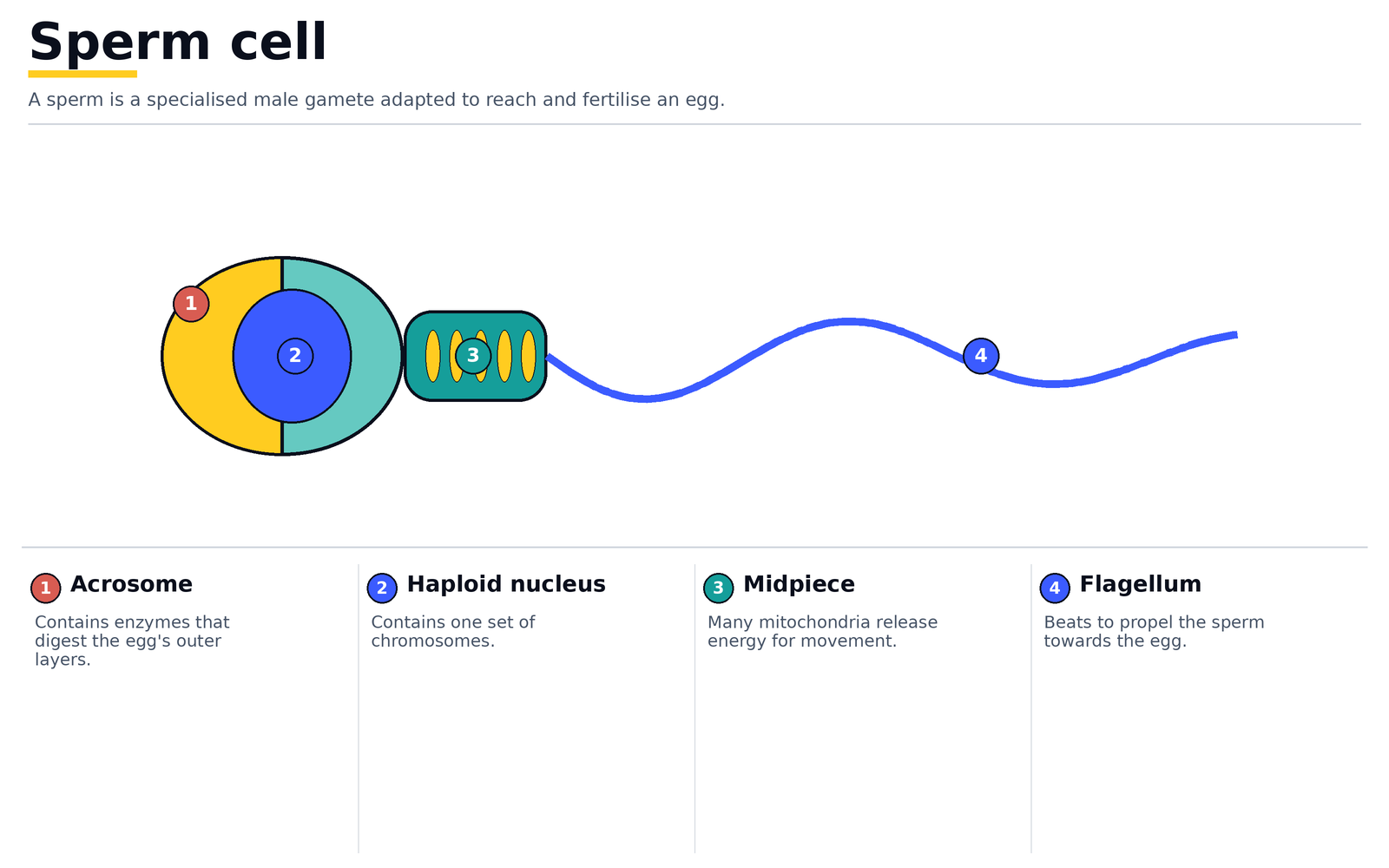 | 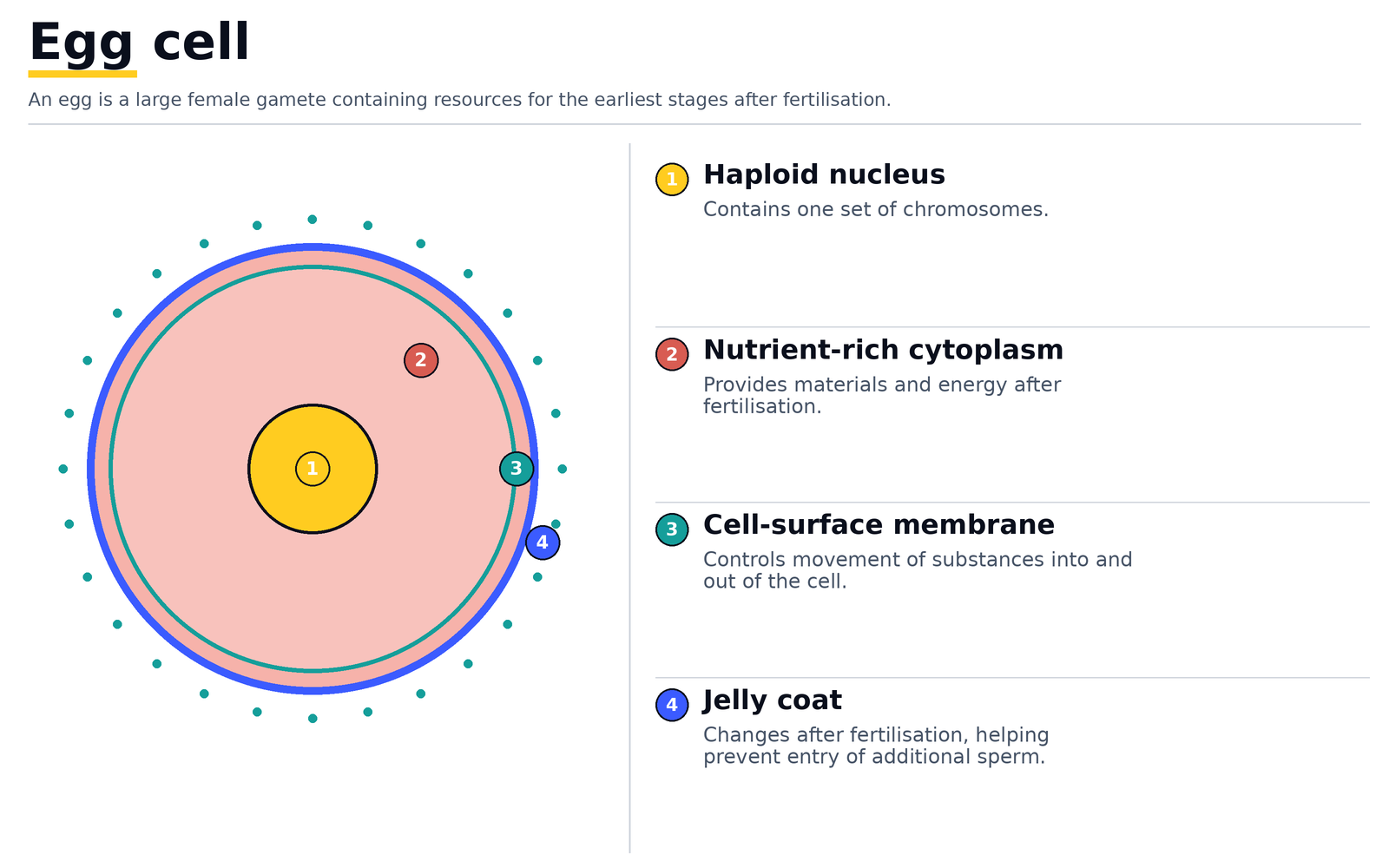 |
| Mobility | Mobile | Not mobile |
| Number | 525 billion | 70000 |
In early development, the zygote forms an embryo which is a ball of cells that implants into the lining of the uterus.
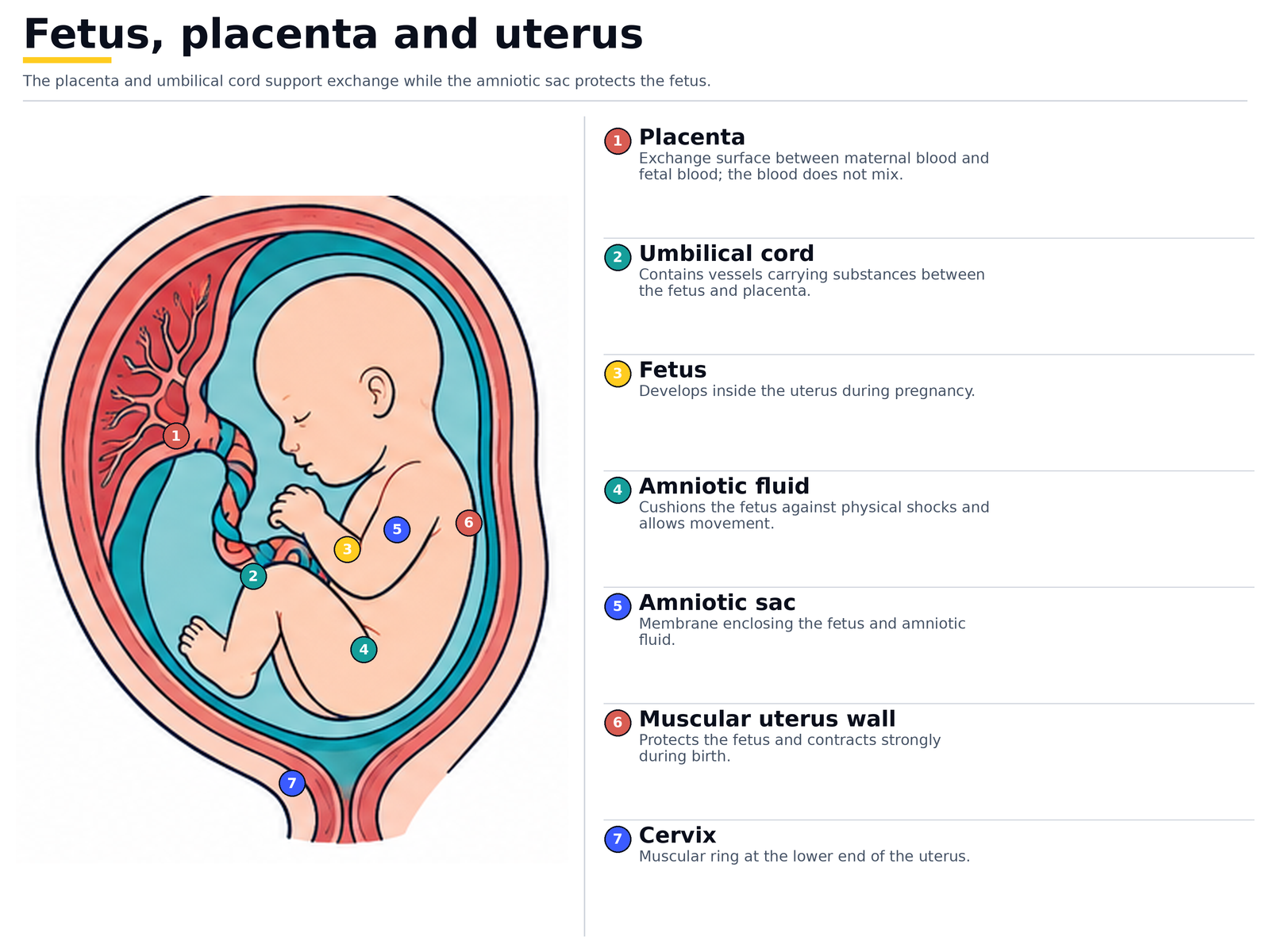
- Umbilical cord : allows exchange of dissolved nutrients, gases and excretory products between the blood of the mother and the blood of the fetus.
- Placenta : provides oxygen & nutrients to fetus, and removes excretory products.
- Amniotic sac : protect fetus from mechanical damage, Amniotic fluid: protect fetus from mechanical damage, maintains temperature and fetal drinking
Some pathogens and toxins can pass across the placenta and affect the fetus.
- Oesteogen → stimulates the development of sex organs and sexual characteristics in girl’s body.
- Progesterone → prepares the uterus so that it is ready to receive an embryo in the case of a pregnancy.
Fetal development:
- Fertilisation takes place in the oviduct
- The fertilised egg is now referred to as Zygote.
- Zygote will continue dividing and becomes embryo (a ball of cells that implants (implantation) into uterus lining to grow & develop)
- Major development of organs takes place in first 12 weeks, where the embryo gets nutrients from the mother by diffusion through the uterus lining.
- After this point the organs are all in place, the placenta has formed and the embryo is now called a fetus.
- Fetus develops and grows by gaining dissolved nutrients (glucose, amino acids, fats, water and oxygen).
- The fetus’s blood connects to the placenta by the umbilical cord
- The mother’s blood absorbs the waste (CO2, urea are removed so it won’t build up to dangerous levels) from the fetus’s blood in the placenta.
Sexual hormones in humans
- Testosterone – development and regulation of secondary sexual characteristics during puberty in males.
- Oestrogen – development and regulation of secondary sexual characteristics during puberty in females.
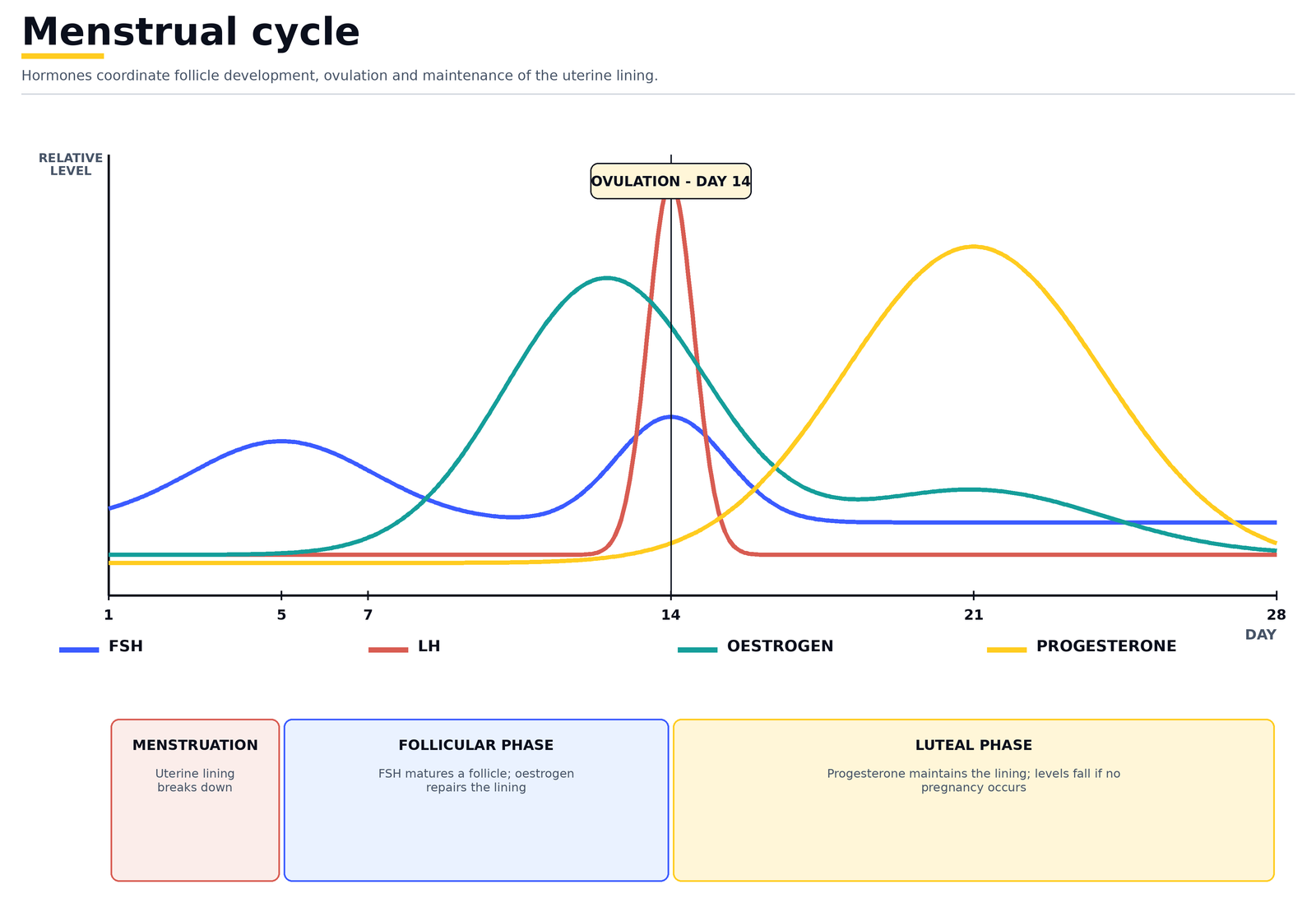
Menstrual cycle:
- Day 1 – 7 : First day of a woman’s period. Lining of the uterus comes away and exits through the vagina as blood.
- Day 7 - 13 : Lining of the uterus begins to build up again. An egg starts to mature in one of the ovaries.
- Day 14 : An egg is released by an ovary into the oviduct.
- Day 14 - 17 : The egg can last up to 3 days after release from ovary. The egg travels down the oviduct and into the uterus hoping to be fertilised.
- Day 18 - 28 : If not fertilised, uterus lining begins to break down.
The cycle repeats
FSH & LH is produced in the pituitary gland.
Oestrogen & progesterone is produced in the ovaries, but placenta during pregnancy.
- FSH : Stimulates growth & maturation of egg, causes the release of oestrogen.
- Oestrogen : Thickening of uterus lining, stops release of FSH, stimulates release of LH.
- LH : Ovulation.
- Progesterone : Maintains the lining of the uterus, Inhibits LH and FSH release.
Sexually transmitted infections
Sexually transmitted infection (STI) - an infection transmitted through sexual contact.
Human Immunodeficiency Virus (HIV) - a pathogen that causes an STI. It attacks white blood cells. There is no cure, but it is treatable with medicine. It can lead to AIDs.
Transmission of HIV: sexual contact, pregnancy, childbirth, breastfeeding, injection, blood transfusion, etc.
How to prevent?
- Use condoms
- Have only 1 sex partner
- Only sterile drug injection equipment and water, and never share your equipment with others.
- Education programmes to make people aware of HIV, etc
- Zidovudine (ZDV), is an antiviral medication that delays the development of problems that result from AIDS/HIV.