Circulatory systems
Circulatory system – A system of blood vessels with a pump and valves to ensure one-way flow of blood
Fish have single circulation. Fish have 2 chambers. Blood passes through it once in its circuit around the body. Oxygen is absorbed as blood passes its gills. Blood pressure is low.
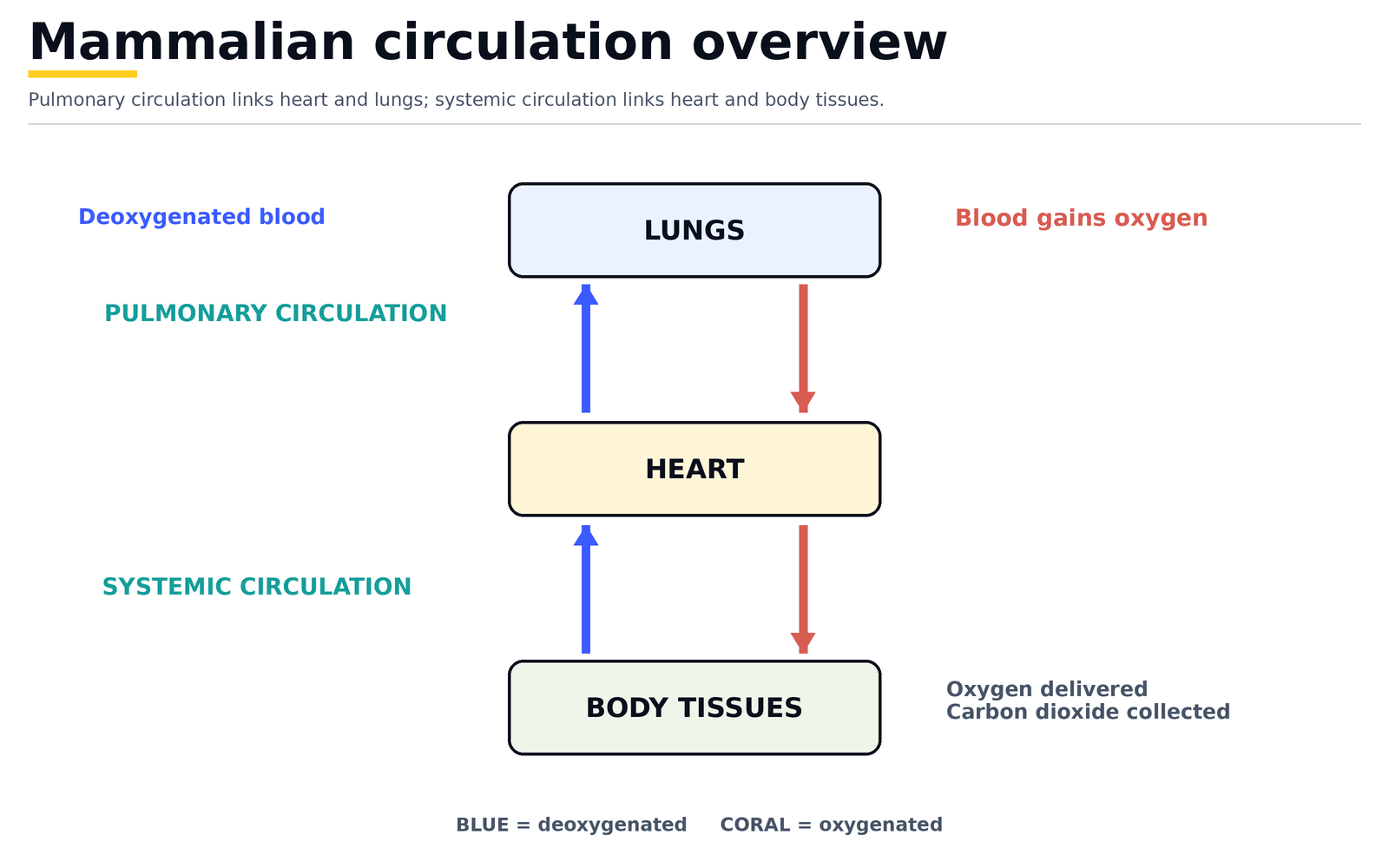
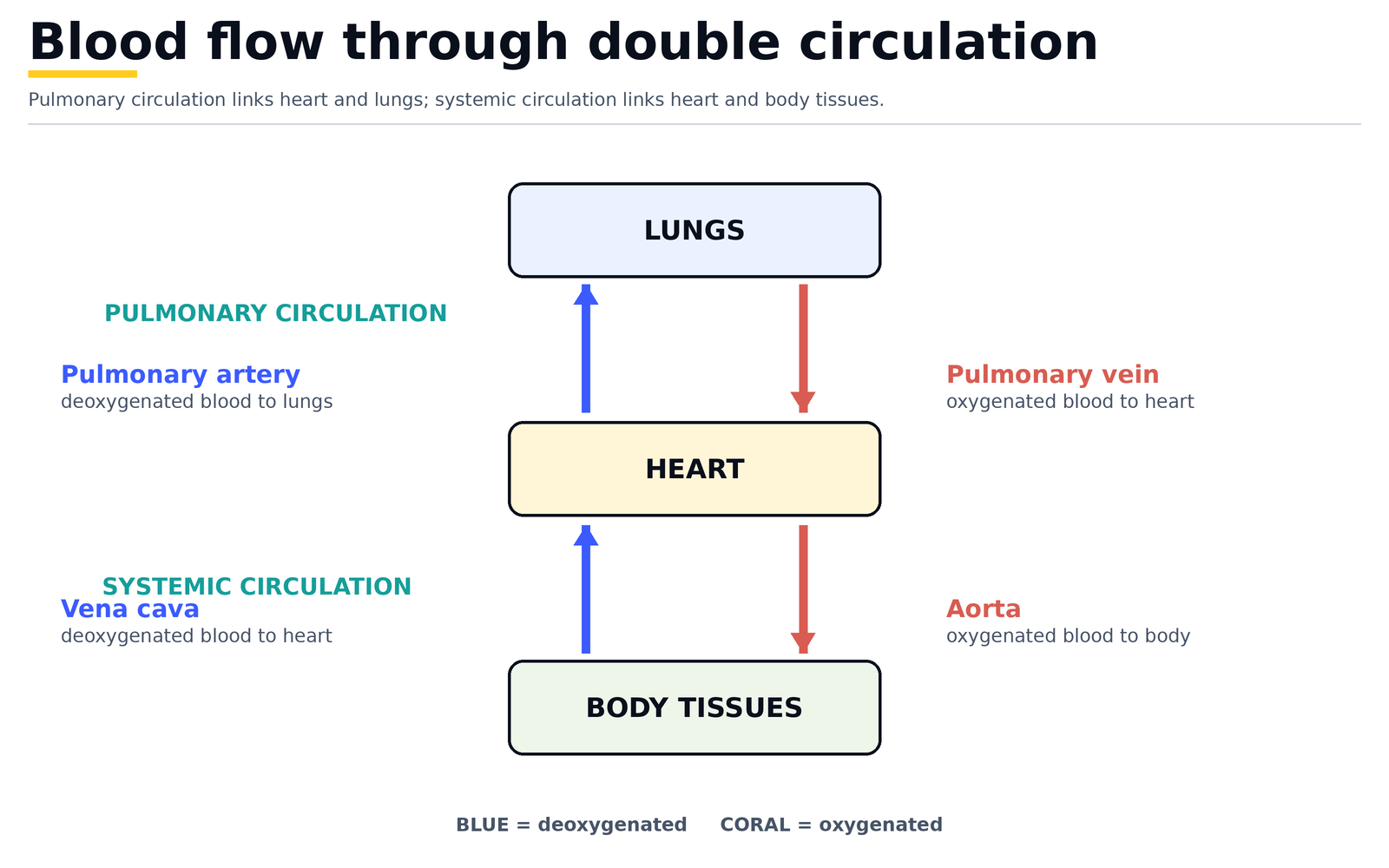
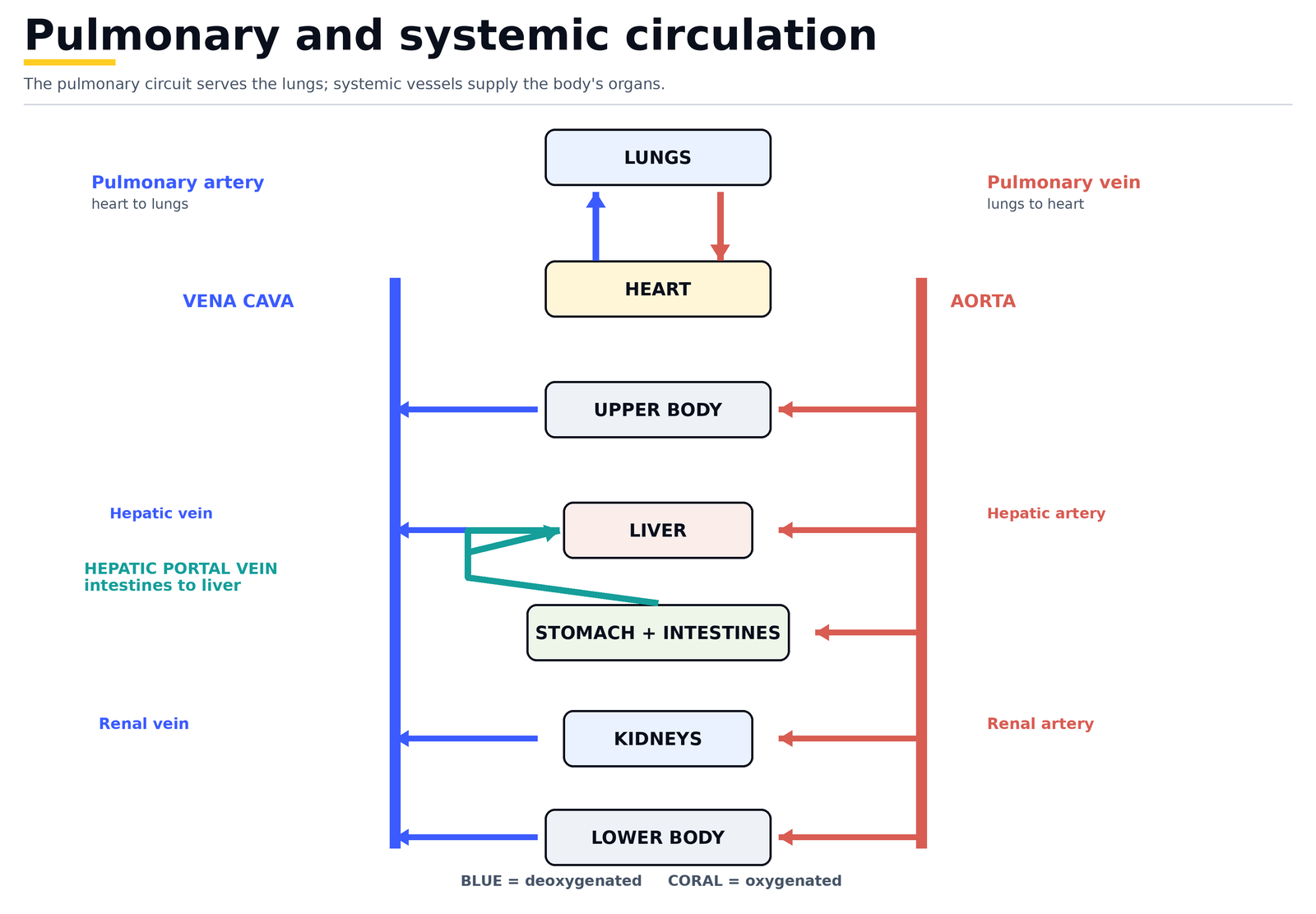
Mammals have double circulation. Blood passes the heart twice. Blood pressure is high.
Advantages of double circulation:
- Higher blood pressure, allowing more efficient blood flow.
- Support better separation of oxygenated and deoxygenated blood.
- Ensures the body has a sufficient supply of oxygen.
Heart
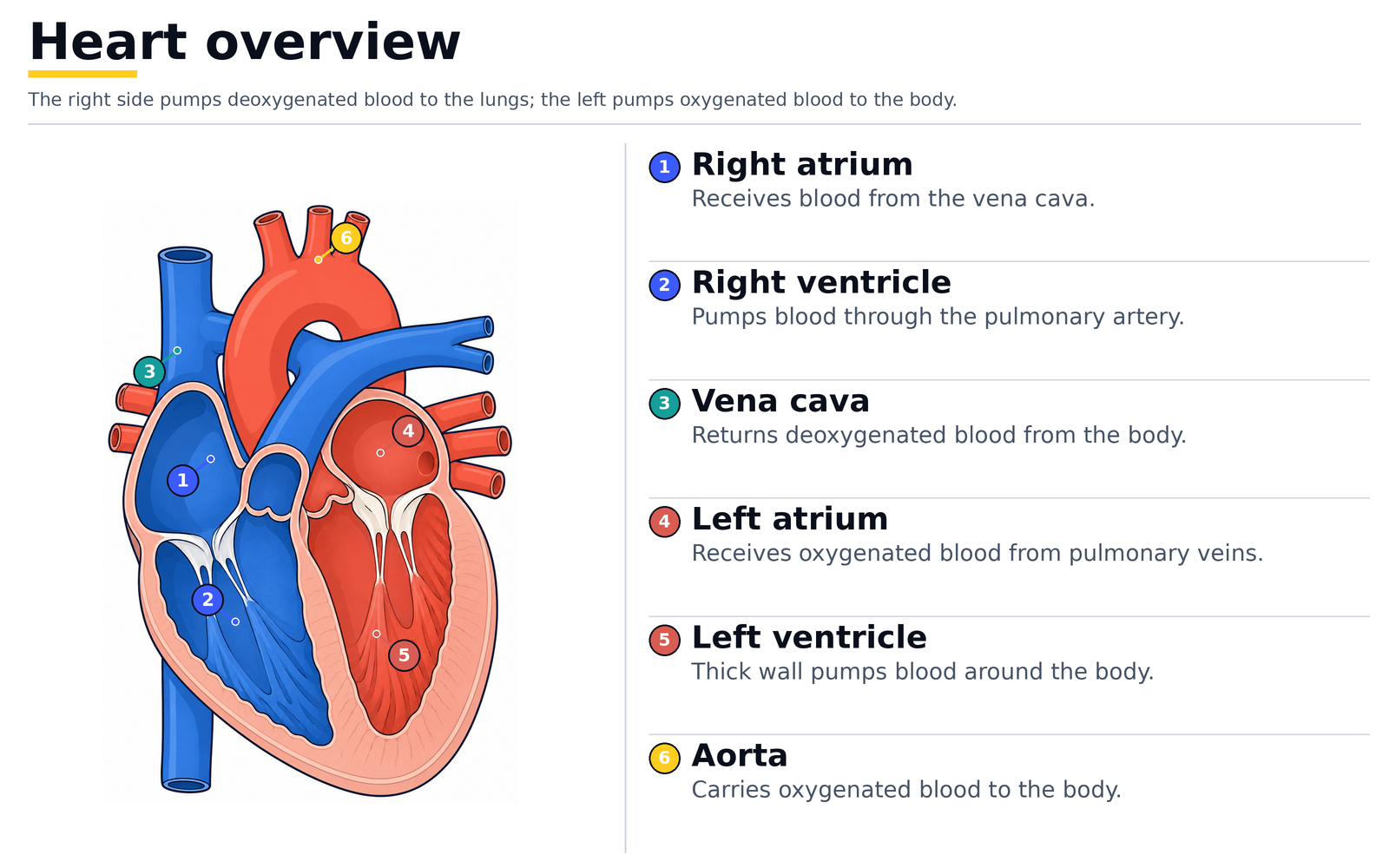
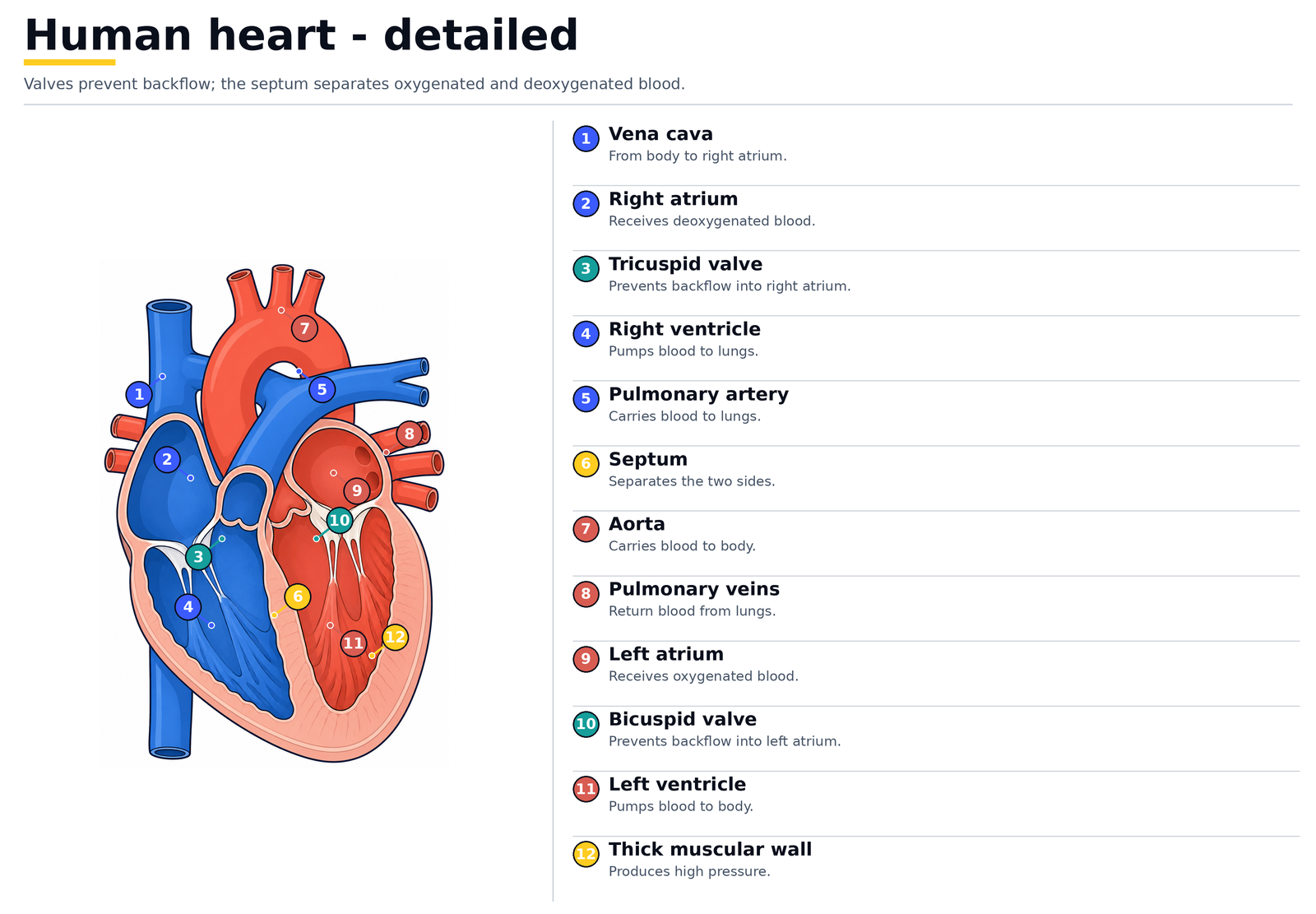
Blood from body -> vena cava -> heart -> pulmonary artery -> lungs -> pulmonary vein -> heart -> aorta -> blood to body
Atrioventricular valves are the mitral and tricuspid valves. Semilunar valves are the aortic and pulmonary valves. They stop blood from moving backwards.
| Arteries | Veins |
|---|---|
| Pumps blood away from heart. | Pumps blood into heart. |
| Oxygenated blood (except pulmonary artery) | Deoxygenated blood (except pulmonary vein) |
The walls of the left ventricle are bigger than the walls of the right ventricle. The right ventricle pushes blood to the lungs, which is closer. The left ventricle pushes blood out to the whole body.
The septum separates oxygenated and deoxygenated blood. The left atrium and left ventricle contains oxygenated blood. The right atrium and right ventricle contains deoxygenated blood.
Activity of the heart may be monitored by: ECG, pulse rate and listening to sounds of valves closing.
Coronary heart disease is caused by the blockage of coronary arteries. Risk factors are diet, lack of exercise, stress, smoking, genetic predisposition, age and sex. It can be treated with bypass surgery and a stent.
Blood vessels
Blood Vessels - designed to carry blood to all areas of the body. There are 3 main types of blood vessels: artery, vein, capillary.
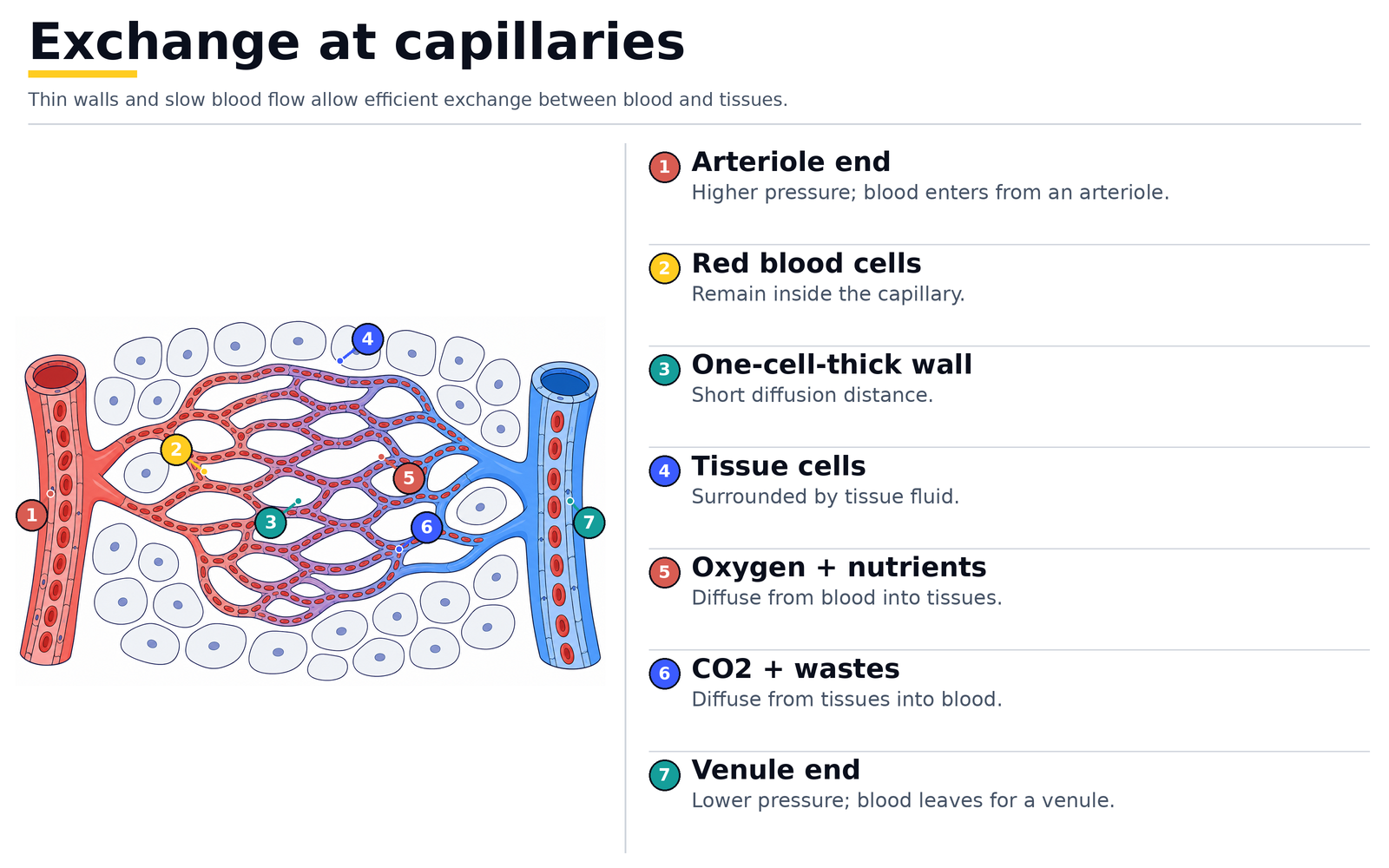
| Arteries | Veins | Capillaries |
|---|---|---|
| Carries oxygenated blood away from heart. | Carries deoxygenated blood into heart. | Connects the arteries & veins. |
| Small lumen. | Large lumen. | Very small lumen. |
| Thick, elastic, muscular wall. | Thinner wall. | Very thin wall (one cell thick). |
| High pressure. | Low pressure. | Very low pressure. |
| No valves. | Have valves. | - |
Blood
Blood is a transport system used for moving things around the body. It is made up of the following components:
- Red Blood Cells – transports oxygen.
- White Blood Cells – phagocytosis and antibody production.
- Plasma – the liquid substance that suspends material for the transport of blood cells, ions, nutrients, urea, hormones and carbon dioxide.
- Platelets – blood clotting.
Red Blood Cells:
- Small, biconcave shape – gives a large surface area for absorbing and releasing oxygen
- Do NOT have a nucleus – which frees up more space for more Haemoglobin
- Contain Haemoglobin
- Flexible – so they can easily pass through tiny capillaries to get oxygen to all cells.
White Blood Cells
- Fight diseases
- Flexible shape – which helps them engulf microbes they come across, surrounding them and digesting them.
- Antibodies – which are proteins specific to antigens on the surface of pathogens. They attach to them destroying the pathogen.
- Antitoxins – which can be released by the white blood cell to neutralise the toxins (poisonous toxins) produced by some microbes.
- Types of white blood cells: phagocytes, lymphocytes.
- Lymphocytes – antibody production
- Phagocytes – engulfing pathogens by phagocytosis.
- Blood clotting prevents blood loss and the entry of pathogens.
- Blood clots are formed by platelets.
- Prothrombin becomes thrombin.
- Thrombin converts fibrinogen into fibrin.
- Fibrin strands help to form an insoluble clot, by forming a mesh and trapping blood cells.