Foreign exchange rates
Meaning and currency transactions
- Foreign currency - money issued by another country, such as US dollars for a resident of Malaysia.
- Foreign exchange rate - the price of one currency expressed in terms of another currency.
- Foreign exchange market (FOREX) - the market in which currencies are bought and sold.
If £1 = US$1.30, one pound exchanges for 1.30 US dollars.
This sub-topic is all about demand and supply for a country’s currency.
Worked currency conversion
At £1 = US$1.30, a UK buyer purchases a US service costing US$260.
- Identify the required currency. The buyer needs to convert US dollars into pounds.
- Divide by dollars per pound. US$260 / 1.30 = £200.
Check: £200 × US$1.30 per £1 = US$260, so the direction of conversion is correct.
Why currencies are bought and sold
| Reason named in the syllabus | Currency transaction |
|---|---|
| Trade in goods and services | Foreign buyers demand the exporter's currency; domestic buyers supply their currency to obtain foreign currency for imports. |
| Speculation | Traders buy a currency expected to rise and sell one expected to fall. |
| Government intervention | A government or central bank may buy or sell currency to influence its exchange rate. |
| Profit, interest and dividends | Income earned in one country may be converted and sent to owners or lenders in another. |
| Workers' remittances | Workers convert income to send money to family members abroad. |
| Investment in capital goods | A firm or investor buys foreign currency to purchase overseas machinery, factories or other capital. |
Floating exchange rates and equilibrium
- Floating exchange rate - an exchange rate determined by demand for and supply of the currency in the foreign exchange market (often fluctuates).
- Demand for a currency - the amount of a currency buyers are willing and able to purchase at different exchange rates.
- Supply of a currency - the amount of currency holders are willing and able to sell at different exchange rates.
- Equilibrium exchange rate - the exchange rate at which demand for a currency equals its supply.
The demand curve slopes down: a lower price makes the currency and the country's products or assets cheaper to foreign buyers. The supply curve slopes up: a higher price gives holders more foreign currency in exchange.
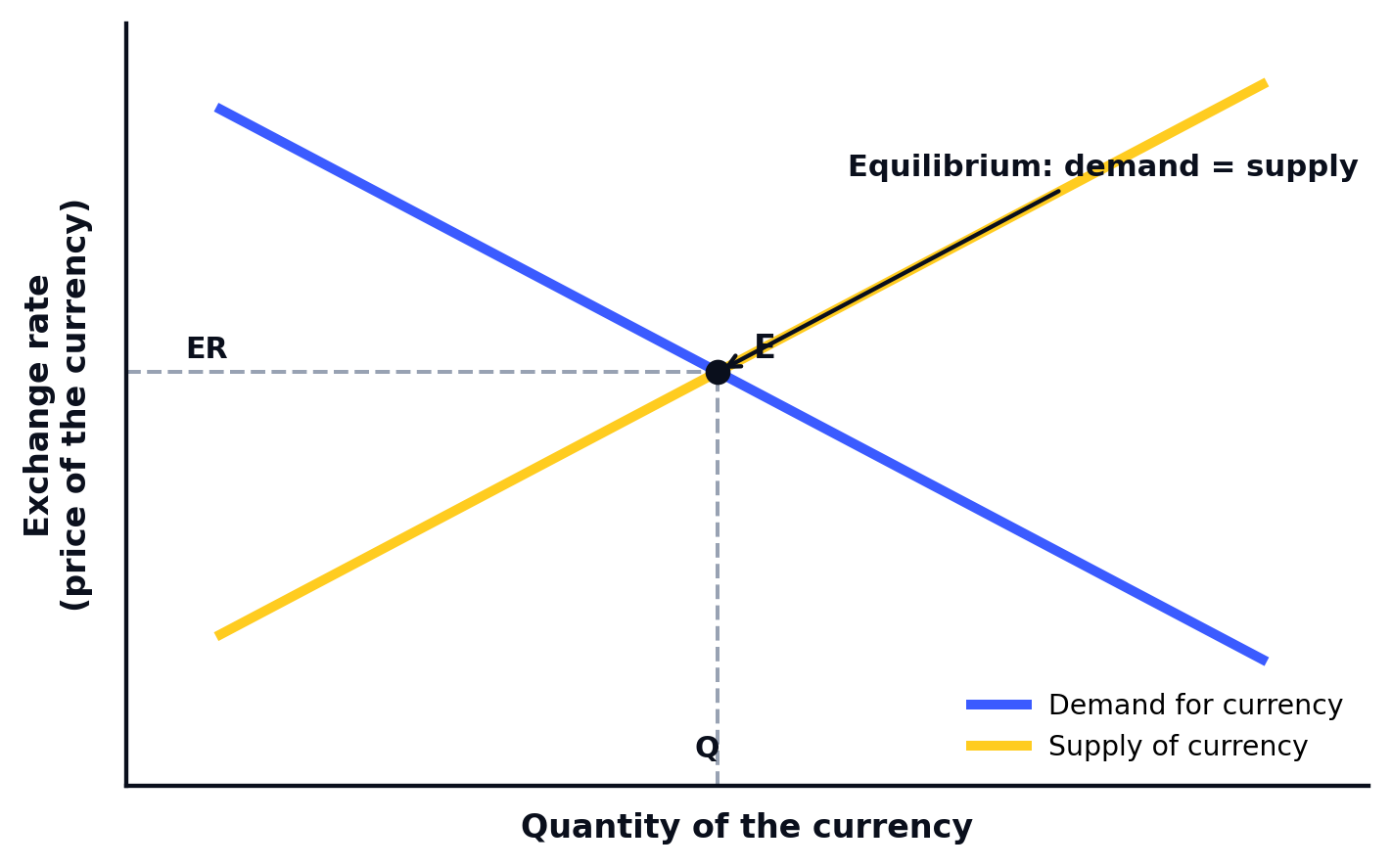
Figure 6.1: A floating exchange rate is determined where demand for the currency equals supply.
Diagram method: Label the vertical axis exchange rate and the horizontal axis quantity of currency. Label demand D and supply S, mark E, then project to the equilibrium exchange rate.
Appreciation, depreciation and causes of fluctuation
- Appreciation - an increase in the value of a currency in a floating exchange-rate system.
- Depreciation - a decrease in the value of a currency in a floating exchange-rate system.
| Change | Demand/supply chain | Likely currency effect |
|---|---|---|
| Demand for exports rises | Foreign buyers need more domestic currency -> demand for it rises. | Appreciation, if other factors are unchanged. |
| Demand for imports rises | Residents sell more domestic currency to obtain foreign currency -> supply rises. | Depreciation, if other factors are unchanged. |
| Domestic interest rate rises | Saving or investment in the country may become more attractive -> currency demand rises. | Possible appreciation; expectations and risk also matter. |
| Speculators expect appreciation | They buy the currency now -> demand rises. | The expectation may itself cause appreciation. |
| Speculators expect depreciation | They sell the currency now -> supply rises. | The expectation may itself cause depreciation. |
| An MNC enters or invests | The MNC converts foreign funds into domestic currency to buy assets or pay costs -> currency demand rises. | Possible appreciation, if other factors are unchanged. |
| An MNC leaves or withdraws funds | It sells domestic currency to convert funds or profits into another currency -> currency supply rises. | Possible depreciation, if other factors are unchanged. |
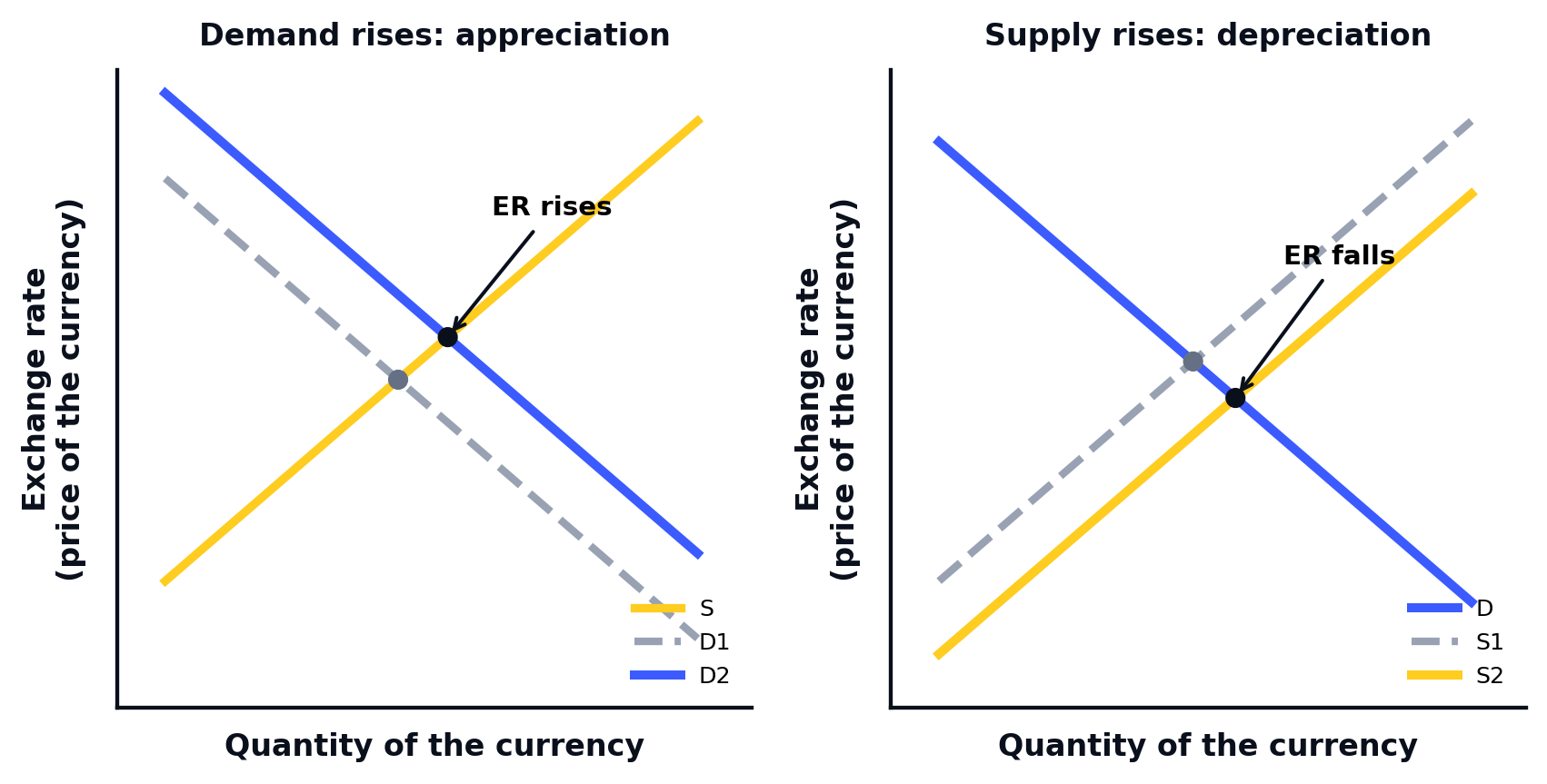
Figure 6.2: Demand or supply shifts change the equilibrium exchange rate.
Fixed and floating exchange-rate systems
- Fixed exchange rate - an exchange rate kept at an official value or within a narrow band through government or central-bank intervention.
- Devaluation - an official reduction in a fixed exchange rate. Revaluation is an official increase in a fixed exchange rate. In a floating system, the corresponding market changes are depreciation and appreciation.
| System | How the rate is determined | Advantages | Disadvantages |
|---|---|---|---|
| Floating | Demand and supply determine equilibrium; the rate changes when either curve shifts. | Automatic adjustment; no exact official rate to defend; policy can focus on domestic aims. | Uncertainty for traders and investors; speculation and large changes can create inflation or instability. |
| Fixed | The authority announces a rate and buys or sells currency to keep the market near it. | Greater certainty for trade and investment; can discipline inflation and build confidence. I.e. A factory in Germany making cars does not have to worry about the price of imported steel from China. It stays fixed. | Requires foreign-currency reserves and intervention; the chosen rate may be inappropriate; domestic policy may be constrained. |
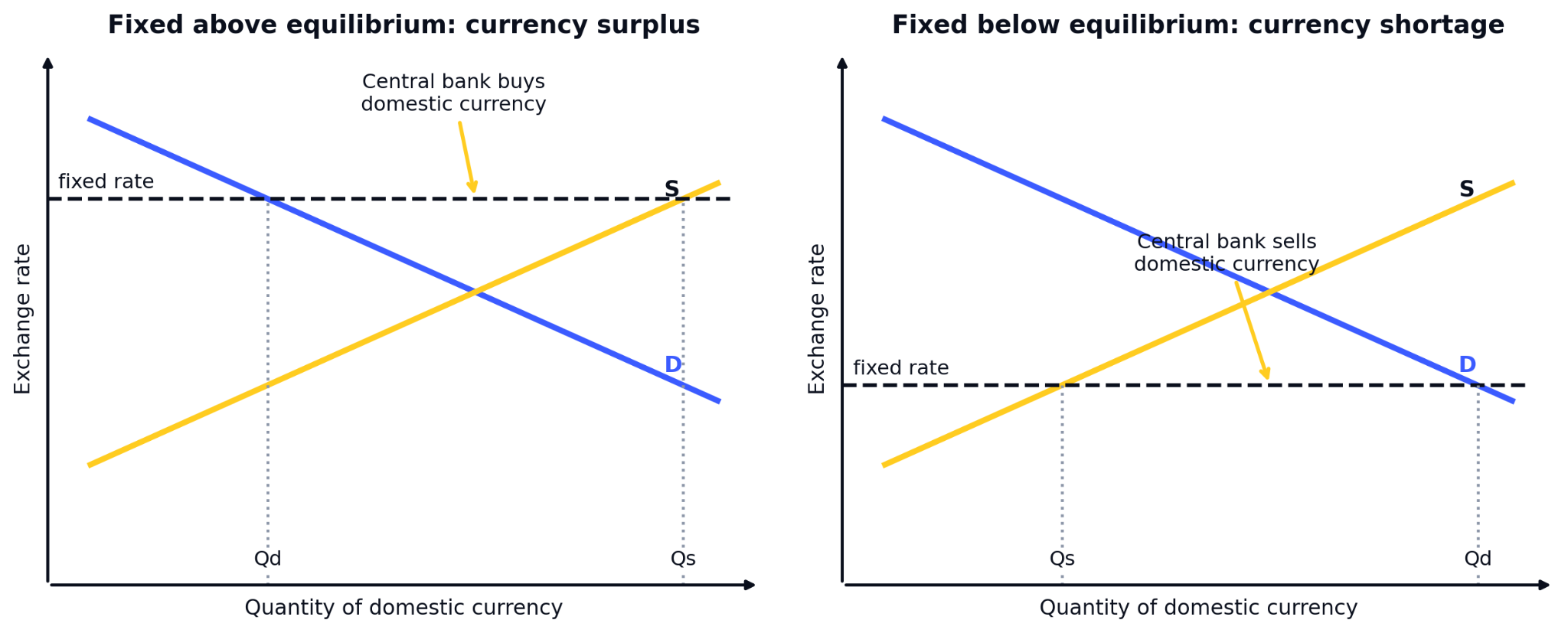
Figure 6.3: Maintaining a fixed rate requires intervention when the official rate creates a surplus or shortage of the domestic currency.
Fixed-rate logic: Above equilibrium, Qs > Qd and the currency faces downward pressure, so the central bank buys it using foreign reserves. Below equilibrium, Qd > Qs and it faces upward pressure, so the central bank sells domestic currency.
Consequences of exchange-rate changes
| Change | Exports | Imports | Wider effects |
|---|---|---|---|
| Depreciation | Foreign-currency price falls -> export demand may rise. | Domestic-currency price rises -> import demand may fall. | Net exports and jobs may rise, but dearer imports can cause cost-push inflation. |
| Appreciation | Foreign-currency price rises -> export demand may fall. | Domestic-currency price falls -> import demand may rise. | Consumers and importing firms gain, but net exports and employment may fall; imported inflation falls. |
- Price elasticity of demand (PED) - the responsiveness of quantity demanded to a change in price.
The final change in export and import spending depends on PED. A depreciation does not guarantee an immediate improvement in the current account. An inelastic good may not be affected by the exchange rate as much—hence, it has a smaller effect on the current account vice versa.
PED and export/import spending
Currency (local) depreciation:
| Product | Price change | If demand is elastic | If demand is inelastic |
|---|---|---|---|
| Exports | Foreign buyers pay a lower price | Quantity bought rises by a greater percentage than the price falls -> foreign spending on exports rises | Quantity bought rises by a smaller percentage than the price falls -> foreign spending on exports falls |
| Imports | Domestic buyers pay a higher price | Quantity bought falls by a greater percentage than the price rises -> domestic spending on imports falls | Quantity bought falls by a smaller percentage than the price rises -> domestic spending on imports rises |
Currency appreciation:
| Product | Price change | If demand is elastic | If demand is inelastic |
|---|---|---|---|
| Exports | Foreign buyers pay a higher price | Quantity bought falls by a greater percentage than the price rises -> foreign spending on exports falls | Quantity bought falls by a smaller percentage than the price rises -> foreign spending on exports rises |
| Imports | Domestic buyers pay a lower price | Quantity bought rises by a greater percentage than the price falls -> domestic spending on imports rises | Quantity bought rises by a smaller percentage than the price falls -> domestic spending on imports falls |
A* judgement: A depreciation is more likely to improve the current account when export and import quantities respond strongly enough to the price changes. Contracts, time lags, spare capacity, quality and the availability of substitutes also matter.