Price changes
A new market equilibrium is created when demand or supply shifts. The price change then causes extensions or contractions along the other, unchanged curve.
| Initial change | Immediate effect | New equilibrium | Effect on sales |
|---|---|---|---|
| Demand increases | Shortage at the old price | Price rises; quantity rises | More units are sold |
| Demand decreases | Surplus at the old price | Price falls; quantity falls | Fewer units are sold |
| Supply increases | Surplus at the old price | Price falls; quantity rises | More units are sold |
| Supply decreases | Shortage at the old price | Price rises; quantity falls | Fewer units are sold |
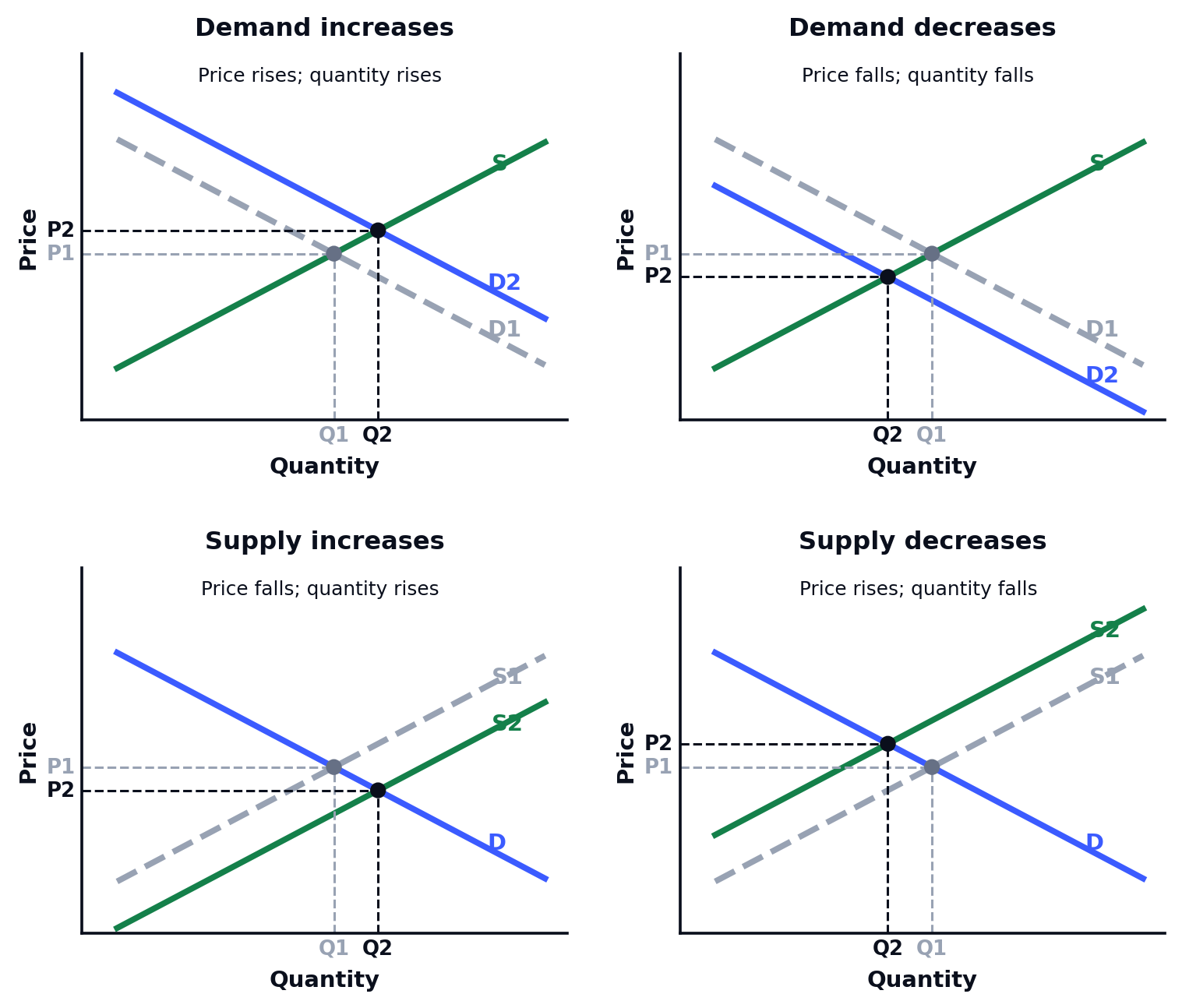
Figure 2.4: The four single-shift outcomes. Compare the old equilibrium E1 with the new equilibrium E2.
A* chain example: Higher incomes increase demand for restaurant meals -> D shifts right -> a shortage exists at the old price -> price rises -> supply extends -> a higher price and quantity are established.