Looking for our old site? We've rebranded — new look, same exam success.

Physics · Electricity & magnetism

Electric circuits

CIE 06251 min read

Series and parallel circuits
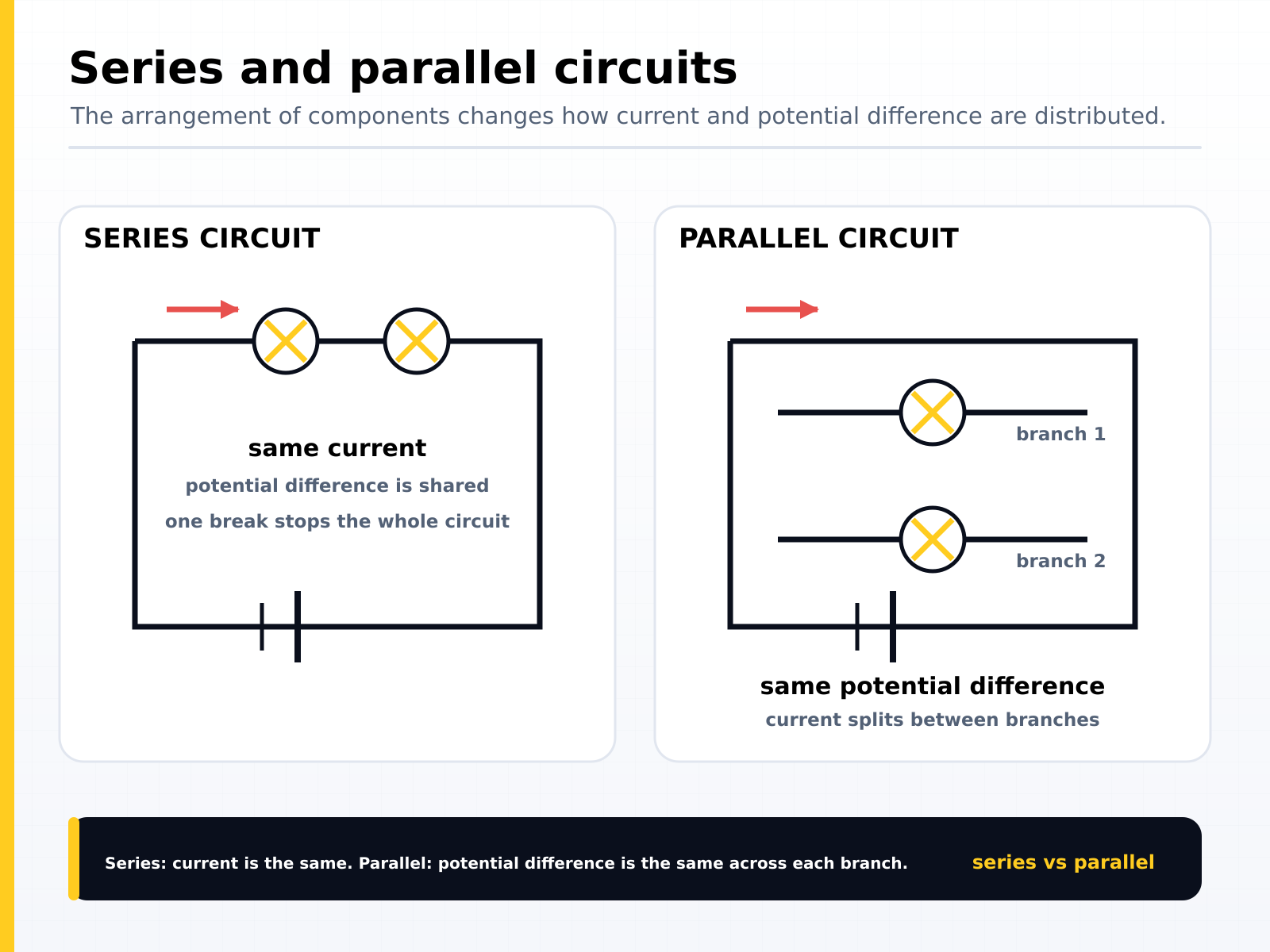
Series and parallel circuits compared: in series the current is the same everywhere and the potential difference is shared, and one break stops the whole circuit; in parallel the potential difference is the same across each branch and the current splits between branches

Voltage in a parallel circuit is equal across components Current in a series circuit is equal across components

Action and use of circuit components
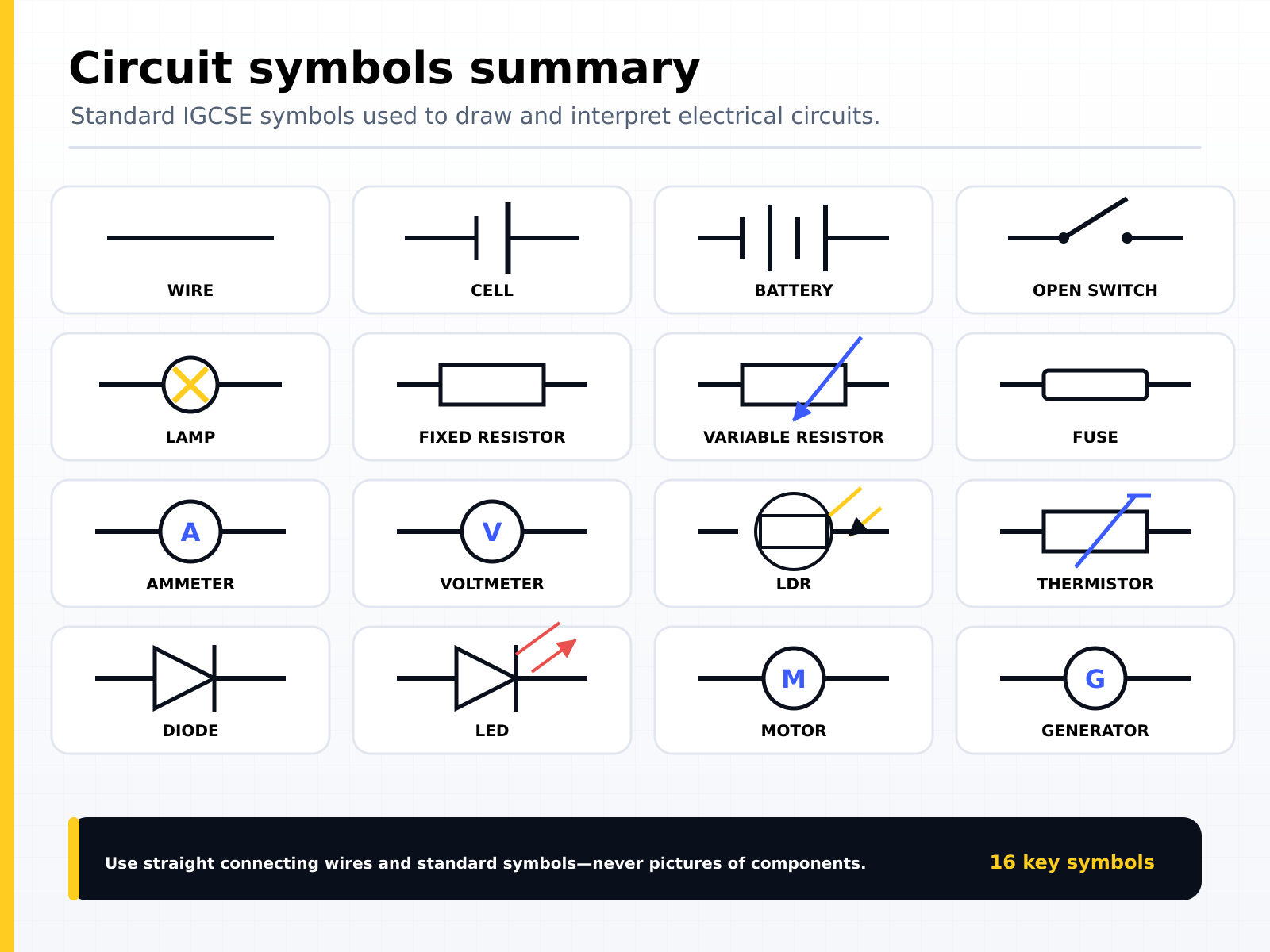
Summary of standard IGCSE circuit symbols: wire, cell, battery, open switch, lamp, fixed resistor, variable resistor, fuse, ammeter, voltmeter, LDR, thermistor, diode, LED, motor and generator

The p.d. across an electrical conductor increases as its resistance increases for a constant current.

Potential Divider – Part of a circuit consisting of two resistors connected in series to obtain a smaller voltage than supplied.

  • The input voltage is applied to the top & bottom of the series resistors.
  • The output voltage is measured from the centre to the bottom of R2.
  • The resistor with more resistance will have greater p.d.
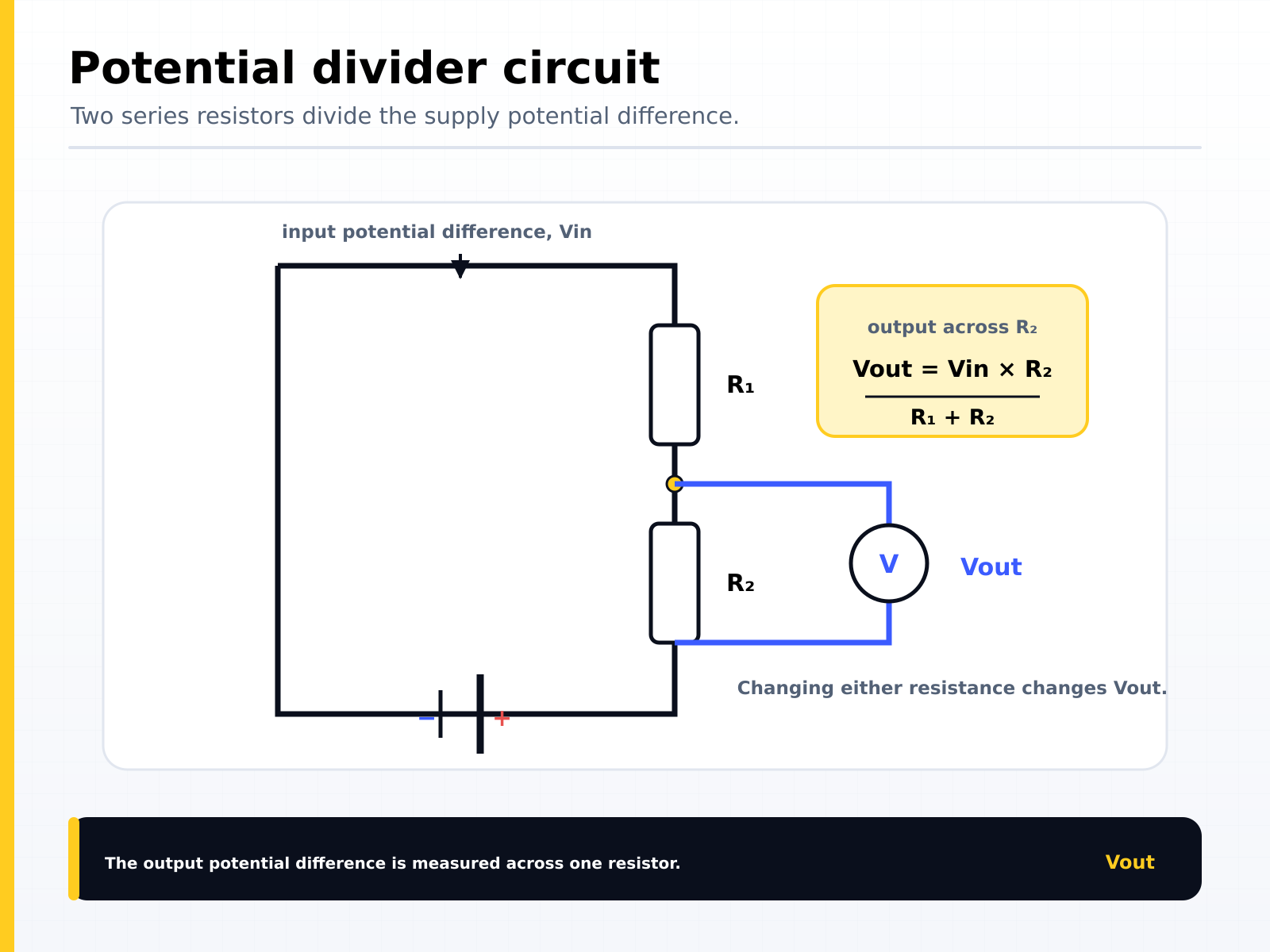
Potential divider circuit: two resistors in series divide the supply potential difference, with the output measured across R2 and given by Vin multiplied by R2 divided by R1 plus R2

← All Physics topics