Electric charge
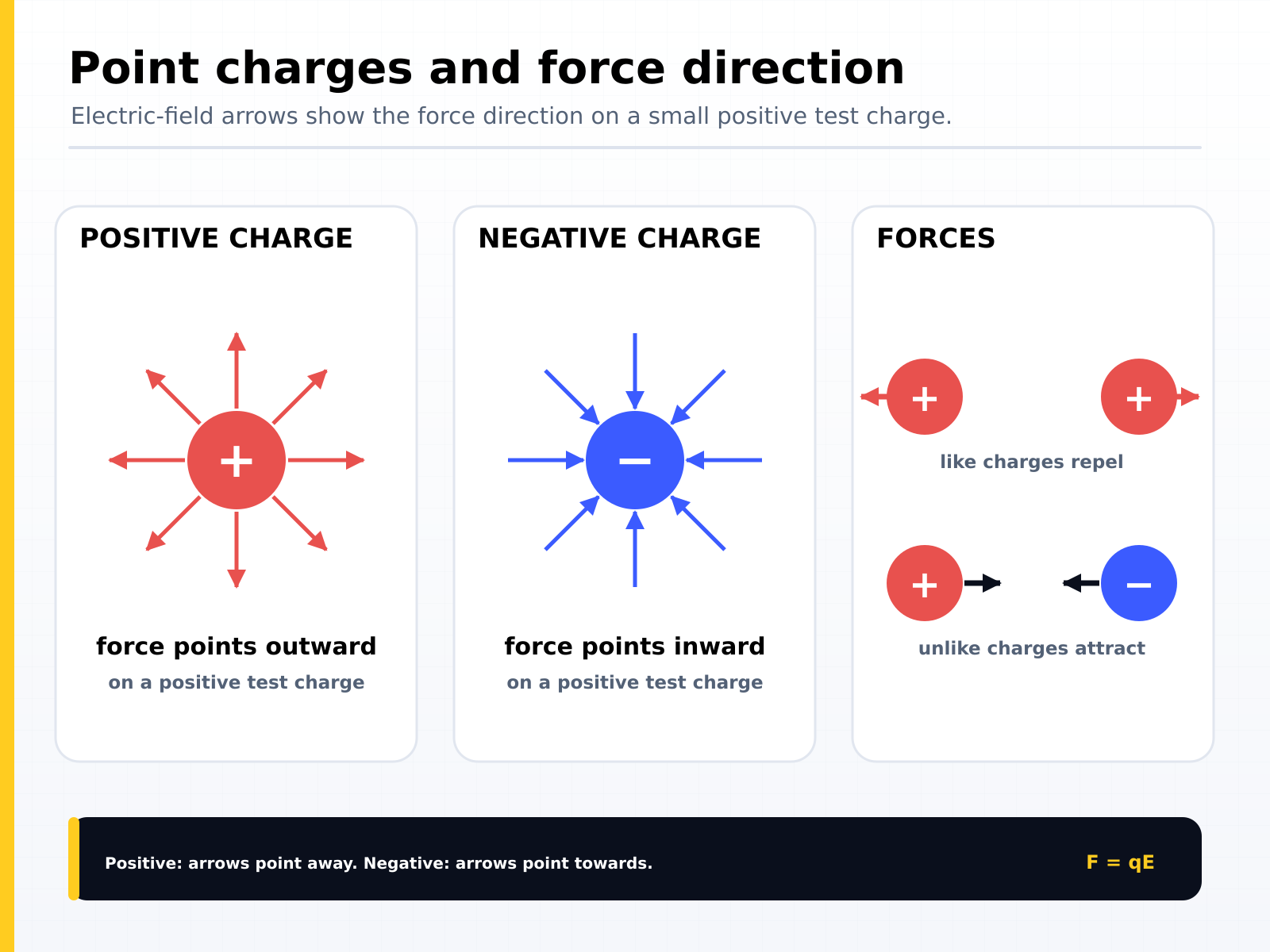
There are positive and negative charges. Positive charges repel other positive charges. Negative charges repel other negative charges. Positive charges attract negative charges.
Like charges repel, Opposing charges attract
Electrostatic charges by friction:
When insulating materials rub against each other, they may become electrically charged. Electrons may be 'rubbed off' one material and on to the other. The material that gains electrons becomes negatively charged. The material that loses electrons is left with a positive charge.
Charging of solids by friction involves only a transfer of negative charge (electrons), protons do not move.
| Conductors | Insulators | |
|---|---|---|
| Materials that allow electrical current to flow through them easily. | Materials that don't allow electrical current to flow through them easily. | |
| Have freely moving electrons. | No freely moving electrons. | |
| Metals. | Glass, plastic, rubber, air, and wood. |
Charge is measured in coulombs.
- Electric field – A region in which an electric charge experiences a force.
- Direction of an electric field at a point – The direction of the force on a positive charge at that point.
Electric current
Electric current is related to the flow of charge.
Current is measured using an ammeter. They should always be connected in series with the part of the circuit you are measuring the current through. Analogue ammeters - Typical ranges are 0.1-1A and 1-5A. Digital ammeters - Can measure very small currents, in mA or µA.
| Direct current (d.c.) | Alternating current (a.c.) | |
|---|---|---|
| The current flows in one constant direction. | The electric current changes its direction. | |
| Produced when using dry cells and batteries. | Comes from mains electricity and generators. |
- Electric current – The charge passing a point per unit time.
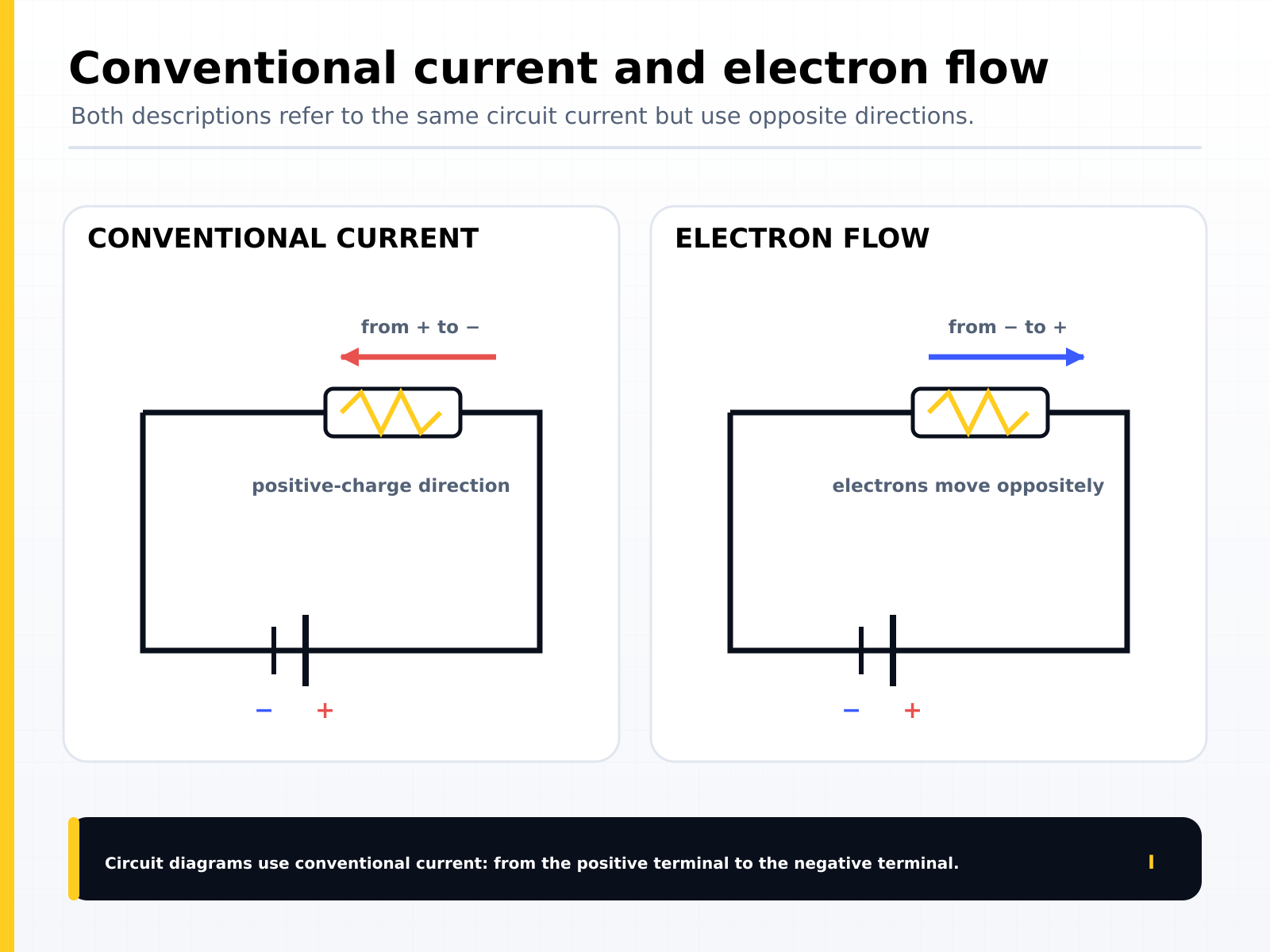
Conventional current is from positive to negative. The flow of free electrons is from negative to positive.
Electromotive force and potential difference
- Electromotive force (e.m.f.) – The electrical work done by a source in moving a unit charge around a complete circuit. It is measured in volts (V).
- Potential difference (p.d.) – The work done by a unit charge passing through a component. It is measured in volts (V).
Voltage is measured using a voltmeter. They are connected in parallel across a component, to measure the potential difference across the component. Analogue voltmeters - Typical ranges are 0.1-1A and 1-5A. Digital voltmeters - Can measure very small currents, in mA or µA.
Resistance
Factors That Affect Resistance:
- Material - Conductors have low resistance.
- Width - Wide wires have less resistance than a narrow wire.
- Length - A longer wire has more resistance than a shorter wire.
- Temperature - Cooler wire has less resistance than a warmer wire.
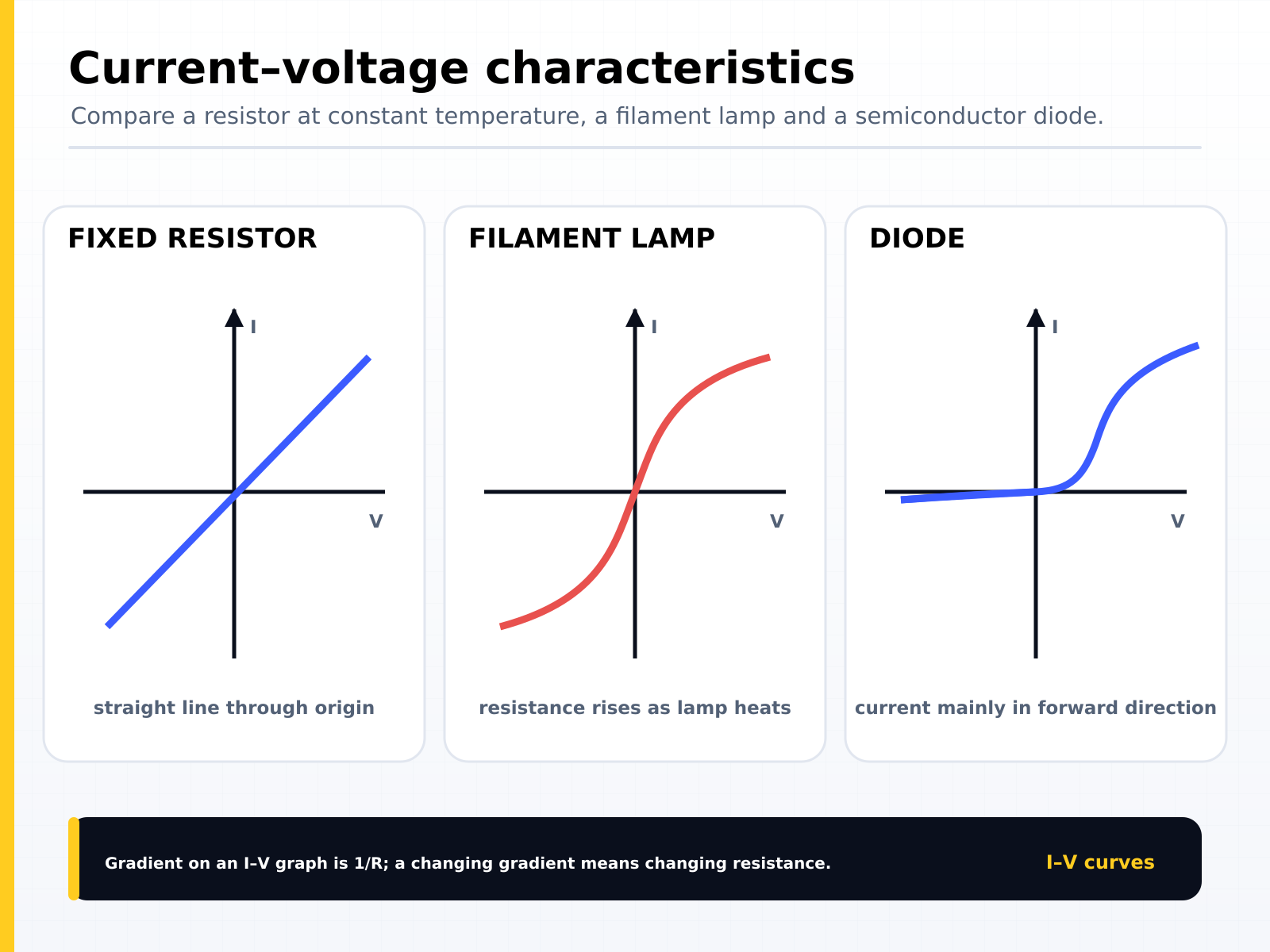
| Filament Lamp | Diode | |
|---|---|---|
| The more energy that is put into the bulb, resistance increases. As the voltage increases, temperature of the thin wire inside the filament increases. | Diodes force the current in a circuit to flow in only one direction. Current is not proportional to the voltage in a diode. If the voltage is reversed, the resistance increases to prevent current from flowing in the other direction. |
Electrical energy and electrical power
Electric circuits transfer energy from a source of electrical energy, such as an electrical cell or mains supply, to the circuit components and then into the surroundings.
P = IV Power = Current x Voltage
E = VIt Energy = voltage x current x time