There are two magnetic poles: north & south. Like poles repel, unlike poles attract. Magnets and magnetic material are influenced by magnetic fields.
Induced magnetism:
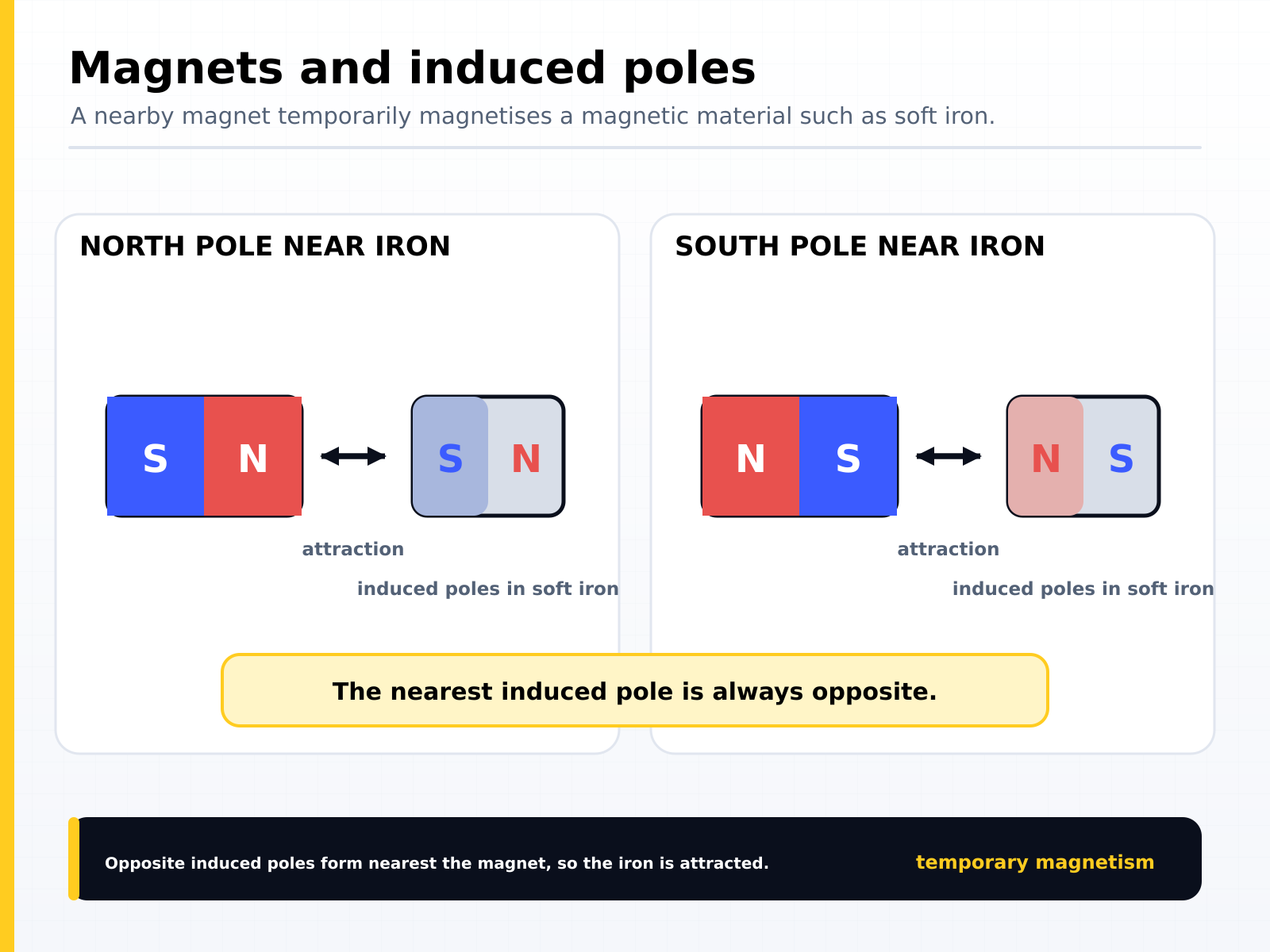
- When magnetic material is placed in a magnetic field, the material can temporarily be turned into a magnet.
- The magnet induces magnetism in them.
- The induced pole of the magnetic material that is closer to the magnet is the opposite of the pole at the end of the magnet.
| Temporary magnets | Permanent magnets |
|---|---|
| Only have magnetic field temporarily | Produce their magnetic field all the time |
| Made of soft iron | Made of steel |
| Magnetic Material | Nonmagnetic materials |
|---|---|
| Any object that can be influenced by magnetic fields, and has the potential to become a magnet. | Any object that cannot be influenced by magnetic fields. |
- Magnetic field – A region in which a magnetic pole experiences a force.
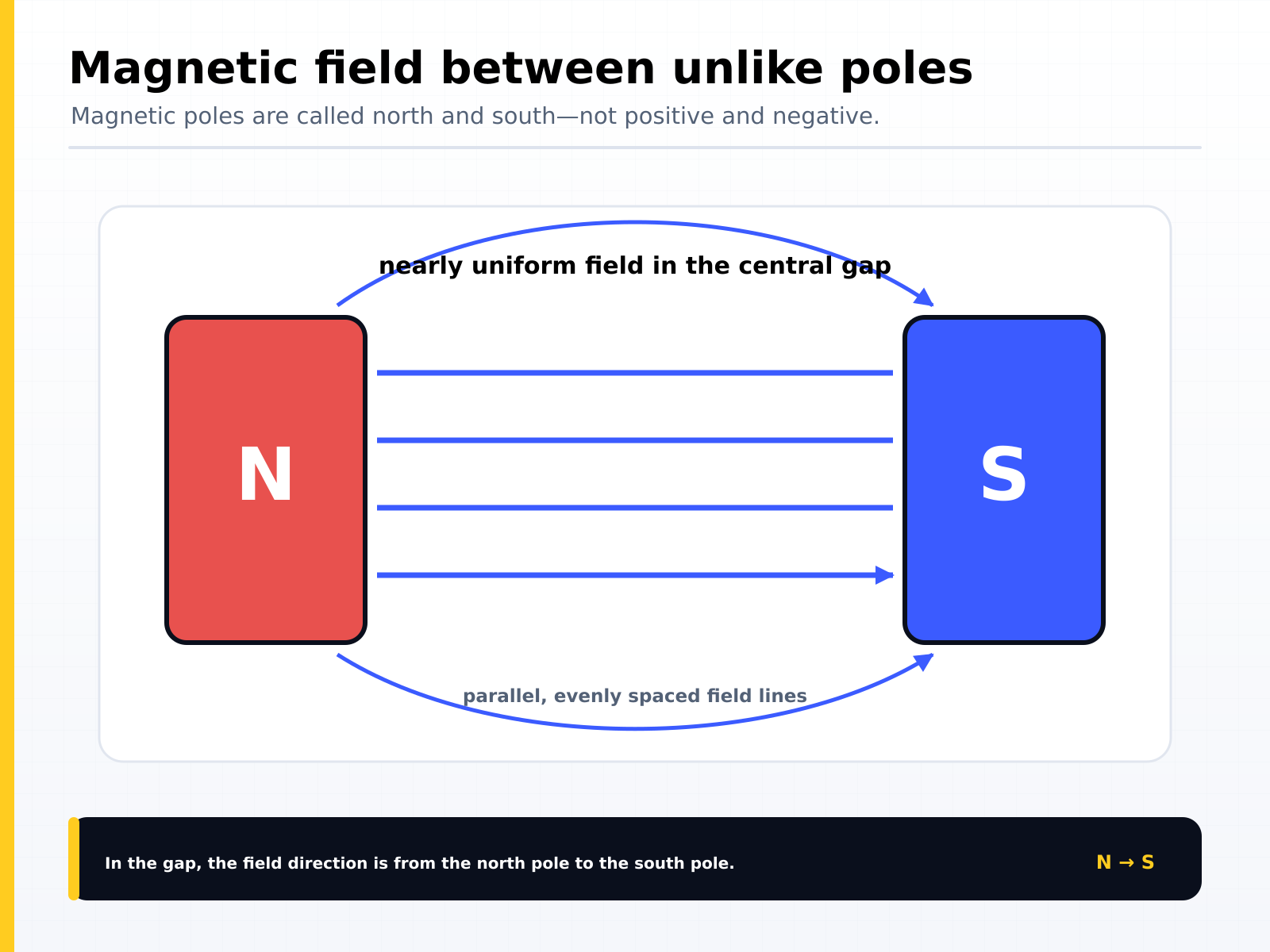
- Direction of a magnetic field at a point – The direction of the force on the N pole of a magnet at that point.
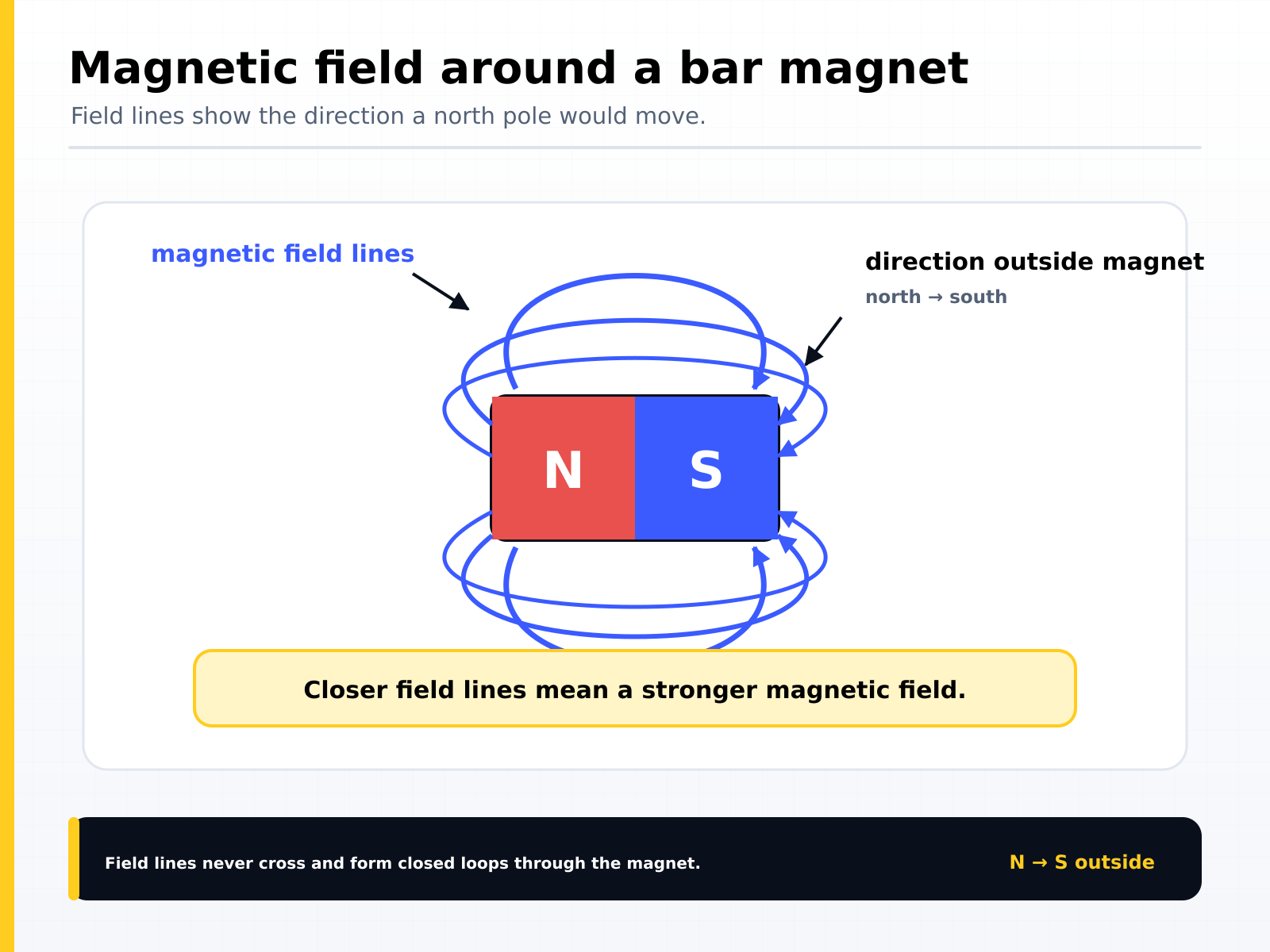
Ways of plotting magnetic field lines:
- With a compass. A compass can determine the direction of the magnetic field.
- Iron filings.
| Permanent magnets | Electromagnets |
|---|---|
| They stay magnetised. | A type of magnet in which the magnetic field is produced by an electric current. |
| They cannot be switched on and off. | They can be switched on and off. |
| Compasses, headphones, loudspeakers. | Electromagnetic cranes, electric bells. |
Magnetic forces are due to interactions between magnetic fields.
The relative strength of a magnetic field is represented by the spacing of the magnetic field lines. The closer the lines, the stronger the magnetic field.